FNPS Plant Database
Bacopa caroliniana
blue waterhyssop, lemon hyssop
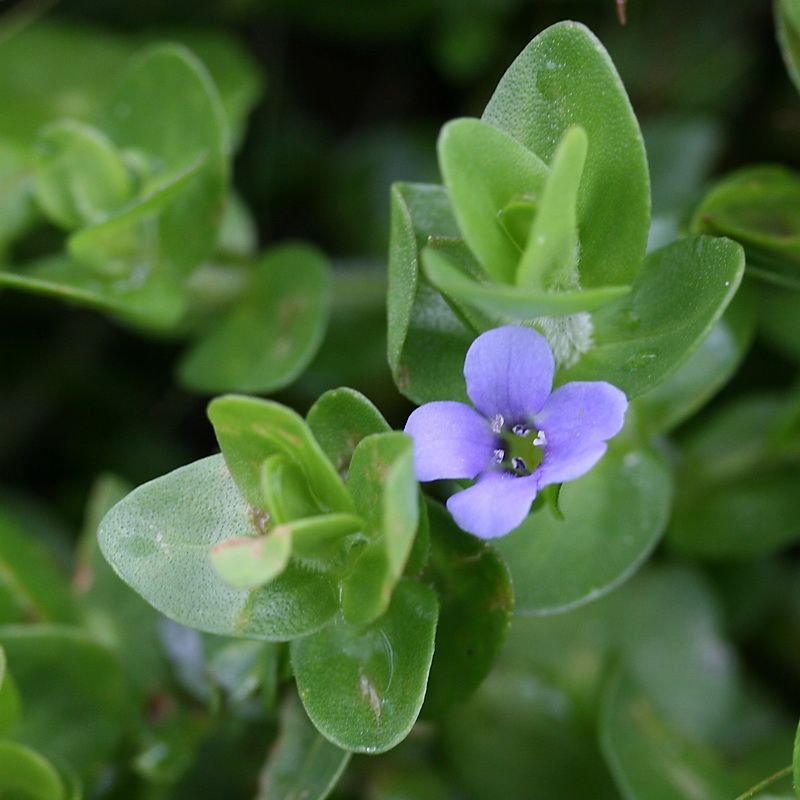
Photographs belong to the photographers who allow use for FNPS purposes only. Please contact the photographer for all other uses.
Nomenclature
Common Name:
blue waterhyssop, lemon hyssop
Synonym(s):
Genus species:
Bacopa caroliniana
Family:
Plantaginaceae
Plant Specifics
Form:
flower
Size:
0.25-0.5 ft tall by extensive mats ft wide
Life Span:
Short-lived perennial
Flower Color:
blue
Fruit Color:
Phenology:
winter dormant
Noted For:
Landscaping
Recommended Uses:
Spreading ground cover around the edges of retention ponds and aquatic gardens. Groundcover in restoration areas. Also used in aquariums.
Considerations:
Availability:
Propagation:
Easily roots from division or stem cuttings.
Light:
Moisture Tolerance:
Always Flooded------------------------------------------------Extremely Dry
<-> |----|----|----|----|----|----|----|----|----|----|----|----|-
Aquatic ---to--- Aquatic
Salt Water Flooding Tolerance:
Not salt tolerant of inundation by salty or brackish water.
Salt Spray/Salty Soil Tolerance:
Low/no tolerance of salty wind or direct salt spray
Soil or Other Substrate:
Sand
Soil pH:
broadly tolerant, prefers some organics
Suitable to Grow In:
8A, 8B, 9A, 9B, 10A, 10B

USDA zones are based on the average annual extreme minimum winter temperature.
Don't know your zone? Click here to search by zip code.
Ecology
Wildlife:
Larval host plant for white peacock (Anartia jatrophae) butterflies. Insect pollinated.
Native Habitats:
Marshes, swamps, ditches
Natural Range in Florida:
Visit the USF Libraries Atlas of Florida Plants
Comments:
Ethnobotany:
Over the centuries, this plant has been used in religious and medical contexts. The plant has a broad distribution including a long history of ethnobotanical uses in India, leading to the suspicion that it may not be native to North America.
General Comments:
Lemon bacopa is distinguished by blue flowers, a hairy upper stem, and by the lemony scent of its crushed foliage.



Citations:
Huegel, Craig N. 2012. Native Wildflowers and Other Ground Covers for Florida Landscapes. University Press of Florida, Gainesville.
Nelson, Gil. 2003. Florida's Best Landscape Plants: 200 Readily Available Species for Homeowners and Professionals. University Press of Florida, Gainesville.
Patton, Sean, and Kendall Southworth. 2025. Florida's Aquatic Butterfly Gardens: How to Create a Beautiful Backyard Habitat for Attracting 70+ Species with 100+ Native Plants. Pineapple Press, Palm Beach.

