
FNPS Plant Database
Bidens alba
beggarticks
Photographs belong to the photographers who allow use for FNPS purposes only. Please contact the photographer for all other uses.
Nomenclature
Common Name:
beggarticks
Synonym(s):
Genus species:
Bidens alba
Family:
Asteraceae
Plant Specifics
Form:
flower
Size:
1-3 ft ft tall by 1-3 ft ft wide
Life Span:
annual
Flower Color:
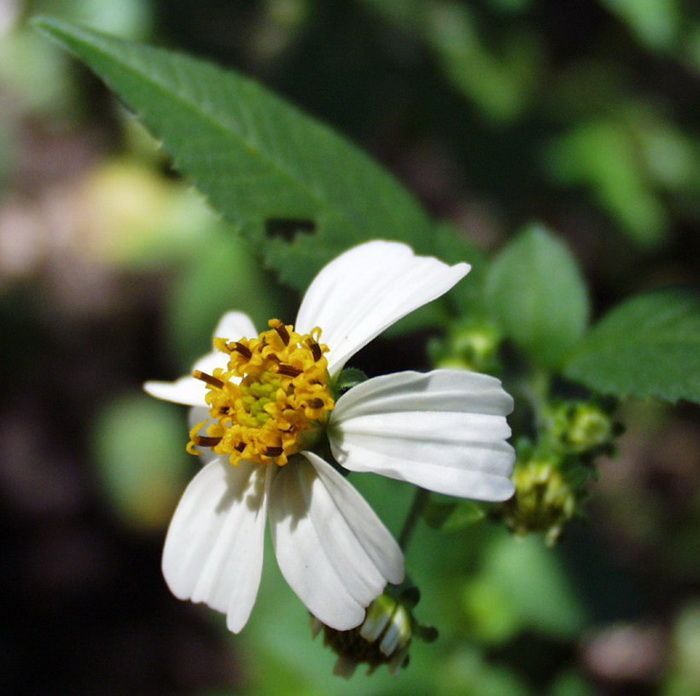
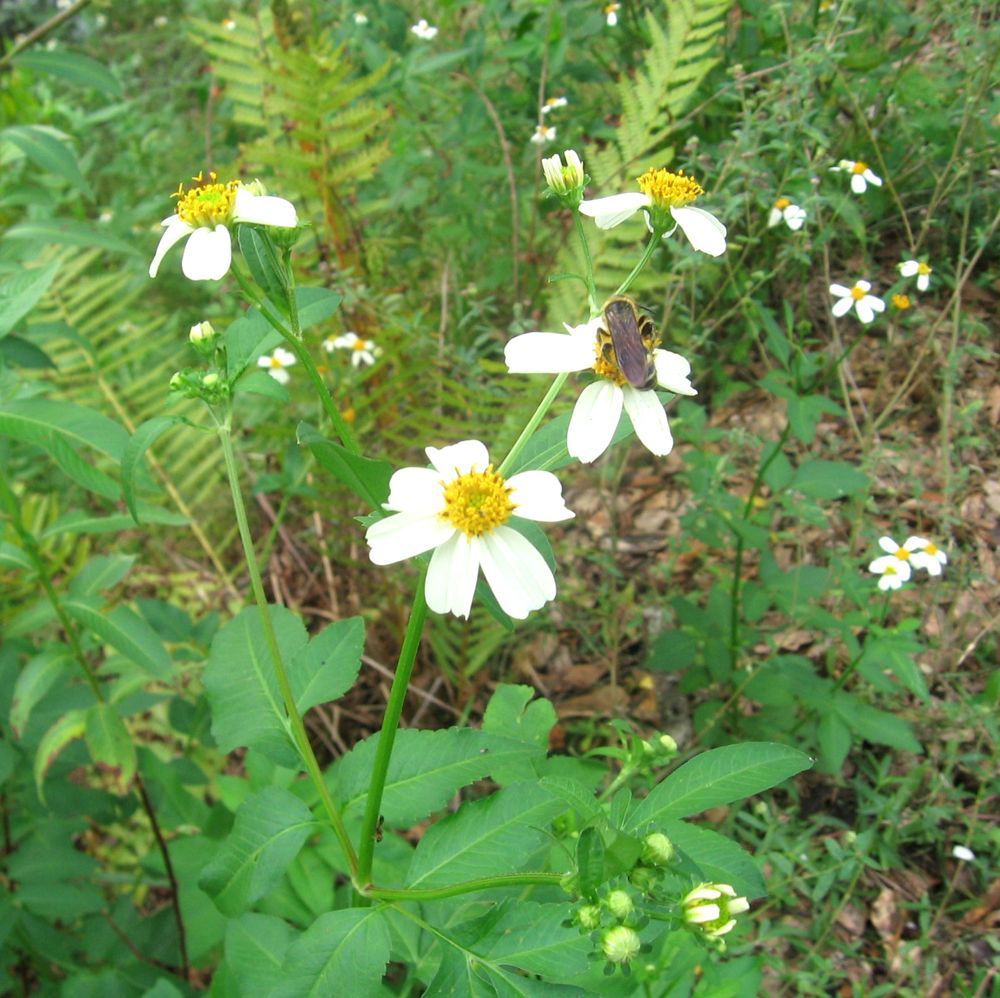
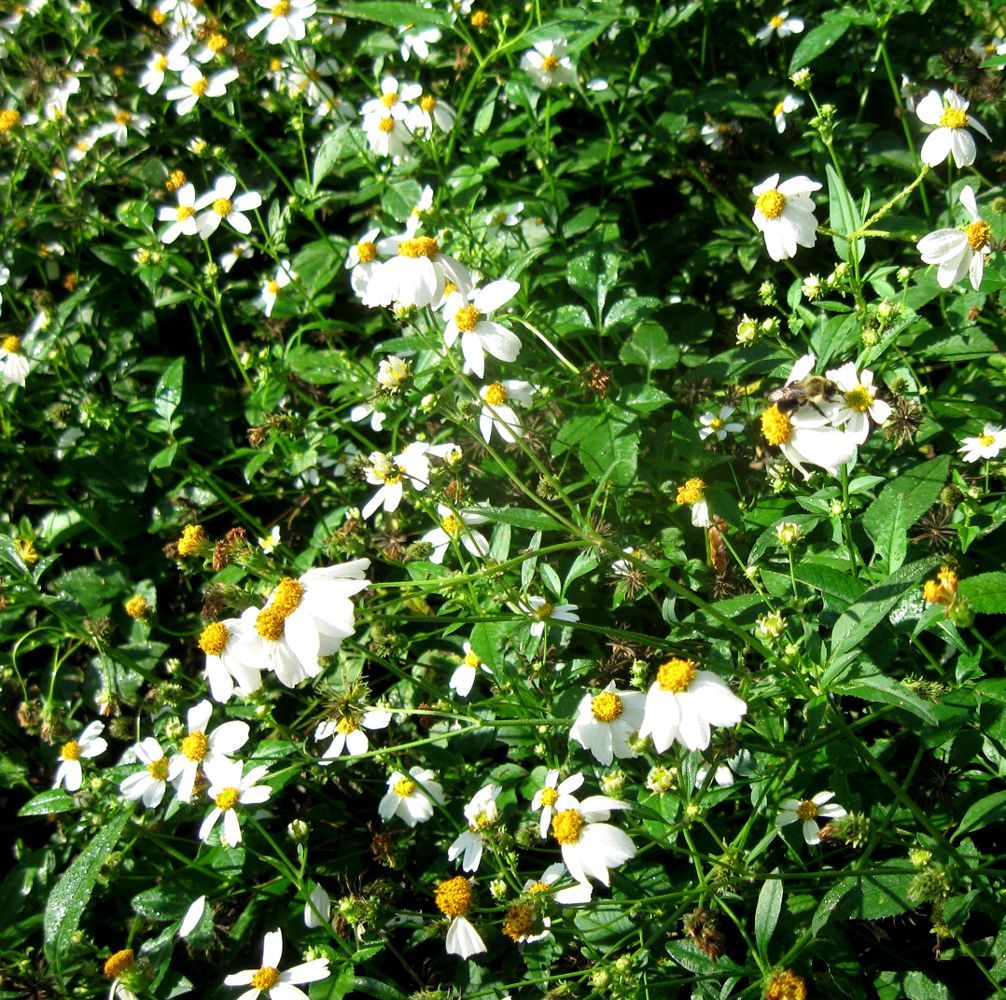
white ray flowers, yellow disk flowers
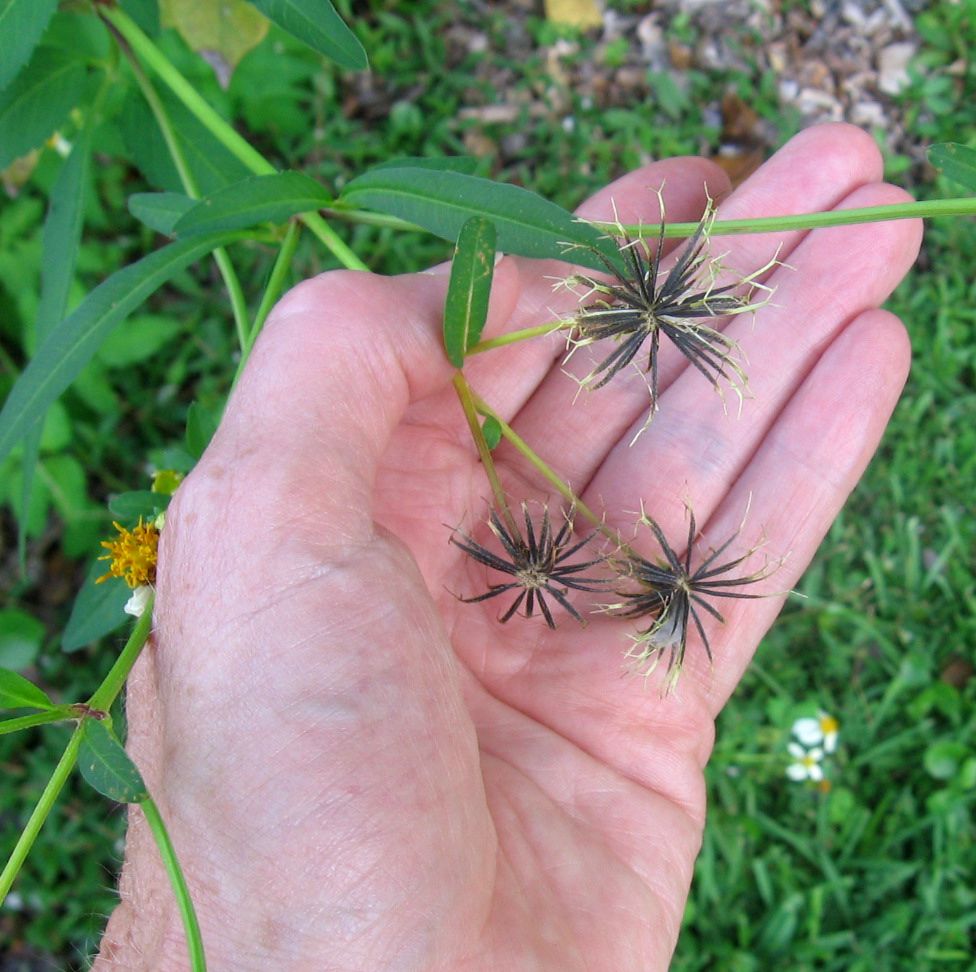
Fruit Color:
black
Phenology:
blooms all year
Noted For:
Landscaping
Recommended Uses:
Casual settings, especially toward the rear of wildflower gardens
Considerations:
Once you have this plant, you will always have this plant. It can be quite weedy. The seeds have barbs which stick to clothing and pet fur.
Availability:
Propagation:
Seed. But if you don't have it now, you will, so no need to plant. Pull seedlings leaving only a few plants to bring in the insects.
Light:
Moisture Tolerance:
Always Flooded------------------------------------------------Extremely Dry
Usually moist, occasional inundation ---to--- Very long very dry periods
Salt Water Flooding Tolerance:
Not salt tolerant of inundation by salty or brackish water
Salt Spray/Salty Soil Tolerance:
Low/no tolerance of salty wind or direct salt spray
Soil or Other Substrate:
Sand, Loam
Soil pH:
adaptable
Suitable to Grow In:
8A, 8B, 9A, 9B, 10A, 10B, 11

USDA zones are based on the average annual extreme minimum winter temperature.
Don't know your zone? Click here to search by zip code.
Ecology
Wildlife:
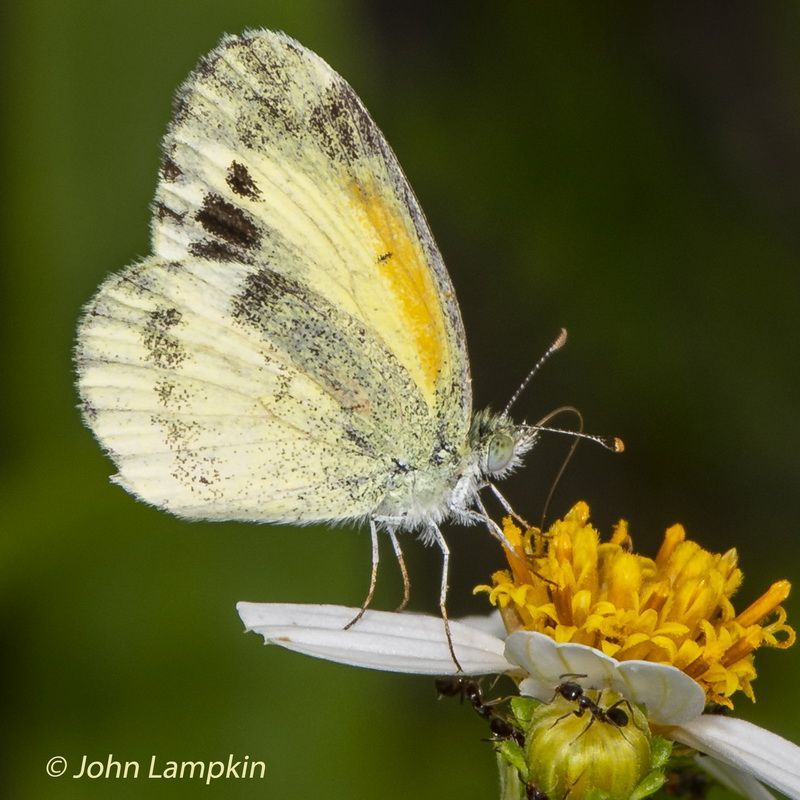
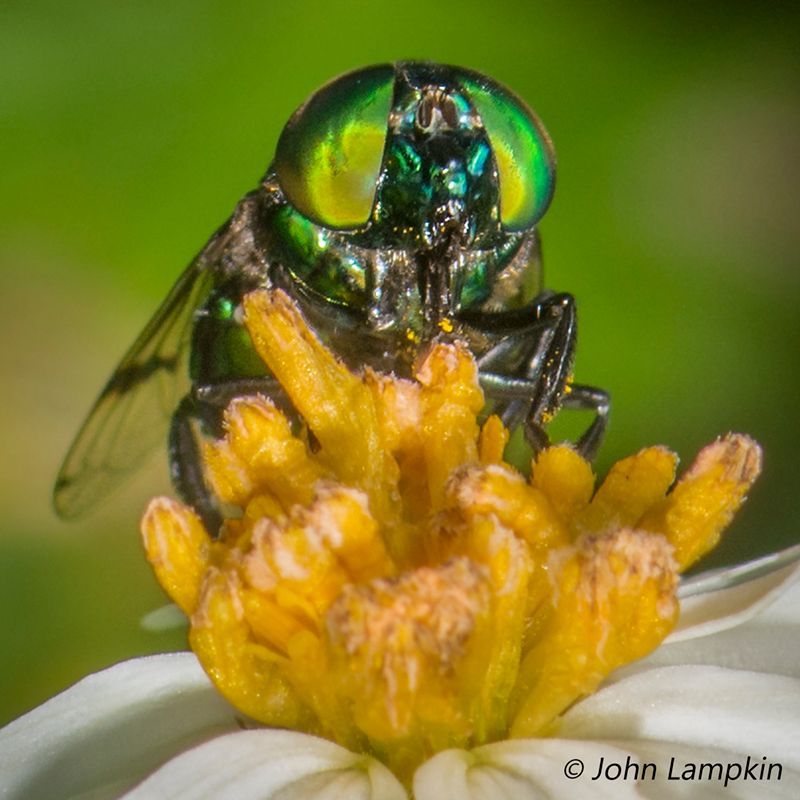
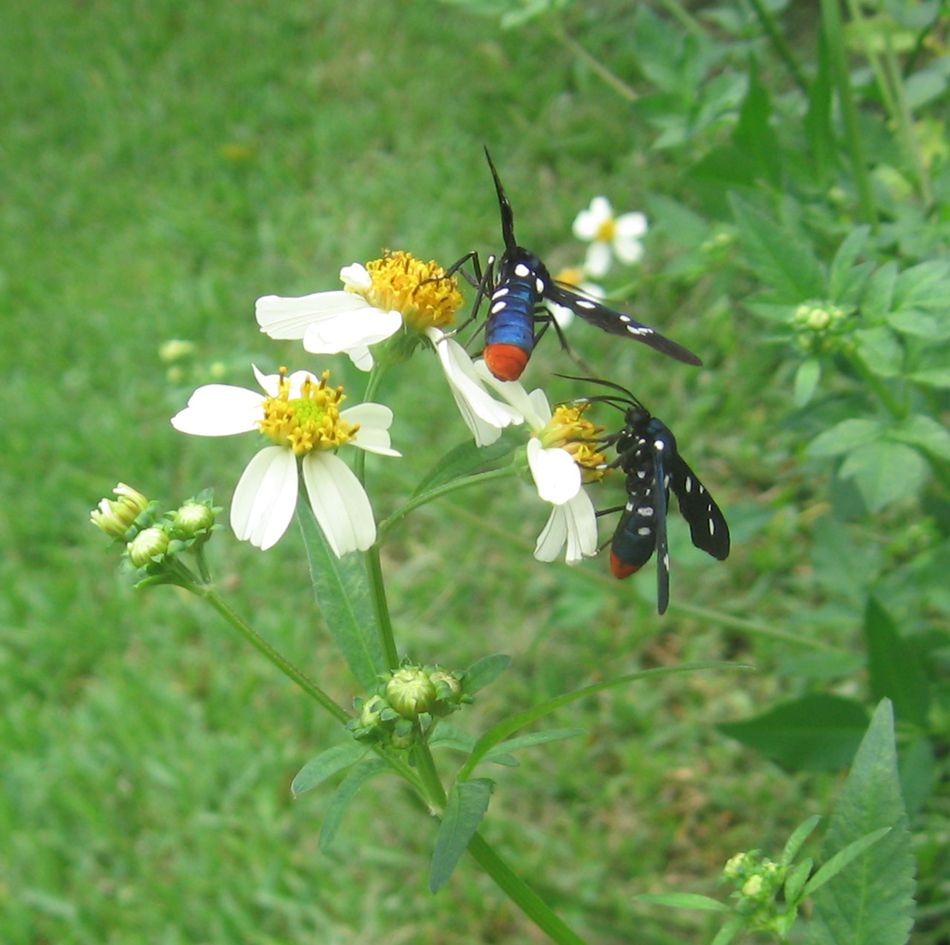
Attracts native bees, butterflies. Larval host for the dainty sulphur (Nathalis iole) butterfly.
Native Habitats:
ruderal
Natural Range in Florida:
Visit the USF Libraries Atlas of Florida Plants
Comments:
Ethnobotany:
Young leaves are edible and the sap will stop small wounds from bleeding.
General Comments:
The nativity of this species is doubtful (FNA, vol. 21), and, if native to Florida, it possibly is only native to South Florida. Quite likely it is an early introduction. The earliest known records in Florida are from the 1830s in Tampa Bay and Key West (Torrey & Gray 1842, as B. leucantha), and subsequently documented around Indian River in 1874 (Palmer, US), Cedar Keys in 1876 (Garber, US), Miami in 1877 (Garber, US), Manatee in 1889 (Simpson, US), and Mobile, Alabama in 1891 (Mohr, US).