FNPS Plant Database
Calamintha ashei
Ashe's savory, Ashe's calamint
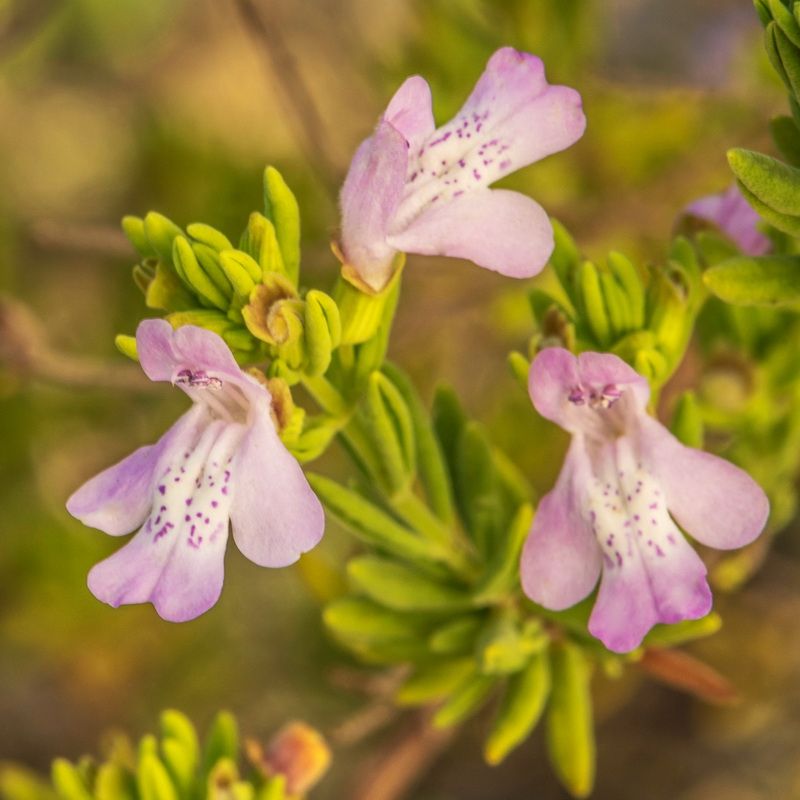
Photographs belong to the photographers who allow use for FNPS purposes only. Please contact the photographer for all other uses.
Nomenclature
Common Name:
Ashe's savory, Ashe's calamint
Synonym(s):
Genus species:
Calamintha ashei
Family:
Lamiaceae (Labiatae)
Plant Specifics
Form:
flower
Size:
1.5 ft tall by 1.5 ft wide
Life Span:
short-lived perennial
Flower Color:
lavender
Fruit Color:
Phenology:
deciduous; flowers predominantly mid-late spring.
Noted For:
Landscaping
Recommended Uses:
This small plant could make a good border along a dry path or as a foundation plant. Welcome in wildflower gardens. Foliage is highly aromatic.
Considerations:
Availability:
Propagation:
Light:
Moisture Tolerance:
Always Flooded------------------------------------------------Extremely Dry
Not wet but not extremely dry ---to--- Very long very dry periods
Salt Water Flooding Tolerance:
Not salt tolerant of inundation by salty or brackish water
Salt Spray/Salty Soil Tolerance:
Low/no tolerance of salty wind or direct salt spray
Soil or Other Substrate:
Sand
Soil pH:
acidic
Suitable to Grow In:
9A, 9B

USDA zones are based on the average annual extreme minimum winter temperature.
Don't know your zone? Click here to search by zip code.
Ecology
Wildlife:
Attracts a variety of insects and mostly pollinated by bees. Documented bees include Agapostemon splendens, Augochlorella aurata, Augochloropsis sumptuosa, Dialictus nymphalis, D. tegularis, Anthidiellum notatum rufimaculatum, A. perplexum, Dianthidium floridiense, Epeolus erigeronis, E. zonatus, Hoplitis truncata, Coelioxys germana, Lithurgus gibbosus, Megachile brevis pseudobrevis, M. exilis parexilis, M. georgica, M. petulans, M. rugifrons, M. texana, Osmia sandhouseae, Osmia sp., plus Apis mellifera (honeybee) and Bombus impatiens (Deyrup et al. 2002). Butterflies harvest nectar.
Native Habitats:
Scrub in disturbed areas, sandhill
Natural Range in Florida:
Visit the USF Libraries Atlas of Florida Plants
Comments:
Ethnobotany:
General Comments:
This species is listed as Threatened in Florida. Please acquire plants only from a reputable nursery.