

FNPS Plant Database
Calycanthus floridus
Carolina allspice, sweetshrub
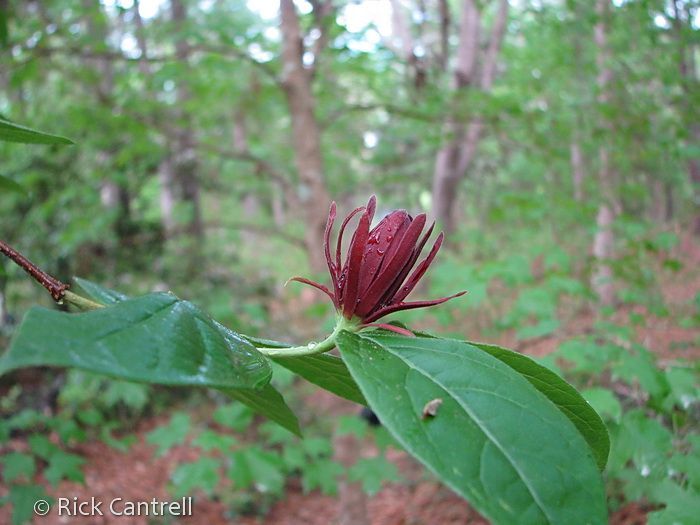
Photographs belong to the photographers who allow use for FNPS purposes only. Please contact the photographer for all other uses.
Nomenclature
Common Name:
Carolina allspice, sweetshrub
Synonym(s):
Genus species:
Calycanthus floridus
Family:
Calycanthaceae
Plant Specifics
Form:
shrub
Size:
6-9 ft tall by 6-12 ft wide
Life Span:
long-lived perennial
Flower Color:
dark red
Fruit Color:
brown
Phenology:
deciduous, flowers in spring; has yellow fall color
Noted For:
Landscaping
Recommended Uses:
Informal settings where it can be a low hedge plant or specimen. Plant forms small clusters by suckering, so give it room.
Considerations:
State endangered. Please acquire from reputable sources.
In the right conditions, the suckering will be aggressive.
Availability:
Propagation:
Transplant suckers, layer, seed.
Light:
Moisture Tolerance:
Always Flooded------------------------------------------------Extremely Dry
Stays Wet ---to--- Not wet but not extremely dry
Salt Water Flooding Tolerance:
Not salt tolerant of inundation by salty or brackish water
Salt Spray/Salty Soil Tolerance:
Low/no tolerance of salty wind or direct salt spray
Soil or Other Substrate:
Loam, Sand
Soil pH:
slightly acidic to neutral
Suitable to Grow In:
8A, 8B

USDA zones are based on the average annual extreme minimum winter temperature.
Don't know your zone? Click here to search by zip code.
Ecology
Wildlife:
Mostly pollinated by sap beetles. The beetles are drawn by the scent of fermentation, and they work their way into the shade of the overlapping tepals to find food. The flowers are easy to enter but difficult to depart. Once trapped inside, the beetle picks up pollen. After the flower is pollinated, the inner parts of the flower fold back to release the beetle. By that point, the stigmas will have withered, and the beetle will move on to another flower in search of more food, ensuring cross-pollination (Arnold Arboretum).
Native Habitats:
Mesic-wet mesic sites. Slope forests, bluffs, riverine floodplain, upland hardwood forest, slope forest, bottomland forest. Found on stream banks.
Natural Range in Florida:
Visit the USF Libraries Atlas of Florida Plants
Comments:
Ethnobotany:
General Comments:



Citations:
Chafin, L. G. 2000. Field Guide to the Rare Plants of Florida. Florida Natural Areas Inventory, Tallahassee, Florida.
Huegel, Craig N. 2015. Native Florida Plants for Shady Landscapes. University Press of Florida, Gainesville.
North Carolina Extension Gardener Plant Toolbox. https://plants.ces.ncsu.edu/plants/calycanthus-floridus/ , accessed 2025. North Carolina State University, Raleigh.

