

FNPS Plant Database
Campsis radicans
trumpet-vine, trumpet creeper
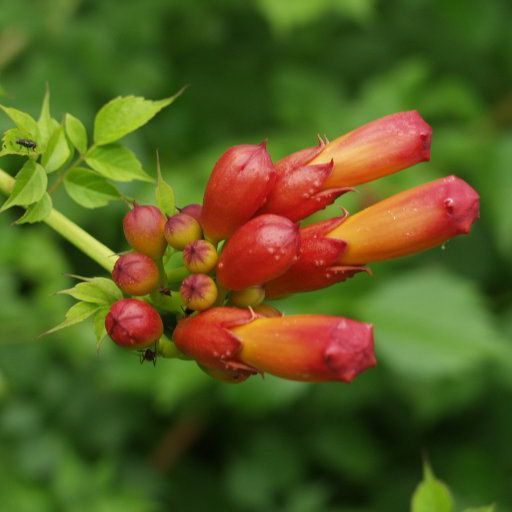
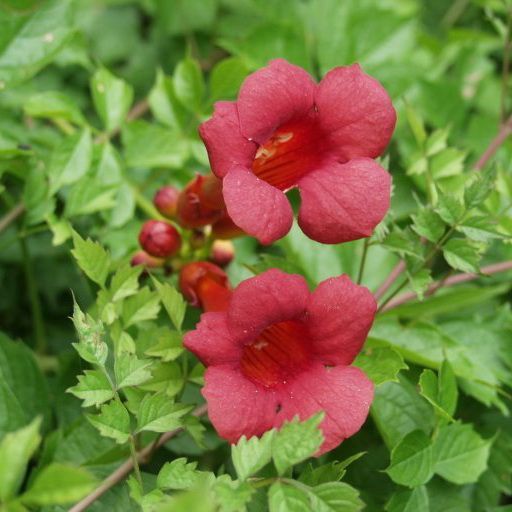
Photographs belong to the photographers who allow use for FNPS purposes only. Please contact the photographer for all other uses.
Nomenclature
Common Name:
trumpet-vine, trumpet creeper
Synonym(s):
Genus species:
Campsis radicans
Family:
Bignoniaceae
Plant Specifics
Form:
vine
Size:
climbing to 50-60 ft
Life Span:
long-lived perennial
Flower Color:
orange, red
Fruit Color:
brown
Phenology:
deciduous (north) to evergreen (south); blooms in spring and summer
Noted For:
Landscaping
Recommended Uses:
Plant this vine where it has support and where its showy flowers are visible. Climbs with aerial roots which can damage brick and stucco, so best allowed to climb trees, poles, trellises and similar structures.
Considerations:
This is a fast growing vine. It also layers and suckers. These characteristics can make it weedy. It climbs by means of aerial rootlets, which can damage wood, stone, and brick.
Availability:
Propagation:
seed or transplants
Light:
Moisture Tolerance:
Always Flooded------------------------------------------------Extremely Dry
Usually moist, occasional inundation ---to--- Somewhat long very dry periods
Salt Water Flooding Tolerance:
Not salt tolerant of inundation by salty or brackish water
Salt Spray/Salty Soil Tolerance:
Some tolerance to salty wind but not direct salt spray
Soil or Other Substrate:
Clay, Loam, Sand
Soil pH:
sightly acidic to neutral
Suitable to Grow In:
8A, 8B, 9A, 9B

USDA zones are based on the average annual extreme minimum winter temperature.
Don't know your zone? Click here to search by zip code.
Ecology
Wildlife:
Very attractive to hummingbirds which are its primary pollinators.
Larval host for the plebeian sphinx (Paratraea plebeja) moth.
Native Habitats:
Dry-moist sites. Riverine forests, mesic & dry mesic hammock especially where disturbed.
Natural Range in Florida:
Visit the USF Libraries Atlas of Florida Plants
Comments:
Ethnobotany:
General Comments:
While somewhat overly aggressive, it can be controlled. The author allows it to climb palm trees but pulls them off the tree to limit their size every 3-5 years.
Climbs using tendrils with adhesive disks.