

FNPS Plant Database
Canella winterana
cinnamon bark, wild cinnamon, pepper cinnamon
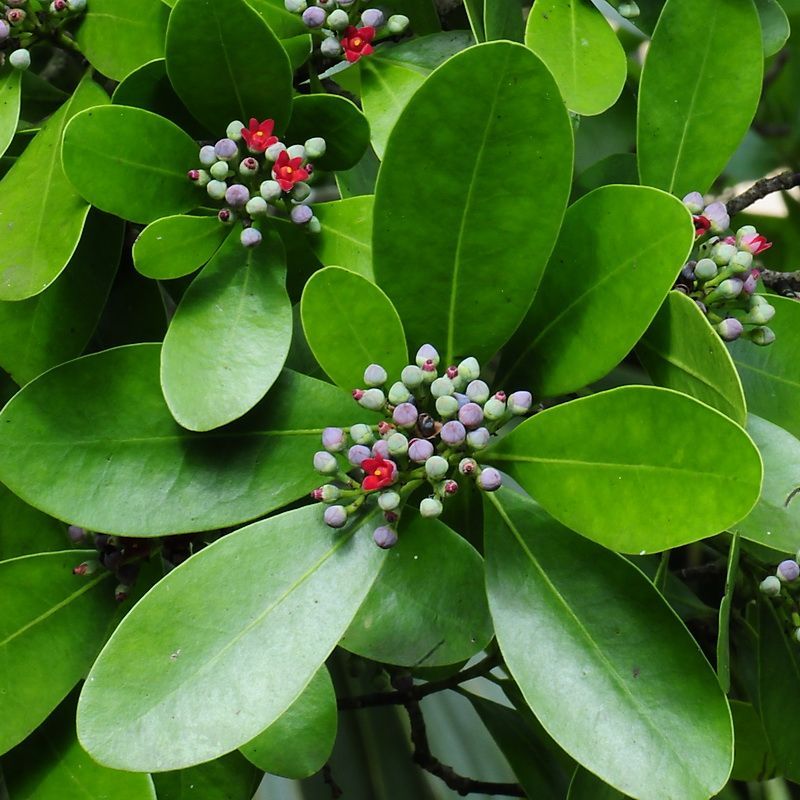
Photographs belong to the photographers who allow use for FNPS purposes only. Please contact the photographer for all other uses.
Nomenclature
Common Name:
cinnamon bark, wild cinnamon, pepper cinnamon
Synonym(s):
Genus species:
Canella winterana
Family:
Canellaceae
Plant Specifics
Form:
tree
Size:
15-20 (30) ft
Life Span:
long-lived perennial
Flower Color:
red
Fruit Color:
red
Phenology:
Evergreen. Flowers in summer. All flowers within a plant bloom synchronously as functional females and after 24 hours they synchronously switch to functional males, helping to ensure cross-pollination. Fruits ripen in winter.
Noted For:
Landscaping
Recommended Uses:
Understory tree. Use as screen or specimen plant.
Considerations:
State endangered; acquire only from reputable sources.
Availability:
Propagation:
seed
Light:
Moisture Tolerance:
Always Flooded------------------------------------------------Extremely Dry
Somewhat moist, no flooding ---to--- Short very dry periods
Salt Water Flooding Tolerance:
Tolerant of inundation with brackish water
Salt Spray/Salty Soil Tolerance:
Some tolerance to salty wind but not direct salt spray
Soil or Other Substrate:
Humus (organic, upland), Lime Rock, Sand
Soil pH:
calcareous (high pH)
Suitable to Grow In:
10A, 10B, 11

USDA zones are based on the average annual extreme minimum winter temperature.
Don't know your zone? Click here to search by zip code.
Ecology
Wildlife:
Fruits eaten by birds and small mammals. Hummingbirds visit the flowers.
Nectar plant for Schaus' swallowtail (Heraclides aristodemius) and other butterflies.
Native Habitats:
Rockland hammock in coastal areas.
Natural Range in Florida:
Visit the USF Libraries Atlas of Florida Plants
Comments:
Ethnobotany:
Canella winterana has been used medicinally to treat “female tiredness” by preparing a tonic made from boiling leaves and bark. Crushed leaves can be used to numb the pain of toothaches by placing them near the tooth. Tonics of the bark are also used to treat gastrointestinal issues.
The bark and berries are dried and crushed and used commercially as a spice. The bark has also been used to flavor tobacco.
General Comments:



Citations:
Chafin, L. G. 2000. Field Guide to the Rare Plants of Florida. Florida Natural Areas Inventory, Tallahassee, Florida.
Nelson, Gil. 1996. The Shrubs & Woody Vines of Florida: A Reference and Field Guide. Pineapple Press, Sarasota.

