FNPS Plant Database
Carya pallida
sand hickory
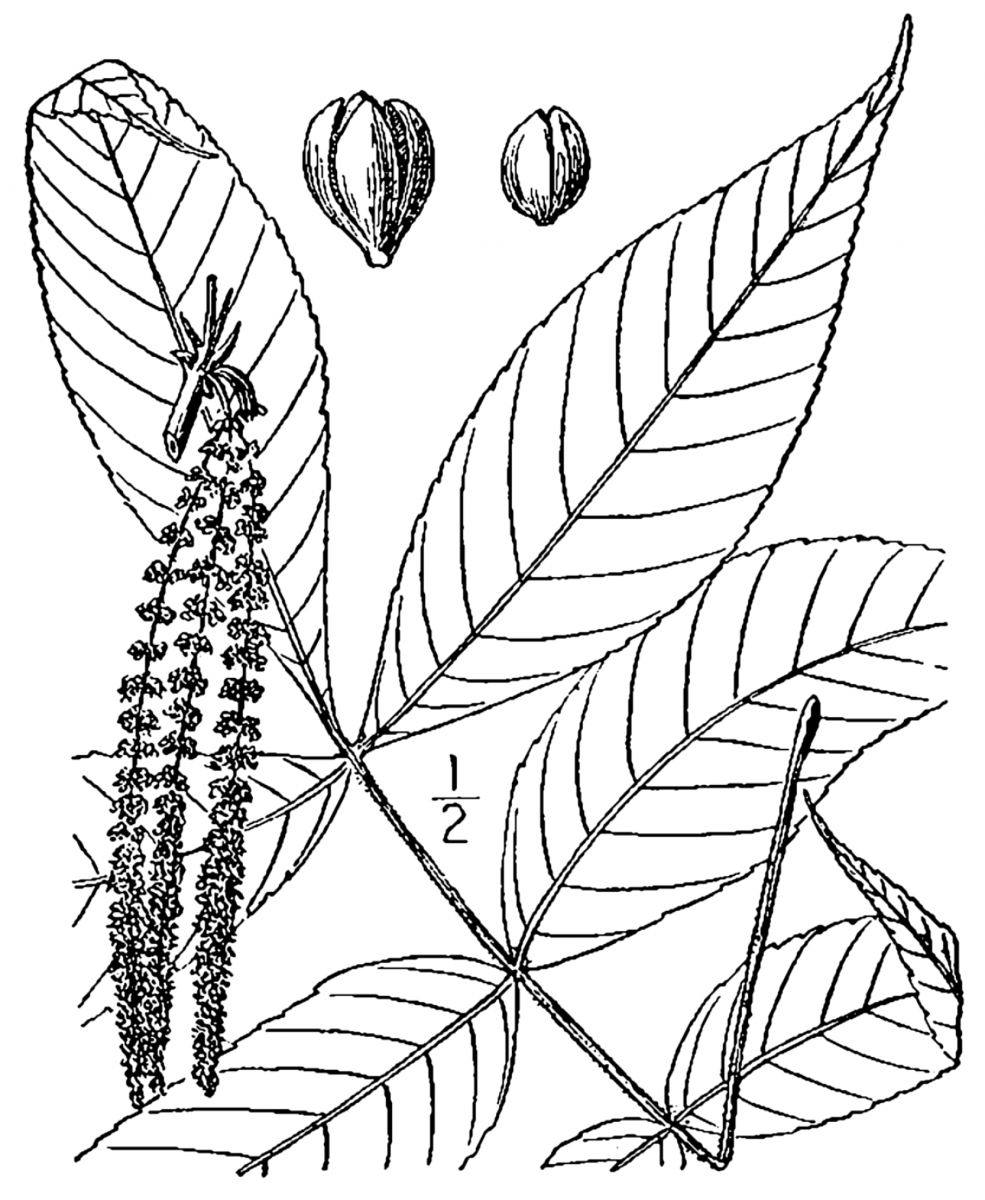
Photographs belong to the photographers who allow use for FNPS purposes only. Please contact the photographer for all other uses.
Nomenclature
Common Name:
sand hickory
Synonym(s):
Genus species:
Carya pallida
Family:
Juglandaceae
Plant Specifics
Form:
tree
Size:
80-100 ft
Life Span:
long-lived perennial
Flower Color:
yellow, green
Fruit Color:
green, brown
Phenology:
deciduous
Noted For:
Landscaping
Recommended Uses:
Shade tree where falling/fallen nuts will not be a problem.
Considerations:
Slow growing. Nut and leaf litter may be a maintenance problem in residential landscapes.
Availability:
Propagation:
Seed. Difficult to transplant except when sufficiently small that the tap root is not disturbed.
Light:
Moisture Tolerance:
Always Flooded------------------------------------------------Extremely Dry
Somewhat moist, no flooding ---to--- Somewhat long very dry periods
Salt Water Flooding Tolerance:
Not salt tolerant of inundation by salty or brackish water
Salt Spray/Salty Soil Tolerance:
Low/no tolerance of salty wind or direct salt spray
Soil or Other Substrate:
Sand, Loam
Soil pH:
acidic to neutral
Suitable to Grow In:
8A, 8B

USDA zones are based on the average annual extreme minimum winter temperature.
Don't know your zone? Click here to search by zip code.
Ecology
Wildlife:
Small mammals (squirrels and other rodents) consume nuts.
Larval host for many moths including; luna moth (Actias luna), hickory leafroller moth (Argyrotaenia juglandana), royal walnut moth (Citheronia regalis), and walnut sphinx (Amorpha juglandis).
Native Habitats:
Dry hammocks, dry hardwood forests
Natural Range in Florida:
Visit the USF Libraries Atlas of Florida Plants
Comments:
Ethnobotany:
edible fruits
General Comments: