
FNPS Plant Database
Castanea pumila
Ashe's chinquapin, trailing chinquapin
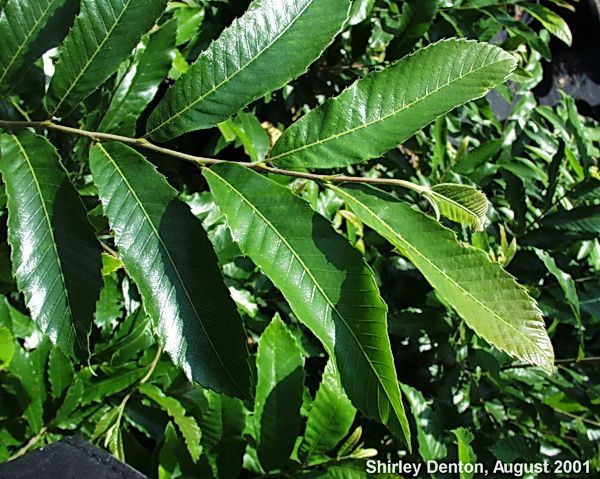
Photographs belong to the photographers who allow use for FNPS purposes only. Please contact the photographer for all other uses.
Nomenclature
Common Name:
Ashe's chinquapin, trailing chinquapin
Synonym(s):
Genus species:
Castanea pumila
Family:
Fagaceae
Plant Specifics
Form:
shrub
Size:
15-30 (40) ft tall by 15-20 (30) ft wide
Life Span:
long-lived perennial; lifespan <50 yrs
Flower Color:
Fruit Color:
Phenology:
deciduous; inconspicuous blooms in spring, with fruits ripening in fall
Noted For:
Landscaping
Recommended Uses:
Natural settings as a small shade tree or large shrub.
Considerations:
Burr-covered nuts can cause a problem in residential landscapes.
Availability:
Propagation:
seed
Light:
Moisture Tolerance:
Always Flooded------------------------------------------------Extremely Dry
Not wet but not extremely dry ---to--- Very long very dry periods
Salt Water Flooding Tolerance:
Not salt tolerant of inundation by salty or brackish water
Salt Spray/Salty Soil Tolerance:
Low/no tolerance of salty wind or direct salt spray
Soil or Other Substrate:
Sand
Soil pH:
acidic
Suitable to Grow In:
8A, 8B, 9A

USDA zones are based on the average annual extreme minimum winter temperature.
Don't know your zone? Click here to search by zip code.
Ecology
Wildlife:
Nuts are consumed by birds and other wildlife.
Larval host for orange-tipped oakworm moth (Anisota senatoria) which can cause significant defoliation.
Native Habitats:
Dry, open sandy woods, hammock edges, sandy roadsides, fence rows in sandy fields, dry bluffs, pine-oak-hickory woods, floodplains, calcareous river hammocks.
Natural Range in Florida:
Visit the USF Libraries Atlas of Florida Plants
Comments:
Ethnobotany:
Native Americans ate the nuts.
General Comments:
While it is related to chestnuts, its not generally subject to chestnut blight, and if it gets it, will likely recover.