

FNPS Plant Database
Cephalanthus occidentalis
buttonbush
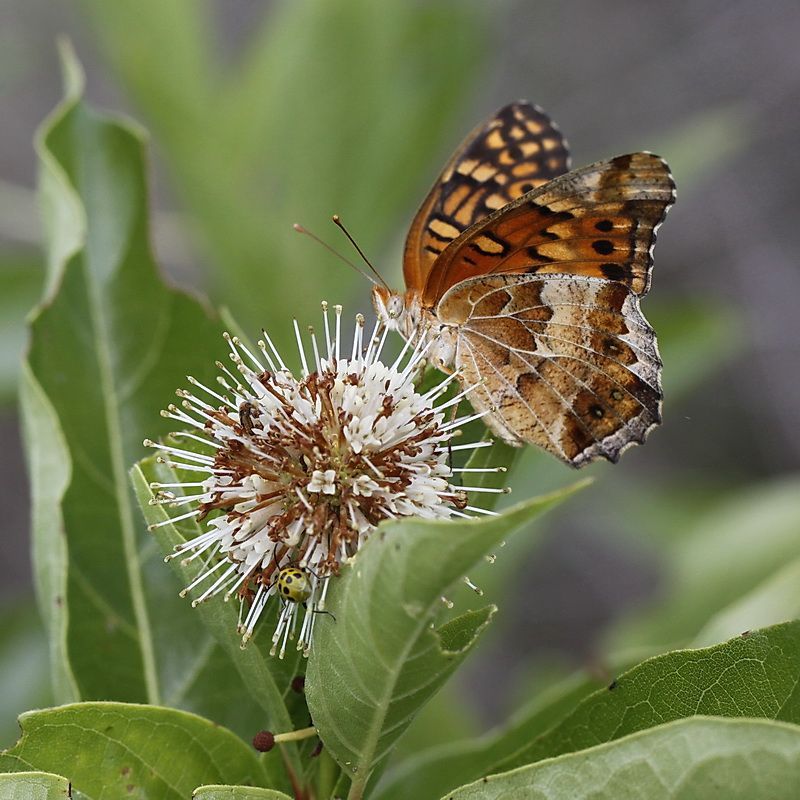
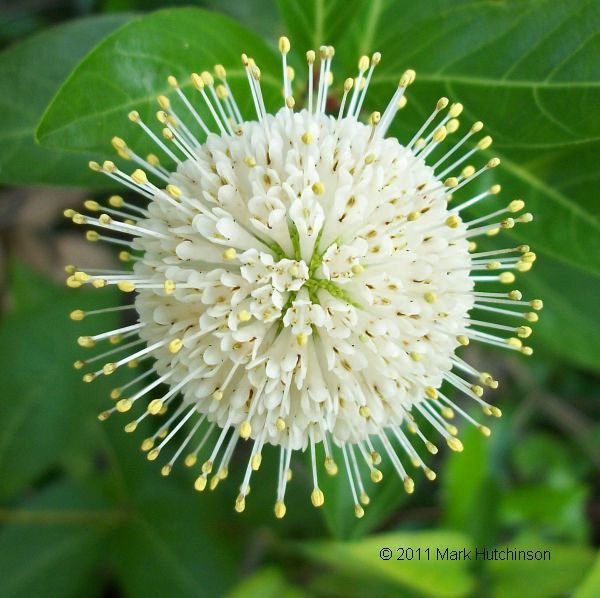
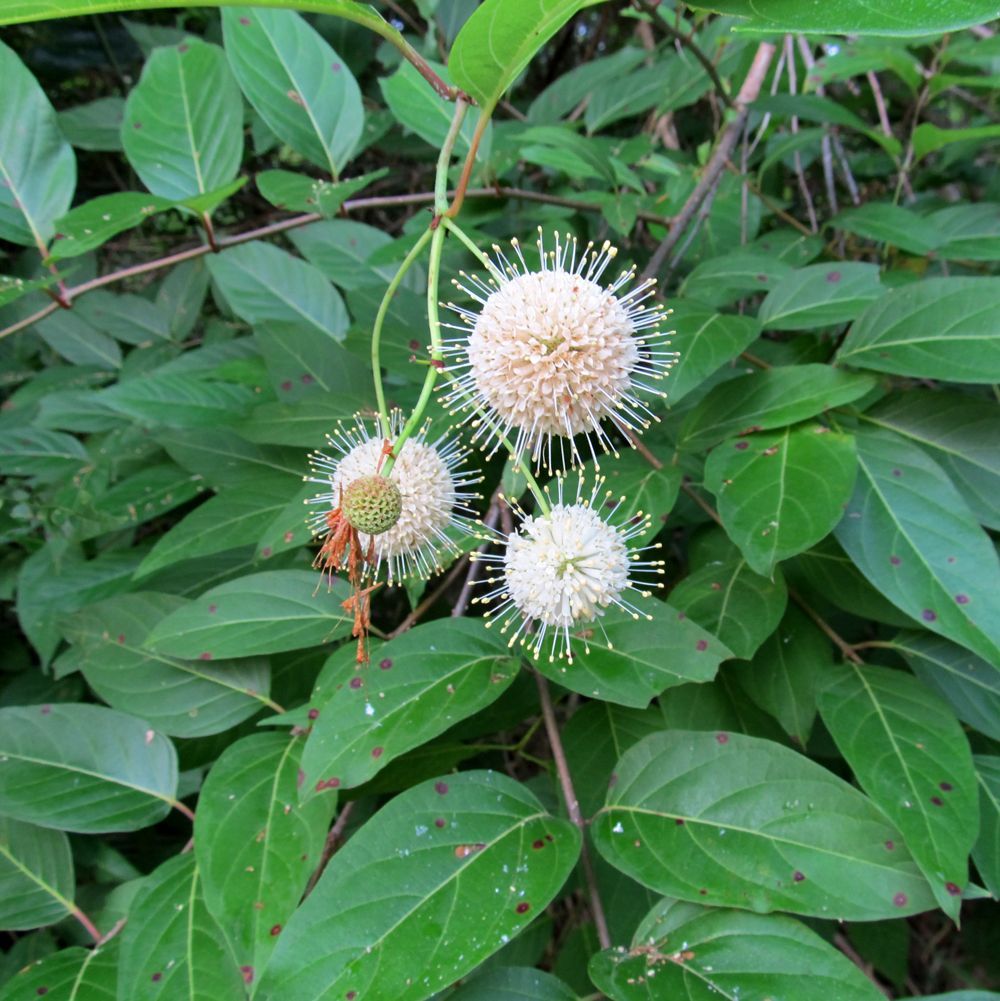
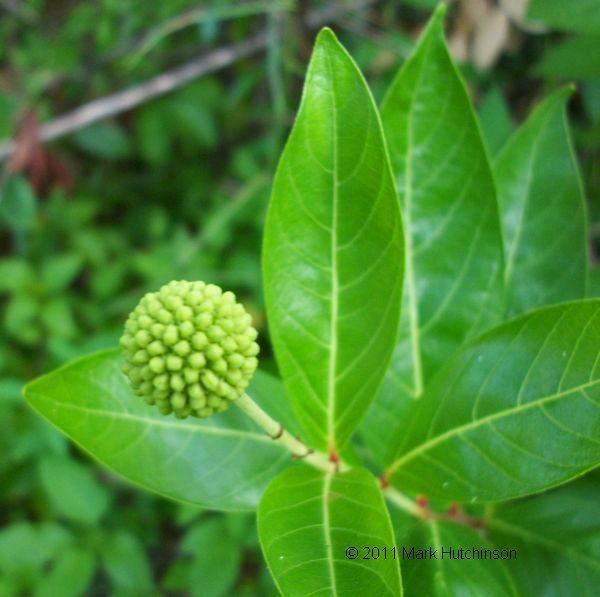
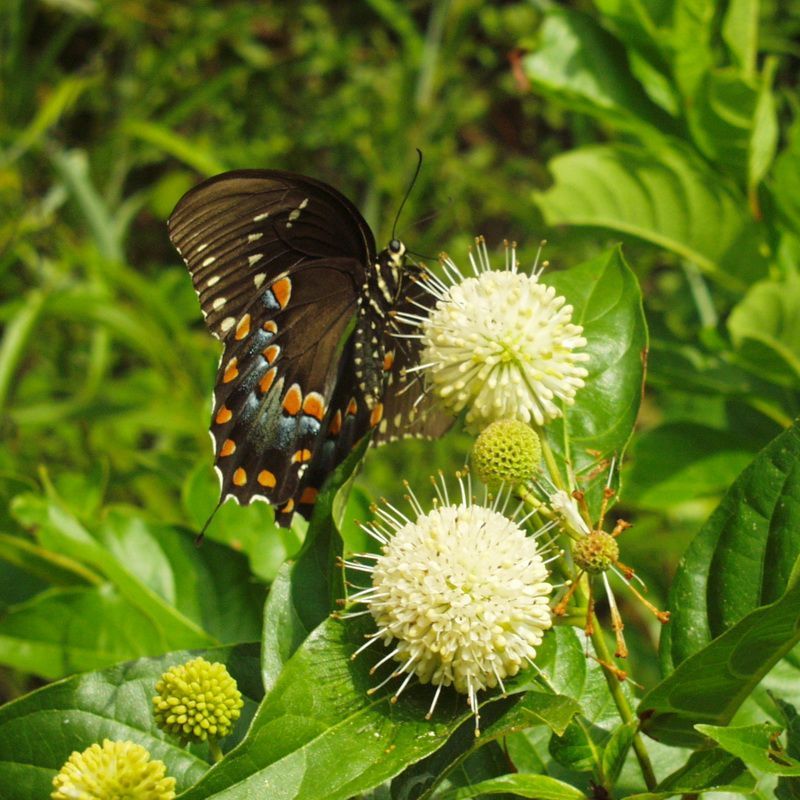
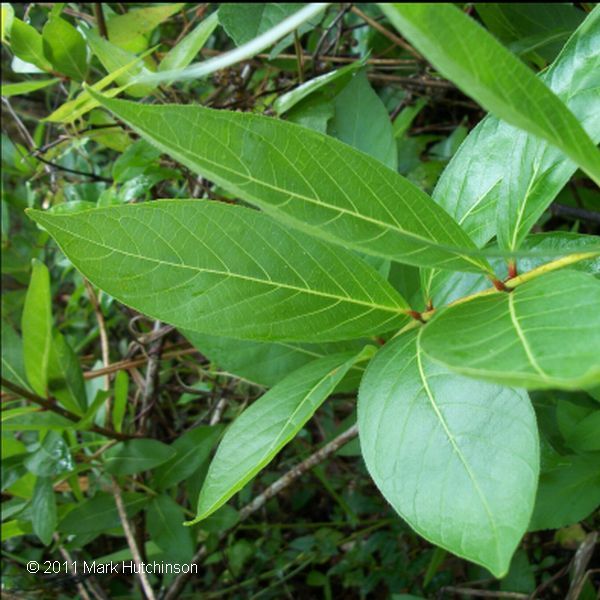
Photographs belong to the photographers who allow use for FNPS purposes only. Please contact the photographer for all other uses.
Nomenclature
Common Name:
buttonbush
Synonym(s):
Genus species:
Cephalanthus occidentalis
Family:
Rubiaceae
Plant Specifics
Form:
shrub
Size:
5-20 ft tall by 4-8 ft wide
Life Span:
long-lived perennial; lifespan likely >50 yrs (Nelson)
Flower Color:
white
Fruit Color:
brown
Phenology:
deciduous; blooms in late spring, with fruits ripening in summer
Noted For:
Landscaping
Recommended Uses:
Wetlands and wetland edges as a specimen plant with a pleasing multi-stemmed vase-shape.
Considerations:
Foliage is poisonous to livestock and humans.
Availability:
Propagation:
Seed or hardwood cuttings. Seed does not need pre-treatment.
Light:
Moisture Tolerance:
Always Flooded------------------------------------------------Extremely Dry
Stays Wet ---to--- Usually moist, occasional inundation
Salt Water Flooding Tolerance:
Not salt tolerant of inundation by salty or brackish water
Salt Spray/Salty Soil Tolerance:
Low/no tolerance of salty wind or direct salt spray
Soil or Other Substrate:
Clay, Loam, Organic (muck), Sand
Soil pH:
slightly acidic to calcareous
Suitable to Grow In:
8A, 8B, 9A, 9B, 10A, 10B, 11

USDA zones are based on the average annual extreme minimum winter temperature.
Don't know your zone? Click here to search by zip code.
Ecology
Wildlife:
Deer browse the foliage. Ducks and other birds including jays, cardinals, nuthatches, titmice, warblers, and mockingbirds consume the seed.
Host plant to several moths including titan sphinx (Aellopos titan) and hydrangea sphinx (Darapsa versicolor) moths (Xerces Society)
Flowers are very attractive to a variety of insects including butterflies and bees.
Native Habitats:
Marshes, swamps, river floodplains
Natural Range in Florida:
Visit the USF Libraries Atlas of Florida Plants
Comments:
Ethnobotany:
Has been used medicinally though there are potential issues. Dried leaves may be poisonous to pets.
General Comments:
Noted for it's round satellite "ball" flowers and round "button" fruits. Fragrant. Sources disagree on salt tolerance of this plant.


Citations:
Nelson, Gil. 2003. Florida's Best Landscape Plants: 200 Readily Available Species for Homeowners and Professionals. University Press of Florida, Gainesville.
Patton, Sean, and Kendall Southworth. 2025. Florida's Aquatic Butterfly Gardens: How to Create a Beautiful Backyard Habitat for Attracting 70+ Species with 100+ Native Plants. Pineapple Press, Palm Beach.
Xerces Society. "Planting for Pollinators: Buttonbush" (blog post). 2017. https://xerces.org/blog/planting-for-pollinators-button-bush , accessed 2025.

