

FNPS Plant Database
Chamaecrista fasciculata
sleeping plant, partridge-pea
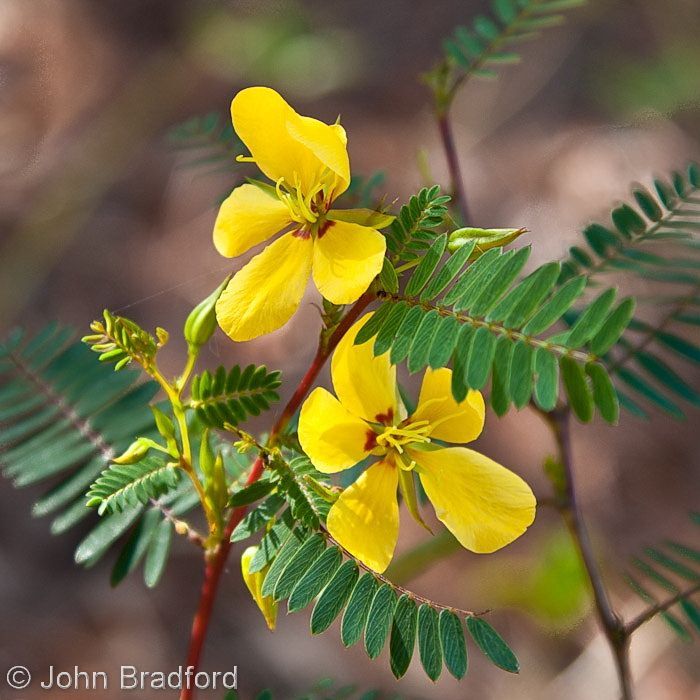
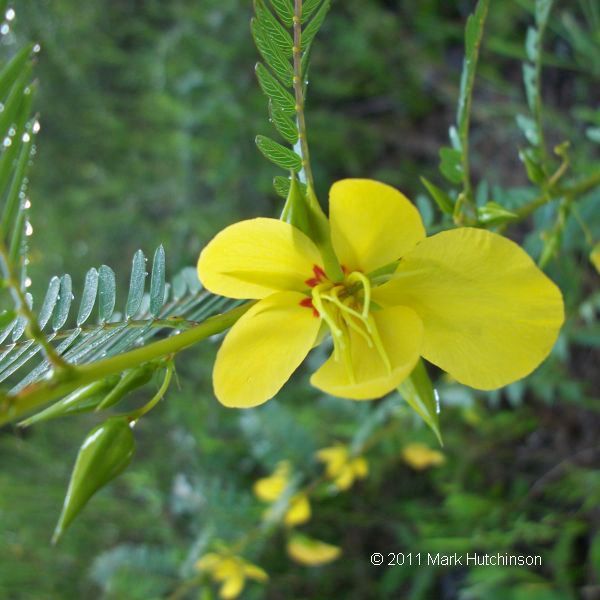
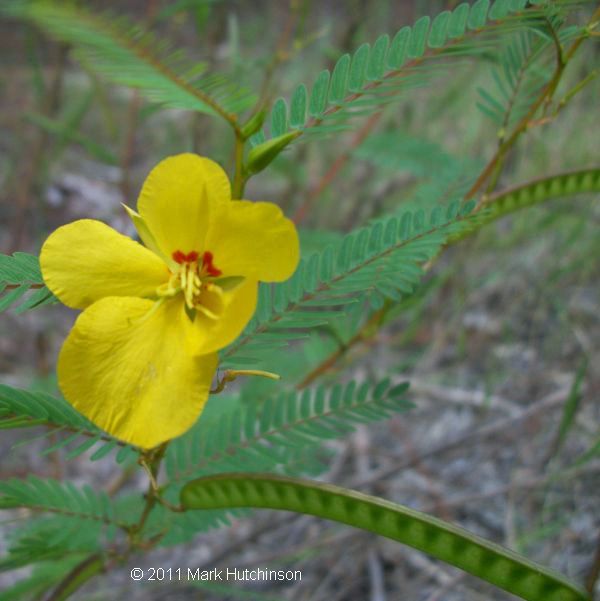
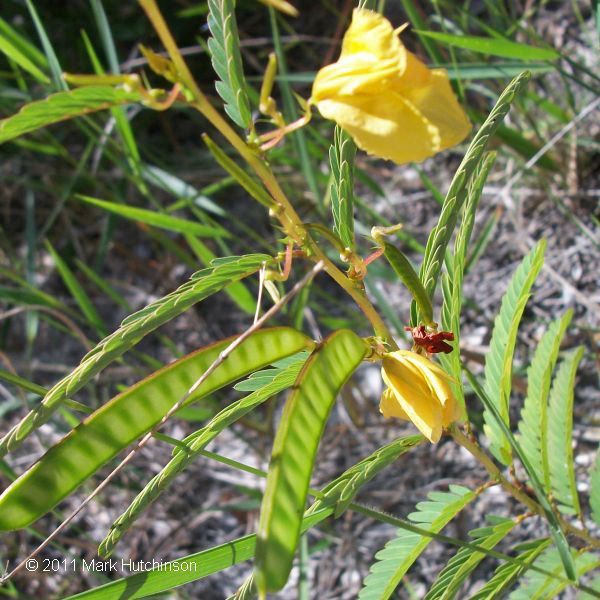
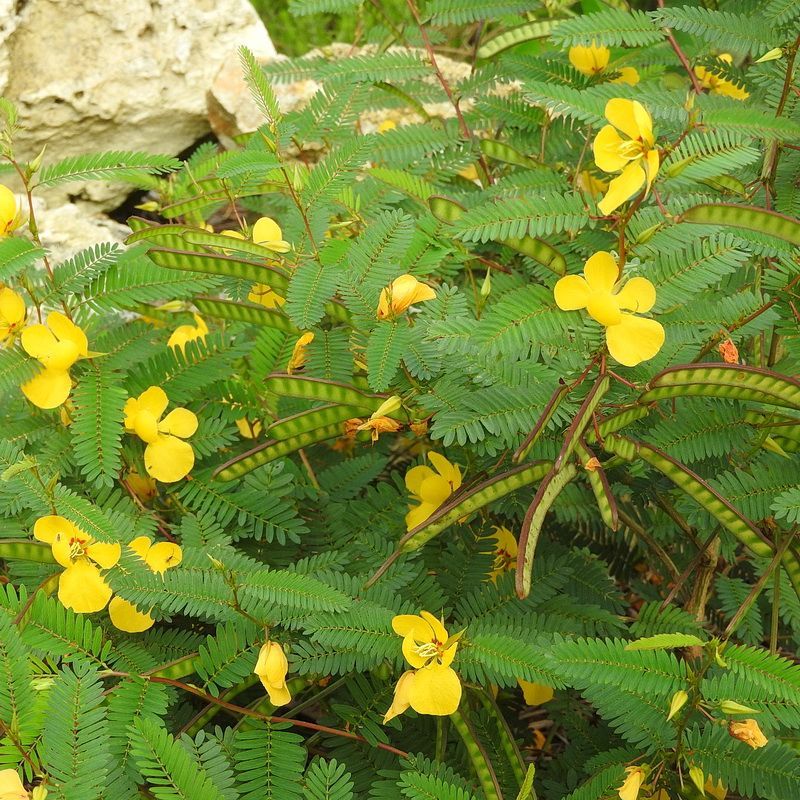
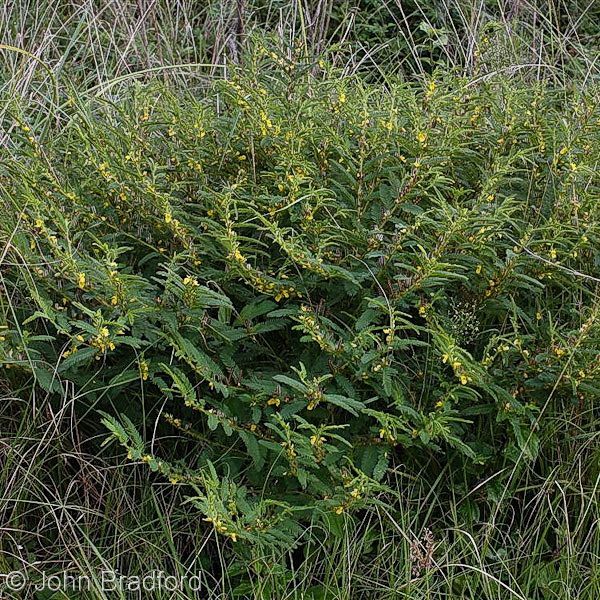
Photographs belong to the photographers who allow use for FNPS purposes only. Please contact the photographer for all other uses.
Nomenclature
Common Name:
sleeping plant, partridge-pea
Synonym(s):
Cassia fasciculata
Genus species:
Chamaecrista fasciculata
Family:
Fabaceae (Leguminosae)
Plant Specifics
Form:
flower
Size:
to 3 ft tall by 3 ft wide
Life Span:
annual
Flower Color:
yellow
Fruit Color:
green, brown
Phenology:
seeds germinate in early spring, blooms late spring, finished with reproduction by early fall and reseeds
Noted For:
Landscaping
Recommended Uses:
Sometimes used for erosion control. Good in casual garden settings, especially useful for butterfly gardens, because it's a larval food for so many species of butterflies. It's a legume and tolerates poor soil.
Considerations:
Availability:
Propagation:
Seeds are available through the Florida Wildflowers Growers Cooperative.
Light:
Moisture Tolerance:
Always Flooded------------------------------------------------Extremely Dry
Not wet but not extremely dry ---to--- Very long very dry periods
Salt Water Flooding Tolerance:
Not salt tolerant of inundation by salty or brackish water
Salt Spray/Salty Soil Tolerance:
Some tolerance to salty wind but not direct salt spray
Soil or Other Substrate:
Sand
Soil pH:
Suitable to Grow In:
8A, 8B, 9A, 9B, 10A, 10B

USDA zones are based on the average annual extreme minimum winter temperature.
Don't know your zone? Click here to search by zip code.
Ecology
Wildlife:
Birds and other wildlife consume seed which is reported to be particularly important for the bobwhite.
Larval host for cloudless sulfur (Phoebis senna), gray hairstreak (Strymon melinus), orange sulphur (Colias eurytheme), sleepy orange (Abaeis nicippe), little yellow (Eurema lisa) and ceraunus blue (Hemiargus ceraunus) butterflies.
Long-tongued bees are responsible for pollination of the flowers, which includes such visitors as honeybees, bumblebees, long-horned bees (Melissodes spp.), and leaf-cutting bees (Megachile spp.). They are attracted to the food pollen of the purple anthers, and are then dusted by the reproductive pollen of the yellow anthers. Two species of bees, Anthophora walshii and Svastra atripes atripes, are oligoleges of partridge-pea. Sometimes leaf-cutting bees cut off portions of the petals for their brood chambers. The flowers are usually cross-pollinated by insects, but sometimes they are self-pollinating. (Illinois Wildflowers).
Petiolar nectaries attract Halictid bees, wasps, flies, and ants). Unusual visitors to the nectaries are velvet ants (Mutillidae), which are hairy wingless femal wasps. (Illinois Wildflowers)
Bee species documented in Florida include Azcgochlora pura, Augochloropsis inetallica, A. sumnptuosa, Dialictzcs coreopsis, D. miniatulus, Megachile brevis pseudobrevis, M mendica, Bolnbz~s impatiens, and Xylocopa micarzs (Deyrup et al. 2002).
Native Habitats:
Scrub, high pine (sandhill, clayhill), dry flatwoods, dunes, open disturbed areas where seed is available.
Natural Range in Florida:
Visit the USF Libraries Atlas of Florida Plants
Comments:
Ethnobotany:
Sometimes grown to attract bees (for honey).
General Comments:
Sources disagree on the salt tolerance of this species.



Citations:
Deyrup, Mark, Jayanthi Edirisinghe, and Beth Norden. 2002. The diversity and floral hosts of bees at the Archbold Biological Station, Florida (Hymenoptera: Apoidea). 16.
Minno, Marc and Maria Minno. 1999. Florida Butterfly Gardening: A Complete Guide to Attracting, Identifying, and Enjoying Butterflies. University Press of Florida, Gainesville.
Prairie Wildflowers of Illinois. "Partridge Pea" (blog post). Undated. https://www.illinoiswildflowers.info/prairie/plantx/part_peax.htm , accessed 2025.

