
FNPS Plant Database
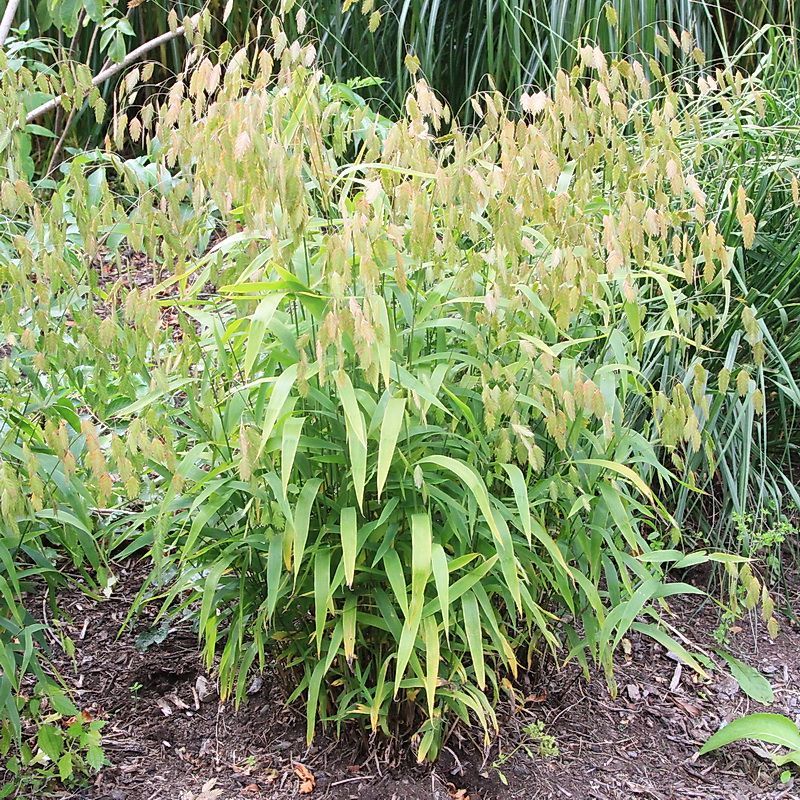
Chasmanthium latifolium
indian woodoats, spikegrass
Photographs belong to the photographers who allow use for FNPS purposes only. Please contact the photographer for all other uses.
Nomenclature
Common Name:
indian woodoats, spikegrass
Synonym(s):
Genus species:
Chasmanthium latifolium
Family:
Poaceae (Gramineae)
Plant Specifics
Form:
grass
Size:
2-4 ft
Life Span:
short-lived perennial
Flower Color:
green
Fruit Color:
brown
Phenology:
winter dormant
Noted For:
Landscaping
Recommended Uses:
Groundcover or border plant in shady areas.
Considerations:
It reseeds easily and can expand aggressively.
Availability:
Propagation:
seed
Light:
Moisture Tolerance:
Always Flooded------------------------------------------------Extremely Dry
Usually moist, occasional inundation ---to--- Not wet but not extremely dry
Salt Water Flooding Tolerance:
Not salt tolerant of inundation by salty or brackish water
Salt Spray/Salty Soil Tolerance:
Low/no tolerance of salty wind or direct salt spray
Soil or Other Substrate:
Loam, Sand
Soil pH:
neutral to slightly acidic
Suitable to Grow In:
8A, 8B

USDA zones are based on the average annual extreme minimum winter temperature.
Don't know your zone? Click here to search by zip code.
Ecology
Wildlife:
Birds and other wildlife consume seed.
Larval host for pepper and salt skipper (Amblyscirtes hegon), common roadside skipper (Amblyscirtes vialis), and Bell's roadside skipper (Amblyscirtes belli). Possible host for Carolina satyr (Hermeuptychia sosybius).
Native Habitats:
Dry-moist sites. Bluffs, floodplains, wet hammocks.
Natural Range in Florida:
Visit the USF Libraries Atlas of Florida Plants
Comments:
Ethnobotany:
Seed stalks are attractive in flower arrangements.
General Comments:



Citations:
Huegel, Craig N. 2012. Native Wildflowers and Other Ground Covers for Florida Landscapes. University Press of Florida, Gainesville.
Taylor, Walter K. 2009. A Guide to Florida Grasses. University Press of Florida, Gainesville.

