FNPS Plant Database
Chionanthus pygmaeus
pigmy fringe tree
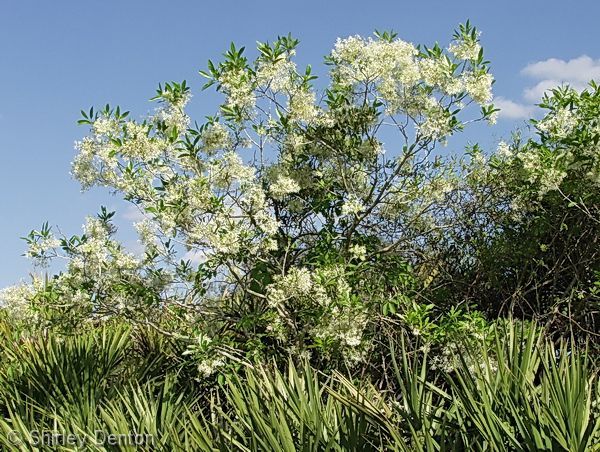
Photographs belong to the photographers who allow use for FNPS purposes only. Please contact the photographer for all other uses.
Nomenclature
Common Name:
pigmy fringe tree
Synonym(s):
Genus species:
Chionanthus pygmaeus
Family:
Oleaceae
Plant Specifics
Form:
tree
Size:
10-12 ft tall by 10 ft wide
Life Span:
long-lived perennial
Flower Color:
white
Fruit Color:
brown
Phenology:
deciduous; flowers emerge before leaves in spring, and leaves fall early in the fall
Noted For:
Landscaping
Recommended Uses:
specimen plant
Considerations:
This tree is listed as as Endangered by both the State of Florida and the US Fish & Wildlife Service. Make sure you acquire this species from a legitimate native nursery and that all permit requirements are met.
Availability:
Propagation:
Stratified seed. Piygmy fringe tree is dioecious, so both a male and female tree are needed to produce seed.
Light:
Moisture Tolerance:
Always Flooded------------------------------------------------Extremely Dry
Not wet but not extremely dry ---to--- Very long very dry periods
Salt Water Flooding Tolerance:
Not salt tolerant of inundation by salty or brackish water
Salt Spray/Salty Soil Tolerance:
Low/no tolerance of salty wind or direct salt spray
Soil or Other Substrate:
Sand
Soil pH:
Suitable to Grow In:
9A, 9B

USDA zones are based on the average annual extreme minimum winter temperature.
Don't know your zone? Click here to search by zip code.
Ecology
Wildlife:
fruit used by birds
probably bee pollinated
Native Habitats:
Scrub and scrubby flatwoods
Natural Range in Florida:
Visit the USF Libraries Atlas of Florida Plants
Comments:
Ethnobotany:
General Comments:
Emerald ash borer is a problem in the northeast and if it reaches Florida, it would likely be lethal to this species.