FNPS Plant Database
Chrysopsis floridana
Florida goldenaster
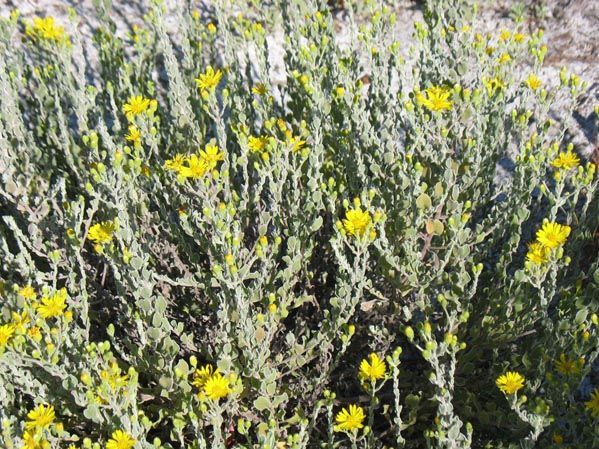
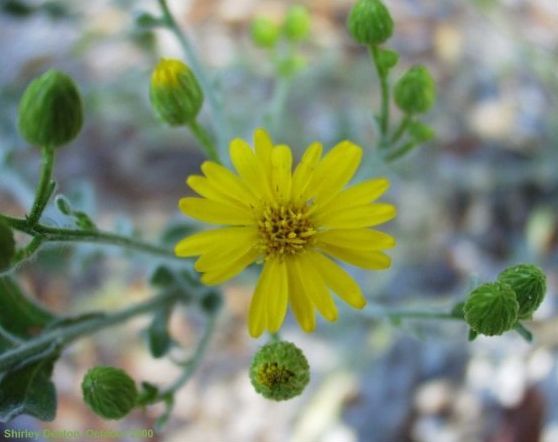
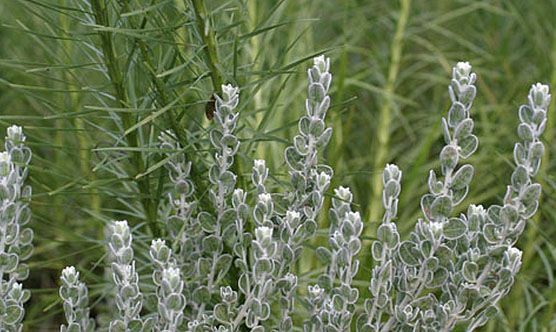
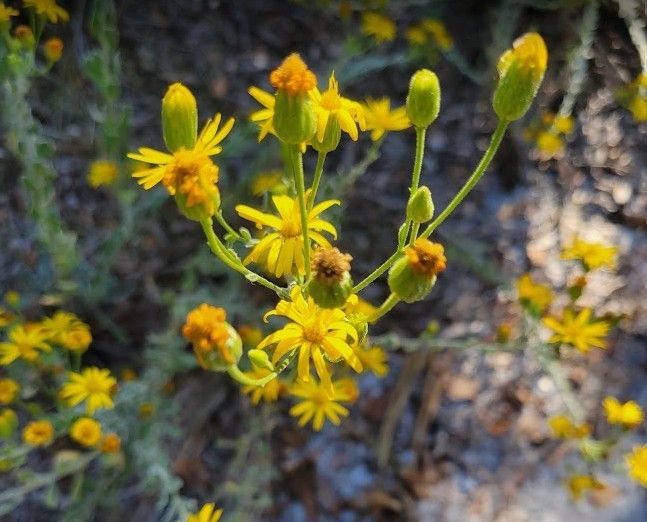
Photographs belong to the photographers who allow use for FNPS purposes only. Please contact the photographer for all other uses.
Nomenclature
Common Name:
Florida goldenaster
Synonym(s):
Genus species:
Chrysopsis floridana
Family:
Asteraceae (Compositae)
Plant Specifics
Form:
flower
Size:
2 ft tall by 1-2 ft wide
Life Span:
short-lived perennial
Flower Color:
yellow
Fruit Color:
brown
Phenology:
foliage is evergreen, but flowering stems do die back in winter; blooms late-October and November, seeds in late-November to early-December
Noted For:
Landscaping
Recommended Uses:
Garden location where its silvery, young foliage is visible but not where its somewhat weedy look at time of flowering (November) will be an issue.
Considerations:
This species is listed as Endangered by the US Fish & Wildlife Service and the State of Florida. Please plant responsibly.
Availability:
Propagation:
Easily established from seed. Plant in December in sandy area at time of seed maturity.
Light:
Moisture Tolerance:
Always Flooded------------------------------------------------Extremely Dry
Not wet but not extremely dry ---to--- Very long very dry periods
Salt Water Flooding Tolerance:
Not salt tolerant of inundation by salty or brackish water
Salt Spray/Salty Soil Tolerance:
Low/no tolerance of salty wind or direct salt spray
Soil or Other Substrate:
Sand
Soil pH:
acidic to neutral
Suitable to Grow In:
9A, 9B

USDA zones are based on the average annual extreme minimum winter temperature.
Don't know your zone? Click here to search by zip code.
Ecology
Wildlife:
Primarily wind dispersed, but small birds consume seed.
Butterflies and bees including green metallic, sweat, leafcutter, bumble and mining bees (Florida Wildflower Foundation).
Native Habitats:
Scrub. In openings and open ecotones. Disturbance is required for persistence of this species. This species can be seen at the Balm-Boyette, Alafia Scrub, and Golden Aster preserves in Hillsborough County.
Natural Range in Florida:
Visit the USF Libraries Atlas of Florida Plants
Comments:
Ethnobotany:
General Comments:
Foliage is showy, silvery gray green. Takes on a weed appearance at flowering time. This is an Endangered Florida endemic; do not harvest plants from the wild.



Citations:
20 Easy-to-Grow Wildflowers. 2023. Florida Wildflower Foundation, Maitland, FL.
Chafin, L. G. 2000. Field Guide to the Rare Plants of Florida. Florida Natural Areas Inventory, Tallahassee, Florida.
Florida goldenaster ( Chrysopsis floridana ) (plant profile). https://saveplants.org/plant-profile/937/Chrysopsis-floridana/Florida-Goldenaster/ , accessed 2025. Center for Plant Conservation, Wildomar, CA.

