
FNPS Plant Database
Cladium jamaicense
sawgrass
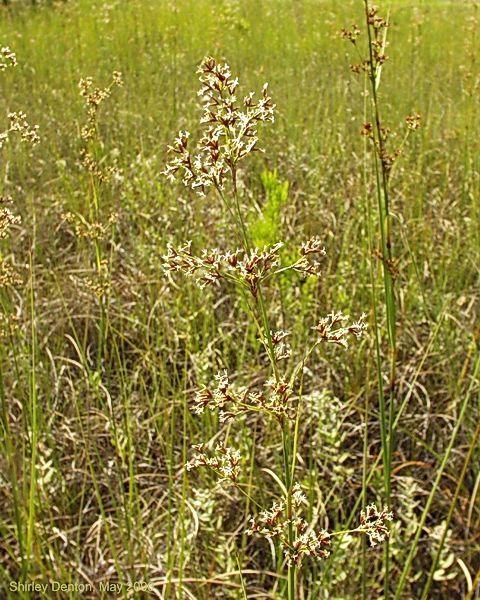
Photographs belong to the photographers who allow use for FNPS purposes only. Please contact the photographer for all other uses.
Nomenclature
Common Name:
sawgrass
Synonym(s):
Genus species:
Cladium jamaicense
Family:
Cyperaceae
Plant Specifics
Form:
grass
Size:
3-6 (10) ft tall, wide-spreading
Life Span:
long-lived perennial
Flower Color:
green
Fruit Color:
brown
Phenology:
evergreen
Noted For:
Landscaping
Recommended Uses:
Typically used in wetland restoration. Also useful for planting in brackish settings where an emergent aquatic is desired. Spreads rapidly to cover large areas.
Considerations:
Blades have sharp edges... hence the common name. Best planted where people will not brush by it.
Availability:
Propagation:
division, seed
Light:
Moisture Tolerance:
Always Flooded------------------------------------------------Extremely Dry
Stays wet ---to--- Tolerant of inundation with brackish water
Salt Water Flooding Tolerance:
Tolerant of inundation with brackish water
Salt Spray/Salty Soil Tolerance:
High. Can tolerate significant and ongoing amounts of salty wind and salt spray without injury.
Soil or Other Substrate:
Clay, Loam, Organic (muck), Lime Rock, Sand
Soil pH:
Suitable to Grow In:
8A, 8B, 9A, 9B, 10A, 10B, 11

USDA zones are based on the average annual extreme minimum winter temperature.
Don't know your zone? Click here to search by zip code.
Ecology
Wildlife:
Larval host of the Palatka skipper (Euphyes pilatka).
Native Habitats:
Swamps, marshes, shores of water bodies, common in coastal marsh, glades, cypress prairie
Natural Range in Florida:
Visit the USF Libraries Atlas of Florida Plants
Comments:
Ethnobotany:
General Comments:
Sawgrass is a sedge, not a grass. It was this plant that Marjory Stoneman Douglas referred to in her seminal work, The Everglades: River of Grass.
A second species (C. mariscoides) occurs in a limited area in north Florida. Its uses and culture are similar.