
FNPS Plant Database
Clusia rosea
pitch-apple, autograph tree
Photographs belong to the photographers who allow use for FNPS purposes only. Please contact the photographer for all other uses.
Nomenclature
Common Name:
pitch-apple, autograph tree
Synonym(s):
Genus species:
Clusia rosea
Family:
Clusiaceae
Plant Specifics
Form:
tree
Size:
25-50 ft
Life Span:
long-lived perennial
Flower Color:
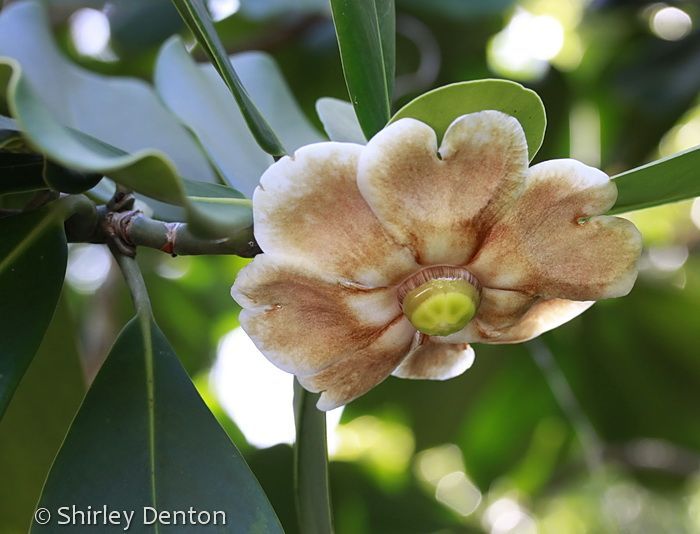
white, pink
Fruit Color:
orange, green
Phenology:
evergreen, blooms in warmer months
Noted For:
Landscaping
Recommended Uses:
Specimen tree. Flowers are open at night.
Considerations:
Easily spread by birds so it can become somewhat of a pest. Not recommended for general landscape use by the Institute for Regional Conservation: "Native only to the lower Florida Keys, where it was probably extirpated and then reintroduced from cultivated plants."
Availability:
Propagation:
seed
Light:
Moisture Tolerance:
Always Flooded------------------------------------------------Extremely Dry
Usually moist, occasional inundation ---to--- Very long very dry periods
Salt Water Flooding Tolerance:
Tolerant of occasional/brief inundation such as can occur in storm surges
Salt Spray/Salty Soil Tolerance:
High. Can tolerate significant and ongoing amounts of salty wind and salt spray without injury.
Soil or Other Substrate:
Sand, Lime Rock, Humus (organic, upland)
Soil pH:
calcareous
Suitable to Grow In:
10A, 10B, 11

USDA zones are based on the average annual extreme minimum winter temperature.
Don't know your zone? Click here to search by zip code.
Ecology
Wildlife:
dense foliage creates cover for birds and other wildlife
can produce seed without pollination
Native Habitats:
Cultivated. According to Wunderlin (1998), probably native, but may not exist outside of cultivation today. Xeric and dry mesic hammocks, scrub.
Natural Range in Florida:
Visit the USF Libraries Atlas of Florida Plants
Comments:
Ethnobotany:
The black material surrounding the seeds was once used to caulk the seams of boats leading to the name pitch apple.
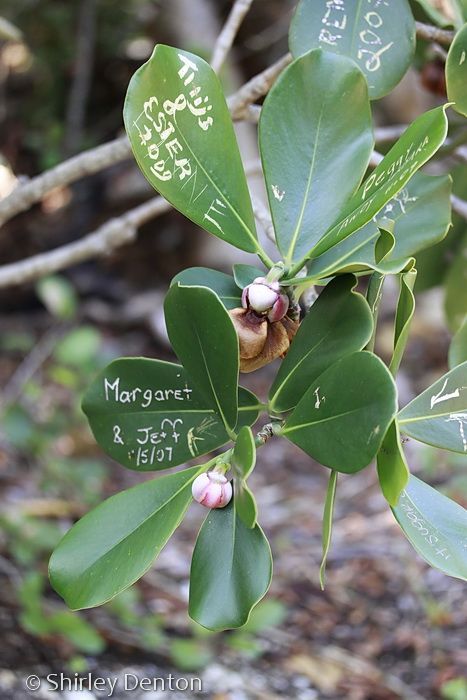
The leathery leaves can be scratched with the scratches remaining on the leaves until they fall -- thus autograph tree..
General Comments:
This Florida native has been introduced into Hawaii where it is extremely invasive. In fact, it has earned the distinction of being listed in the Global Compendium of Weeds.
In Florida, it is known to naturalize into areas near where it has been planted. Avoiding the use of this in landscape settings where it could escape is recommended.



Citations:
Gann, G.D., C.J. Abbott, C.G. Stocking, K.N. Hines, and collaborators. Natives For Your Neighborhood. https://www.regionalconservation.org/beta/nfyn/plantdetail.asp?tx=Clusrose&tx=Clusrose, accessed 2025. The Institute for Regional Conservation. Delray Beach, Florida.
Workman, Richard W. 1980. Growing Native: Native Plants for Landscape Use in Coastal South Florida. Sanibel-Captiva Conservation Foundation, Inc.: Sanibel, FL.

