
FNPS Plant Database
Coccoloba diversifolia
pigeon plum
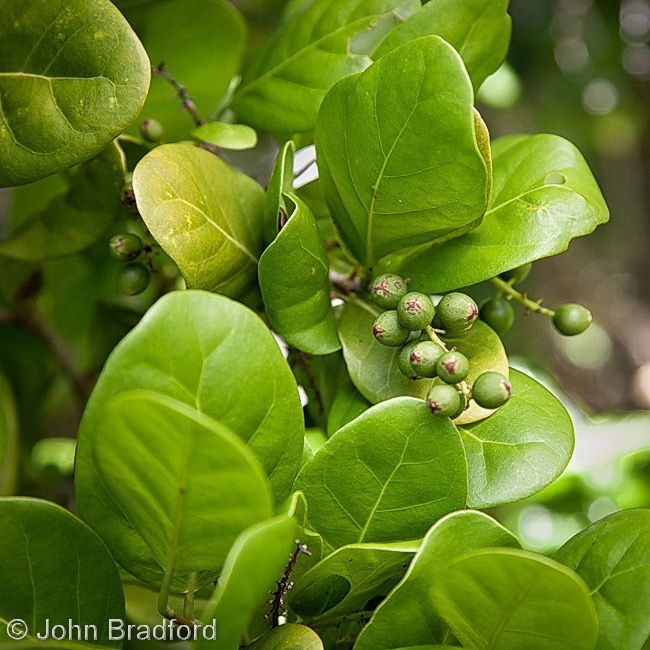
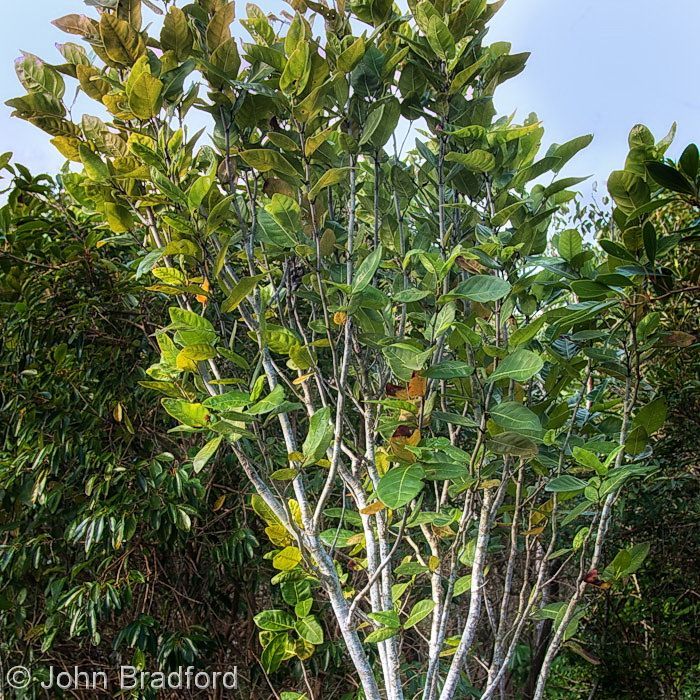
Photographs belong to the photographers who allow use for FNPS purposes only. Please contact the photographer for all other uses.
Nomenclature
Common Name:
pigeon plum
Synonym(s):
Genus species:
Coccoloba diversifolia
Family:
Polygonaceae
Plant Specifics
Form:
shrub
Size:
30-40 (60) ft tall by 10-20 ft wide
Life Span:
long-lived perennial; relatively long-lived (Nelson 2003)
Flower Color:
white, yellow
Fruit Color:
purple
Phenology:
evergreen; blooms year-round, but predominantly spring-summer
Noted For:
Landscaping
Recommended Uses:
Shade tree. Narrow crown is said to make it a good choice for avenues, narrow entryways, and areas between houses. Can be used as a large container plant.
Considerations:
Availability:
Propagation:
seed
Light:
Moisture Tolerance:
Always Flooded------------------------------------------------Extremely Dry
Somewhat moist, no flooding ---to--- Short very dry periods
Salt Water Flooding Tolerance:
Not salt tolerant of inundation by salty or brackish water
Salt Spray/Salty Soil Tolerance:
Some tolerance to salty wind but not direct salt spray
Soil or Other Substrate:
Humus (organic, upland), Sand
Soil pH:
Suitable to Grow In:
9B, 10A, 10B, 11

USDA zones are based on the average annual extreme minimum winter temperature.
Don't know your zone? Click here to search by zip code.
Ecology
Wildlife:
Fruits are used by birds and other wildlife.
Nectar plant for large orange sulphur (Phoebis agarithe), Schaus' swallowtail (Papilio aristodemus ponceanus) and other butterflies.
Pollinated by bees.
Native Habitats:
Coastal uplands
Natural Range in Florida:
Visit the USF Libraries Atlas of Florida Plants
Comments:
Ethnobotany:
The Miccosukee Indians of the Big Cypress Swamp are reported to relish the fruit, and they are also popular in outdoor markets in the Caribbean. Juice from the fruit is supposed to make a very good jelly and a fine wine (Osorio, 2001).
General Comments:


Citations:
Austin, Daniel, Penelope N. Honychurch, and Steve Bass. 1997. Coastal Hammock & Mangrove Guide. Gumbo Limbo Nature Center, Boca Raton.
Lantz, Peggy S. 2014. Florida's Edible Wild Plants: A Guide to Collecting and Cooking. University Press of Florida, Gainesville.
Osorio, Rufino. 2001. A Gardener's Guide to Florida's Native Plants. University Press of Florida, Gainesville.

