
FNPS Plant Database
Coccoloba uvifera
seagrape
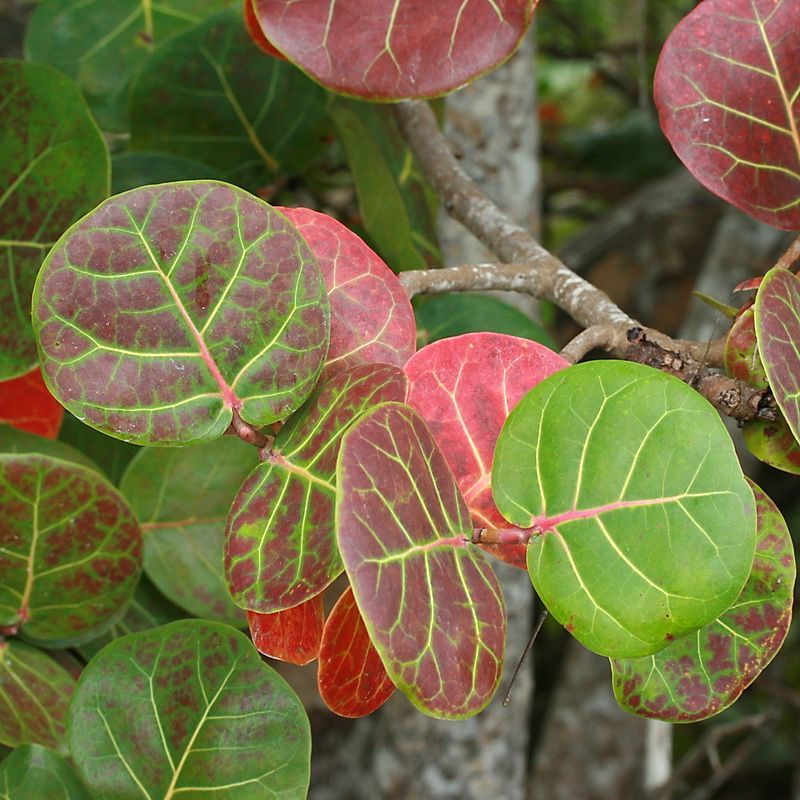
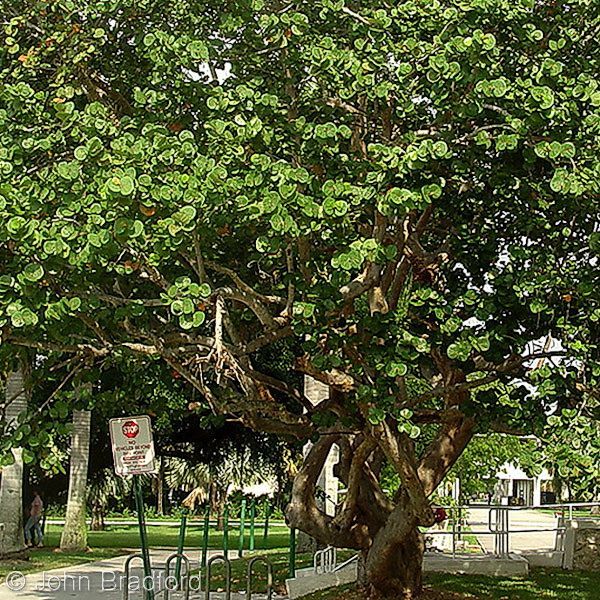
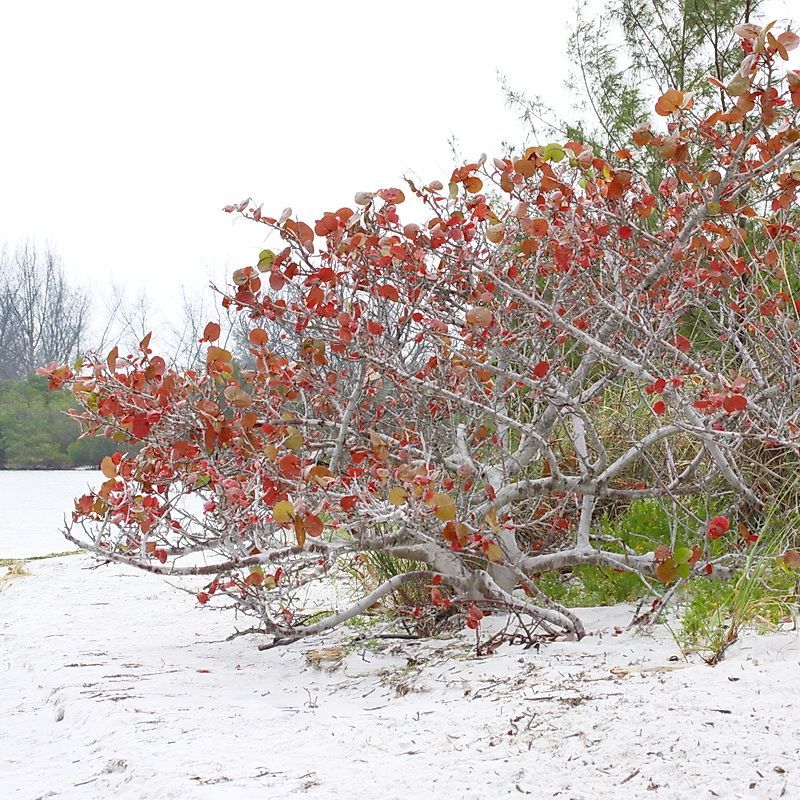
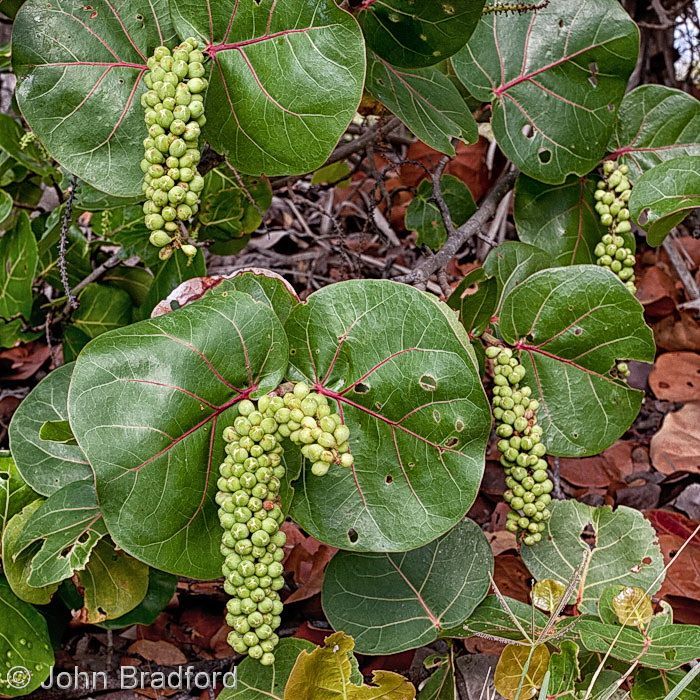
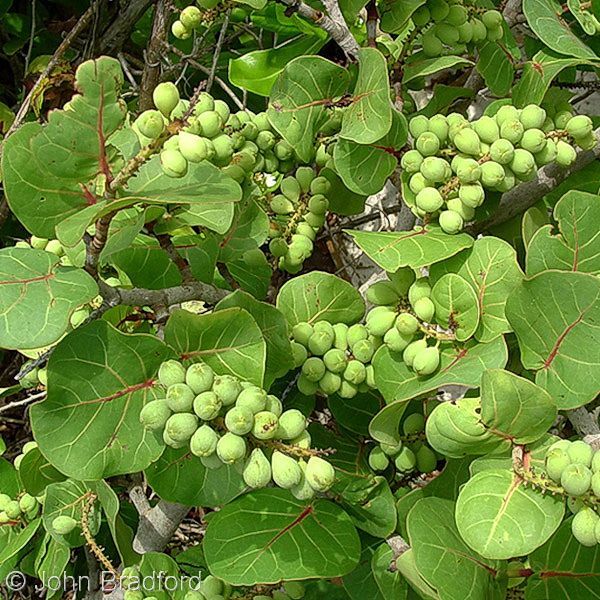
Photographs belong to the photographers who allow use for FNPS purposes only. Please contact the photographer for all other uses.
Nomenclature
Common Name:
seagrape
Synonym(s):
Genus species:
Coccoloba uvifera
Family:
Polygonaceae
Plant Specifics
Form:
tree
Size:
10-50 ft ft tall by 3-35 ft ft wide
Life Span:
long-lived perennial; moderately long lived (Nelson 2003)
Flower Color:
white
Fruit Color:
green, black
Phenology:
deciduous; blooms predominantly in spring, with fruit ripening by late summer
Noted For:
Landscaping
Recommended Uses:
Works well as a specimen plant. Its thick, large leaves make it stand out from most other plants in the landscape. Very useful in settings subject to salt spray.
Considerations:
Fast growing, tends to sprawl. Very cold sensitive if planted inland from the coast even in the counties noted as its range. Unless cold is extreme, it will sprout back from the root. May be damaged by hurricanes, but sprouts back quickly. Leaves take a long time to decompose, so plant where leaf litter is not a problem.
Availability:
Propagation:
layering, seed
Light:
Moisture Tolerance:
Always Flooded------------------------------------------------Extremely Dry
Somewhat moist, no flooding ---to--- Very long very dry periods
Salt Water Flooding Tolerance:
Tolerant of occasional/brief inundation such as can occur in storm surges
Salt Spray/Salty Soil Tolerance:
High. Can tolerate significant and ongoing amounts of salty wind and salt spray without injury.
Soil or Other Substrate:
Sand
Soil pH:
adaptable
Suitable to Grow In:
9B, 10A, 10B, 11

USDA zones are based on the average annual extreme minimum winter temperature.
Don't know your zone? Click here to search by zip code.
Ecology
Wildlife:
Birds and other wildlife consume fruit
Nectar plant for Florida duskywing (Ephyriades brunneus), julia (Dryas iulia), Schaus' swallowtail (Papilio aristodemus ponceanus), the introduced fulvous hairstreak (Electrostrymon angelica), and other butterflies. Attracts bee pollinators.
Native Habitats:
Coastal uplands
Natural Range in Florida:
Visit the USF Libraries Atlas of Florida Plants
Comments:
Ethnobotany:
Fruits are edible with sweet-sour flavor sometimes used to make jams and jellies. It is possible to make wine from the fruits. The resin of the bark has been used in tanning and dyeing.
General Comments:
can be pruned


Citations:
Austin, Daniel, Penelope N. Honychurch, and Steve Bass. 1991. Coastal Dune Plants. Gumbo Limbo Nature Center, Boca Raton.
Lantz, Peggy S. 2015. Florida's Edible Wild Plants: A Guide to Collecting and Cooking. University Press of Florida, Gainesville.
Nelson, Gil. 2003. Florida's Best Landscape Plants: 200 Readily Available Species for Homeowners and Professionals. University Press of Florida, Gainesville.
Osorio, Rufino. 2001. A Gardener's Guide to Florida's Native Plants. University Press of Florida, Gainesville.
Workman, Richard W. 1980. Growing Native: Native Plants for Landscape Use in Coastal South Florida. Sanibel-Captiva Conservation Foundation, Inc.: Sanibel, FL.

