FNPS Plant Database
Adiantum capillus-veneris
Venus maidenhair fern, southern maidenhair fern
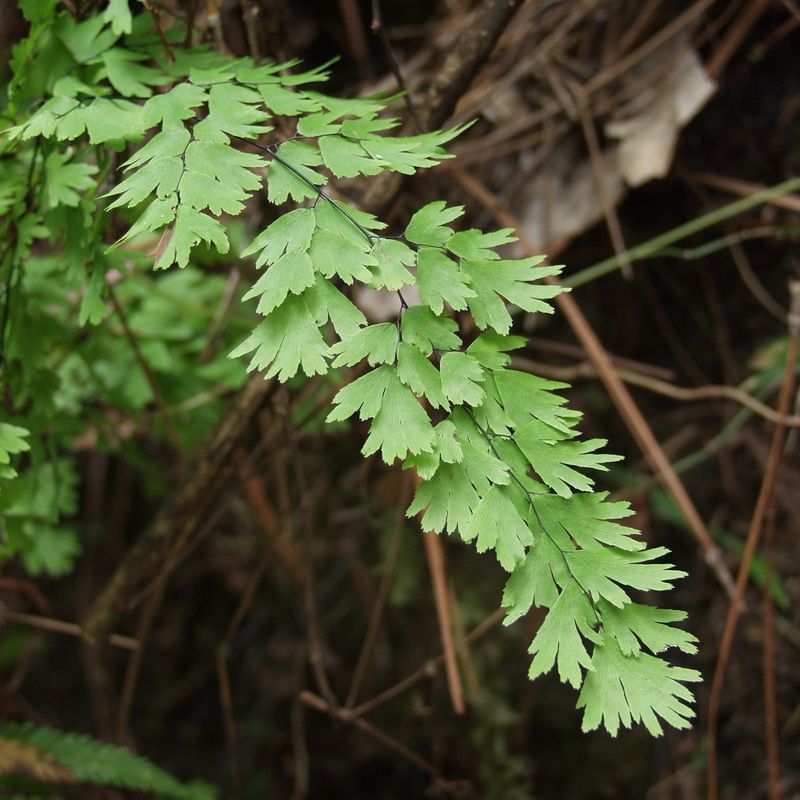
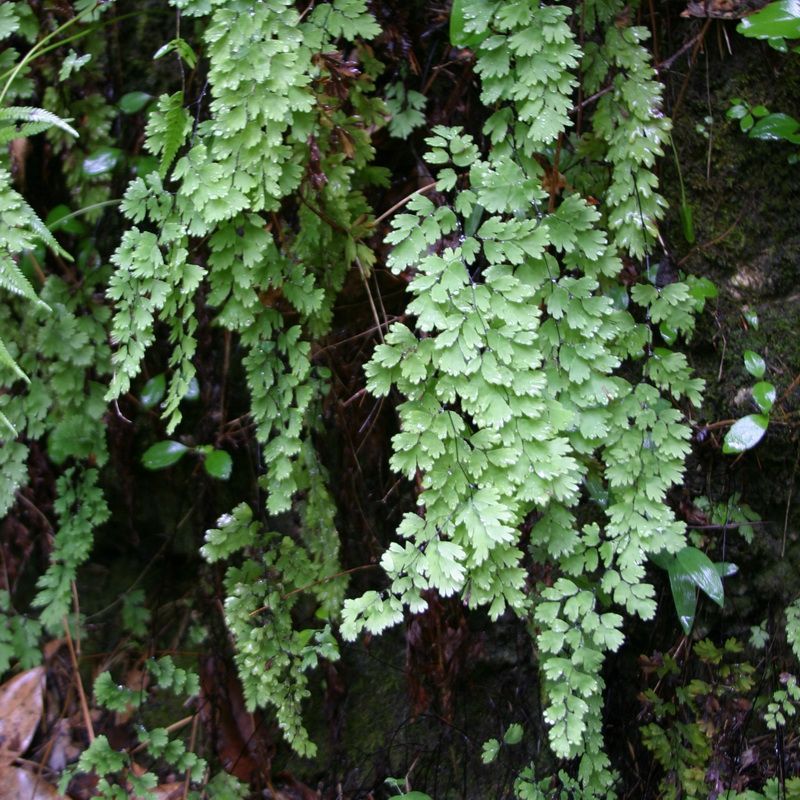
Photographs belong to the photographers who allow use for FNPS purposes only. Please contact the photographer for all other uses.
Nomenclature
Common Name:
Venus maidenhair fern, southern maidenhair fern
Synonym(s):
Genus species:
Adiantum capillus-veneris
Family:
Pteridaceae
Plant Specifics
Form:
Size:
Life Span:
Flower Color:
Fruit Color:
Phenology:
evergreen
Noted For:
Landscaping
Recommended Uses:
Small specimen plant or groundcover. Also grows well as a container plant. A good addition to a rock garden. Prefers settings that are well drained but moist (Osorio 2001). Note that the range as shown is where limestore is is near the surface. If you plant it near concrete or limestone, it should do well throughout Florida.
Considerations:
Availability:
Propagation:
Light:
Moisture Tolerance:
Always Flooded------------------------------------------------Extremely Dry
-|----
<------------------->
Usually moist, occasional inundation ---to--- Not wet but not extremely dry
Salt Water Flooding Tolerance:
Not salt tolerant of inundation by salty or brackish water.
Salt Spray/Salty Soil Tolerance:
Low/no tolerance of salty wind or direct salt spray
Soil or Other Substrate:
Clay, Lime Rock, Sand
Soil pH:
calcareous (high pH)
Suitable to Grow In:
8A, 8B, 9A, 9B, 10A

USDA zones are based on the average annual extreme minimum winter temperature.
Don't know your zone? Click here to search by zip code.
Ecology
Wildlife:
Native Habitats:
Moist hammocks; can grow attached to rock outcroppings if moisture is consistently present in the area.
Natural Range in Florida:
Visit the USF Libraries Atlas of Florida Plants
Comments:
Ethnobotany:
General Comments:



Citations:
Huegel, Craig N. 2012. Native Wildflowers and Other Ground Covers for Florida Landscapes. University Press of Florida, Gainesville.
North Carolina Extension Gardener Plant Toolbox. https://plants.ces.ncsu.edu/plants/adiantum-capillus-veneris/ , accessed 2025. North Carolina State University, Raleigh.
Osorio, Rufino. 2001. A Gardener's Guide to Florida's Native Plants. University Press of Florida, Gainesville.
Wunderlin, R. P., B. F. Hansen, A. R. Franck, and F. B. Essig. 2021. Atlas of Florida Plants ( https://florida.plantatlas.usf.edu/ ). Institute for Systematic Botany, University of South Florida, Tampa.

