
FNPS Plant Database
Asimina triloba
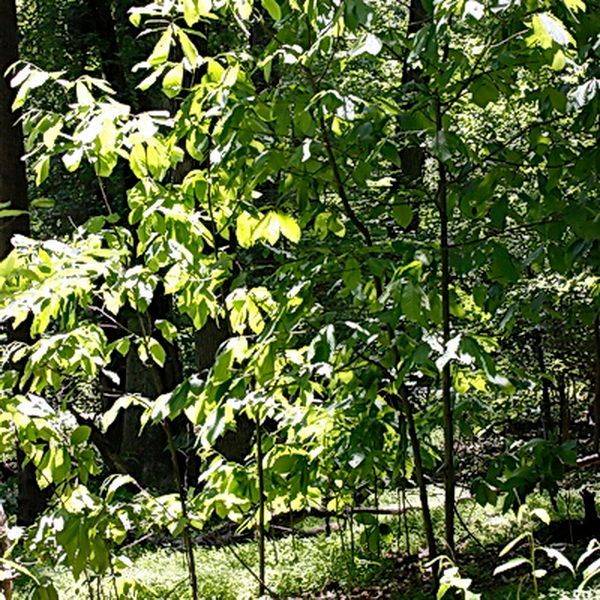
Photographs belong to the photographers who allow use for FNPS purposes only. Please contact the photographer for all other uses.
Nomenclature
Common Name:
Synonym(s):
Genus species:
Asimina triloba
Family:
Annonaceae
Plant Specifics
Form:
Size:
15-20 ft, may be clonal
Life Span:
Flower Color:
Fruit Color:
Phenology:
Noted For:
Landscaping
Recommended Uses:
Considerations:
Availability:
Propagation:
Light:
Moisture Tolerance:
Always Flooded------------------------------------------------Extremely Dry
-|----|----|--
<------------------------> ----|----|----|----|-
Stays Wet ---to--- Not wet but not extremely dry
Salt Water Flooding Tolerance:
Not salt tolerant of inundation by salty or brackish water
Salt Spray/Salty Soil Tolerance:
Low/no tolerance of salty wind or direct salt spray
Soil or Other Substrate:
Loam, Sand
Soil pH:
Suitable to Grow In:
8A, 8B, 9A, 9B

USDA zones are based on the average annual extreme minimum winter temperature.
Don't know your zone? Click here to search by zip code.
Ecology
Wildlife:
Native Habitats:
River floodplains, predominantly to the north of Florida. In most of Florida, Asimina parviflora would be more appropriate yet very similar in appearance.
Natural Range in Florida:
Visit the USF Libraries Atlas of Florida Plants
Comments:
Ethnobotany:
Fruits edible. According to Epps (2019), the fruit of Asimina triloba is the largest edible fruit native to the U.S. and can weigh up to a pound although 5 to 7 ounces is more typical. They also suggest that with the possible exception of the black bear, the seeds are too large to be ingested by modern north American mammals. They conjecture that the primary spreader of the seeds was humans.
General Comments:



Citations:
Epps, Mary Lee. 2019. Pawpaws and the zebra swallowtail butterfly. (blog post). https://vnps.org/paw-paws-and-the-zebra-swallowtail-butterfly/ , accessed 2025. Virginia Native Plant Society, Boyce, VA.
Haehle, Robert G. and Joan Brookwell. 1999. Native Florida Plants. Gulf Publishing Company. Houston, TX.
Huegel, Craig N. 2010. Native Plant Landscaping for Florida Wildlife. University Press of Florida, Gainesville.
Minno, Marc and Maria Minno. 1999. Florida Butterfly Gardening: A Complete Guide to Attracting, Identifying, and Enjoying Butterflies. University Press of Florida, Gainesville.
Tras, Pamela. 2001. Gardening for Florida's Butterflies. Great Outdoors Publishing, St. Petersburg, FL.
University of Tennessee Extension Service. 2010. Desired pH Range and salt tolerance of common nursery plants. https://plantsciences.tennessee.edu/wp-content/uploads/sites/25/2021/10/Desired-pH-Range-List.pdf , accessed 2025. University of Tennessee Extension, Knoxville.
Wunderlin, R. P., B. F. Hansen, A. R. Franck, and F. B. Essig. 2021. Atlas of Florida Plants. https://florida.plantatlas.usf.edu/ , accessed 2025. Institute for Systematic Botany, University of South Florida, Tampa.

