

Comunidades de plantas nativas de Florida
Prairie Hammock
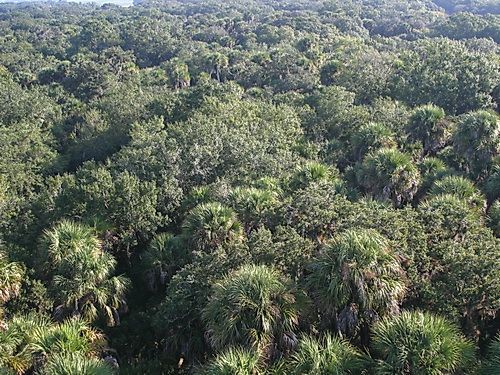
Las fotografías pertenecen a los fotógrafos que permiten su uso únicamente para fines de FNPS.
Información
Variantes de la comunidad:
N/A
Descripción:
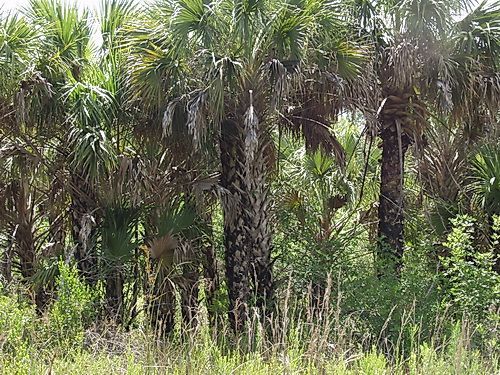
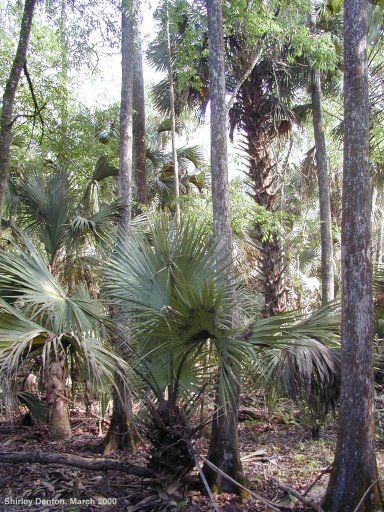
Prairie hammocks are poorly drained forested areas often surrounded by open prairies. Substrates range from sandy to organic soils over marl or limestone. They occur primarily in peninsular Florida. Dominant species include live oak ( Quercus virginiana ) and/or cabbage palm ( Sabal palmetto ).
Prairie hammocks are associated with frequent, light fires.
They are especially common in the floodplains of the St. Johns River and the Kissimmee River, where surrounding marshlands historically burned. Other good examples can be found in Picayune Strand and Myakka River State Park.
Referencias:
Duever, L. (1988, Summer). Florida’s natural communities: Mesic hammock. The Palmetto, 8(2), 4–5. http://fnps.org/assets/pdf/palmetto/v08i2p4duever.pdf
Florida Department of Environmental Protection. (1992). Soil and water relationships of Florida's ecological communities. http://www.dep.state.fl.us/water/wetlands/delineation/docs/soil-and-water.pdf
Florida Natural Areas Inventory. (2010). Guide to the natural communities of Florida: 2010 edition. Florida Natural Areas Inventory. http://fnai.org/naturalcommguide.cfm
Knight, G. R., Oetting, J. B., & Cross, L. (2011). Atlas of Florida's natural heritage: Biodiversity, landscapes, stewardship and opportunities. Institute of Science and Public Affairs, Florida State University.
Myers, R. L., & Ewel, J. J. (Eds.). (1990). Ecosystems of Florida. University of Central Florida Press.
U.S. Department of Agriculture, Soil Conservation Service. (1986). 26 ecological communities of Florida. http://ufdc.ufl.edu/UF00000110/00001
Whitney, E. N., Means, D. B., & Rudloe, A. (2004). Priceless Florida: Natural ecosystems and native species. Pineapple Press.
Haga clic para obtener más información sobre las diferentes comunidades de plantas de Florida o desplácese por la página para ver toda la maravillosa diversidad única que se puede explorar.
Tierras altas xéricas (muy secas)
Tierras altas algo secas
Tierras altas húmedas
Tierras rocosas
llanuras húmedas
Humedales de la cuenca
Humedales de filtración
Humedales con aguas de movimiento lento
Humedales de llanura aluvial
Arroyos
Lagos y estanques
Tierras altas costeras
Humedales costeros

