


Florida's Native Plant Communities
Prairie Hammock
Photographs belong to the photographers who allow use for FNPS purposes only.
Information
Community Variants:
N/A
Description:
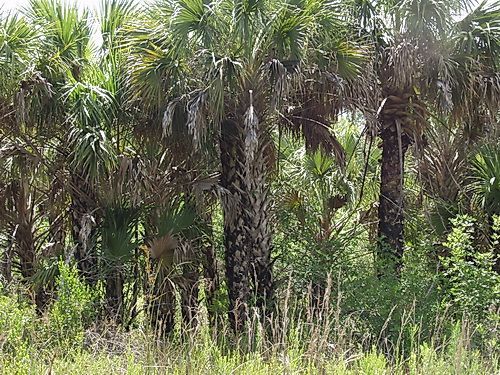
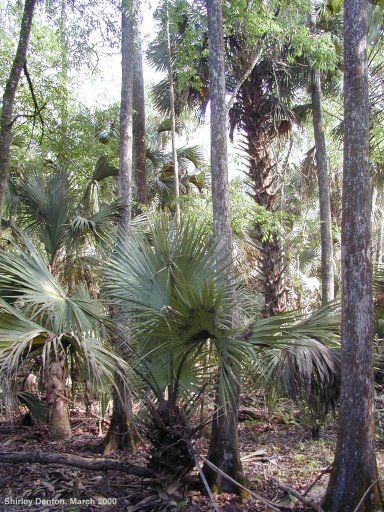
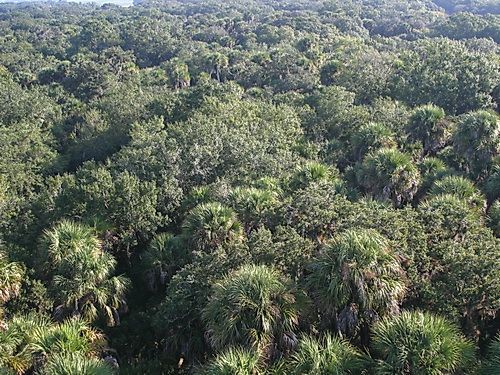
Prairie hammocks are poorly drained forested areas often surrounded by open prairies. Substrates range from sandy to organic soils over marl or limestone. They occur primarily in peninsular Florida. Dominant species include live oak ( Quercus virginiana ) and/or cabbage palm ( Sabal palmetto ).
Prairie hammocks are associated with frequent, light fires.
They are especially common in the floodplains of the St. Johns River and the Kissimmee River, where surrounding marshlands historically burned. Other good examples can be found in Picayune Strand and Myakka River State Park.
References:
Duever, L. (1988, Summer). Florida’s natural communities: Mesic hammock. The Palmetto, 8(2), 4–5. http://fnps.org/assets/pdf/palmetto/v08i2p4duever.pdf
Florida Department of Environmental Protection. (1992). Soil and water relationships of Florida's ecological communities. http://www.dep.state.fl.us/water/wetlands/delineation/docs/soil-and-water.pdf
Florida Natural Areas Inventory. (2010). Guide to the natural communities of Florida: 2010 edition. Florida Natural Areas Inventory. http://fnai.org/naturalcommguide.cfm
Knight, G. R., Oetting, J. B., & Cross, L. (2011). Atlas of Florida's natural heritage: Biodiversity, landscapes, stewardship and opportunities. Institute of Science and Public Affairs, Florida State University.
Myers, R. L., & Ewel, J. J. (Eds.). (1990). Ecosystems of Florida. University of Central Florida Press.
U.S. Department of Agriculture, Soil Conservation Service. (1986). 26 ecological communities of Florida. http://ufdc.ufl.edu/UF00000110/00001
Whitney, E. N., Means, D. B., & Rudloe, A. (2004). Priceless Florida: Natural ecosystems and native species. Pineapple Press.
Click to learn about different Florida plant communities or scroll through the page to see all the wonderful unique diversity to be explored.
