


Base de datos de plantas del FNPS
Rhus copallinum
Nomenclatura
Nombre común:
Sinónimo(s):
Especie del género:
Familia:
Anacardiaceae
Especificaciones de la planta
Forma:
Tamaño:
Esperanza de vida:
Long-lived perennial
Color de la flor:
Color de la fruta:
Fenología:
Destacado por:
Paisajismo
Usos recomendados:
Consideraciones:
Disponibilidad:
Propagación:
Luz:
Tolerancia a la humedad:
Siempre inundado---------------------------------Extremadamente seco
□□□□□□□□□□□□□□□□□□□□□■■■■■■■■■■■■■■■■■■□□□
Somewhat moist, no flooding -a- Very long very dry periods
Tolerancia a inundaciones por agua salada:
Not salt tolerant of inundation by salty or brackish water
Tolerancia a la niebla salina/suelo salado:
Moderate. Tolerant of salty wind and may get some salt spray
Suelo u otro sustrato:
Sand
pH del suelo:
Apto para cultivo en:
8A,8B,9A,9B,10A,10B,11
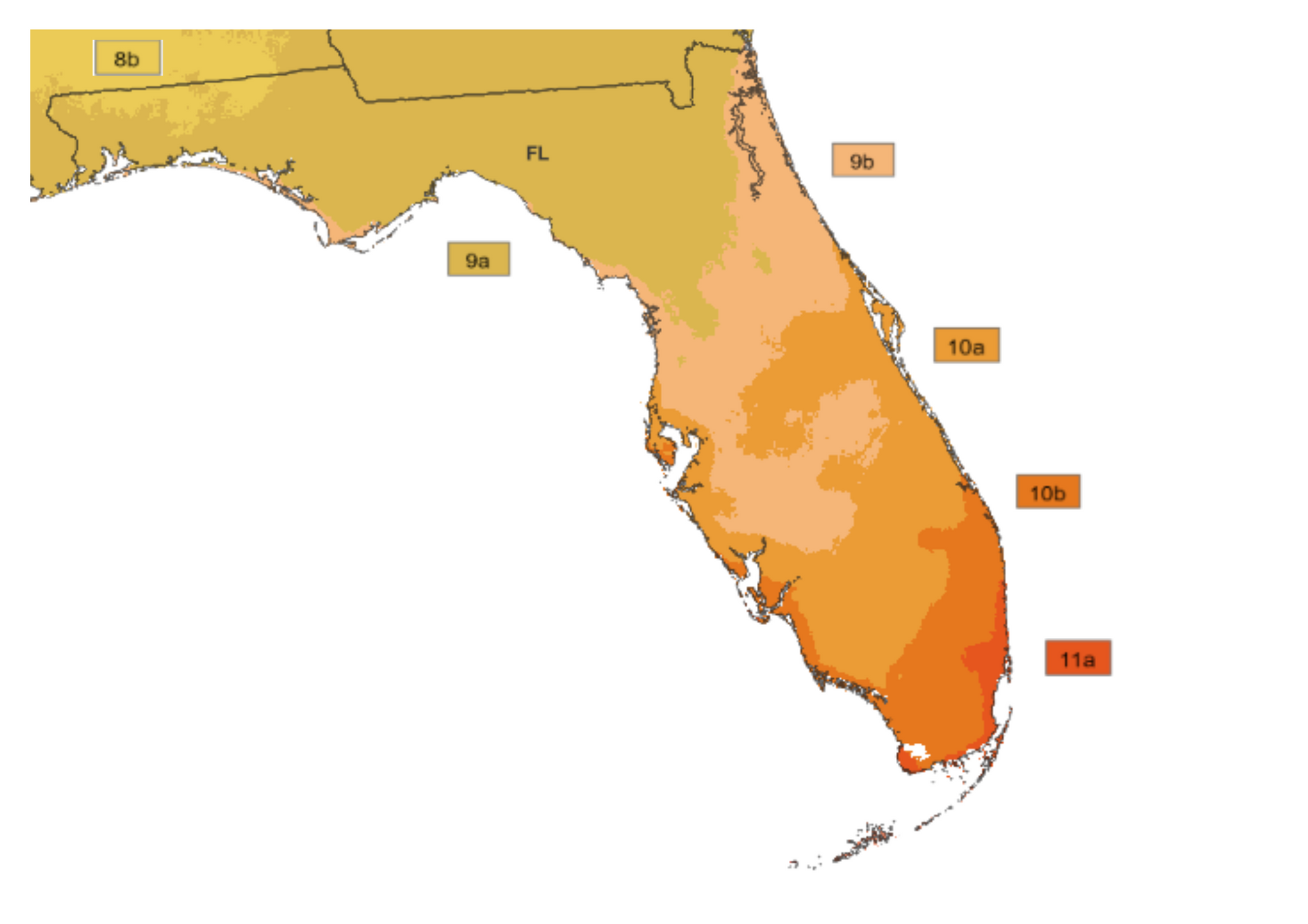
Las zonas del USDA se basan en la temperatura mínima extrema invernal anual promedio.
¿No conoces tu zona? Haz clic aquí para buscar por código postal.
Acreditado en:
Ecología
Fauna:
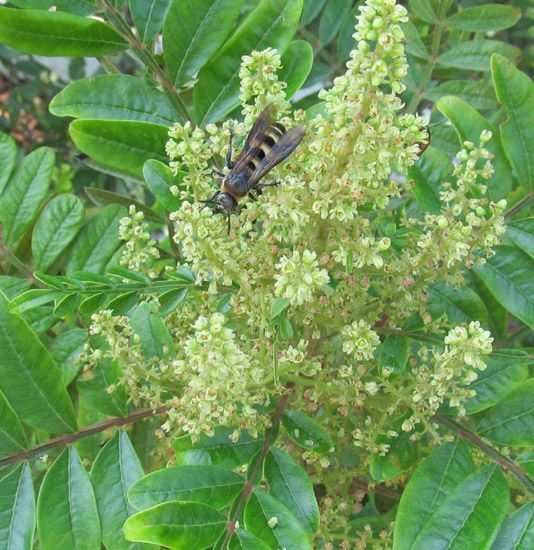
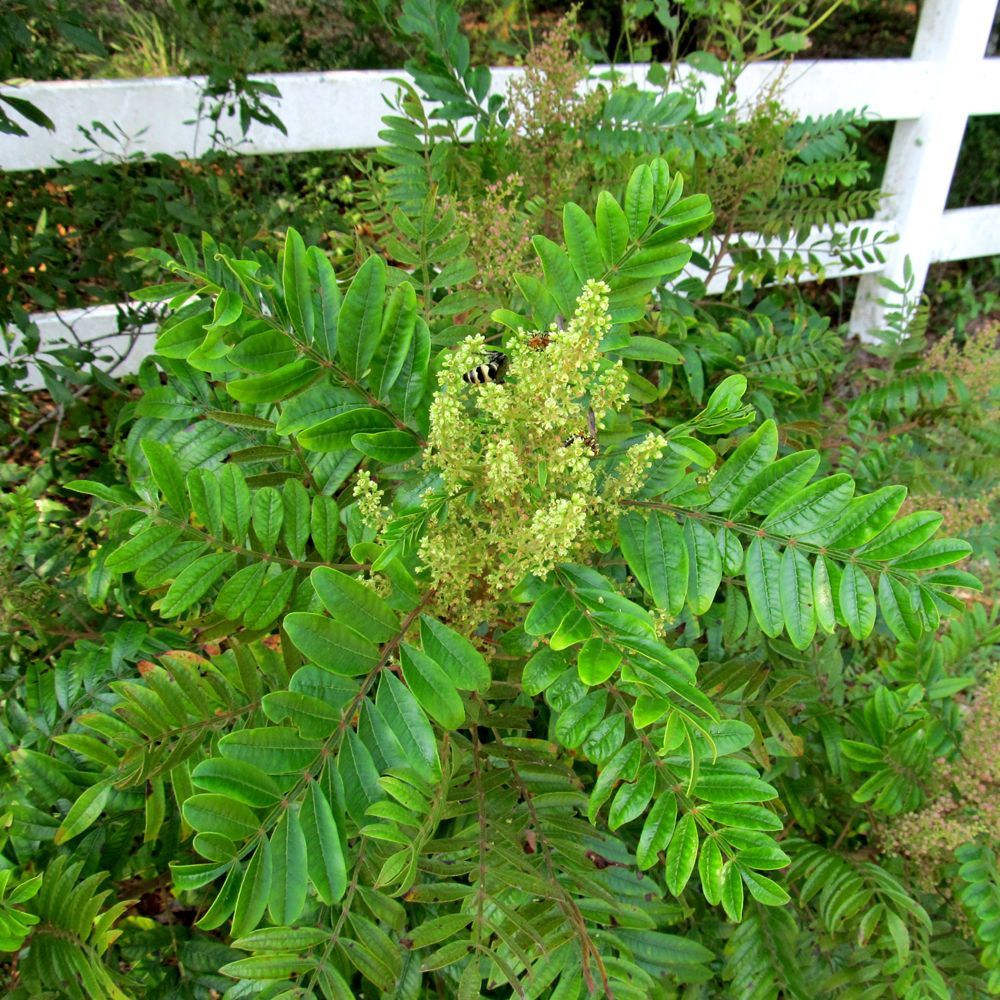
Flowers attract pollinators including bees and butterflies. Bees documented include Colletes inandibularis, Augochlora pura, Augochlorella aurata, Augochloropsis sumptuosa and Lasioglossum tarponense (Deyrup et al. 2002). Host plant for the red-banded hairstreak caterpillar and the Luna moth.
Fruits are eaten by songbirds, jays, and crows; white-tailed deer, opossums, wild turkey, and quail. Bark is eaten by rabbits.
Hábitats nativos:
Comentarios:
Etnobotánica:
Comentarios generales:


Citas:
Covell, C.V, Jr. 2005. A field guide to moths of eastern North America. Virginia Museum of Natural History, Martinsville, VA.
Gann, G.D, C.J. Abbott, C.G. Stocking, K.N. Hines, and collaborators. (2001+). Plant Name [in] Natives For Your Neighborhood. ( https://www.regionalconservation.org/beta/nfyn/plantdetail.asp?tx=Rhuscopa). Accessed 2026. The Institute for Regional Conservation. Delray Beach, FL.
Haehle, Robert G. and Joan Brookwell. (1999). Native Florida Plants. Gulf Publishing Company. Houston, TX.
Huegel, Craig N. (2010). Native Plant Landscaping for Florida Wildlife. University Press of Florida, Gainesville, FL.
Nelson, Gil. (2003). Florida's Best Landscape Plants: 200 Readily Available Species for Homeowners and Professionals. University Press of Florida, Gainesville, FL.
North Carolina State Extension. (Undated). North Carolina Extension Gardener Plant Toolbox. ( https://plants.ces.ncsu.edu/). North Carolina Agricultural & Technical University, Greensboro, NC.
Osorio, Rufino. (2001). A Gardener's Guide to Florida's Native Plants. University Press of Florida, Gainesville, FL.
University of Tennessee Extension Service. (2010). Desired pH Range and salt tolerance of common nursery plants. ( https://plantsciences.tennessee.edu/wp-content/uploads/sites/25/2021/10/Desired-pH-Range-List.pdf). Accessed 2026. University of Tennessee Extension, Knoxville, TN.
Wunderlin, R. P, B. F. Hansen, A. R. Franck, and F. B. Essig. (1999+). Atlas of Florida Plants. ( https://florida.plantatlas.usf.edu/). [S. M. Landry and K. N. Campbell (application development), USF Water Institute.] Institute for Systematic Botany, University of South Florida, Tampa, FL.

