

-1920w.jpg)
-1920w.jpg)
Nomenclature
Common Name:
Synonym(s):
Genus species:
Family:
Sapindaceae
Plant Specifics
Form:
Size:
Life Span:
Long-lived perennial
Flower Color:
Fruit Color:
Phenology:
Noted For:
Landscaping
Recommended Uses:
Rain gardens or bioswales
Considerations:
Availability:
Propagation:
Light:
Moisture Tolerance:
Always Flooded------------------------------------------------Extremely Dry
|----|---- <------------------------>
Usually moist, occasional inundation ---to--- Not wet but not extremely dry
Salt Water Flooding Tolerance:
Unknown
Salt Spray/Salty Soil Tolerance:
Low/no tolerance of salty wind or direct salt spray
Soil or Other Substrate:
Sand, Clay, Loam, Organic
Soil pH:
Suitable to Grow In:
8A,8B,9A,9B,10A,10B
Ecology
Wildlife:
Attracts bees.
Larval host for imperial moth ( Eacles imperialis ) , cecropia silkmoth ( Hyalophora cecropia ), polyphemus moth( Antheraea polyphemus ) and rosy maple moth ( Dryocampa rubicunda ).
Seeds consumed mostly by squirrels and other rodents.
Native Habitats:
Natural Range in Florida:
Visit the USF Libraries Atlas of Florida Plants
Comments:
Ethnobotany:
General Comments:
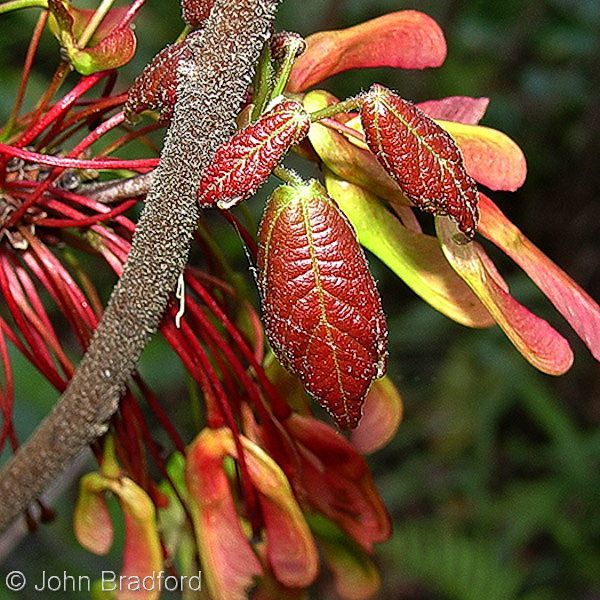
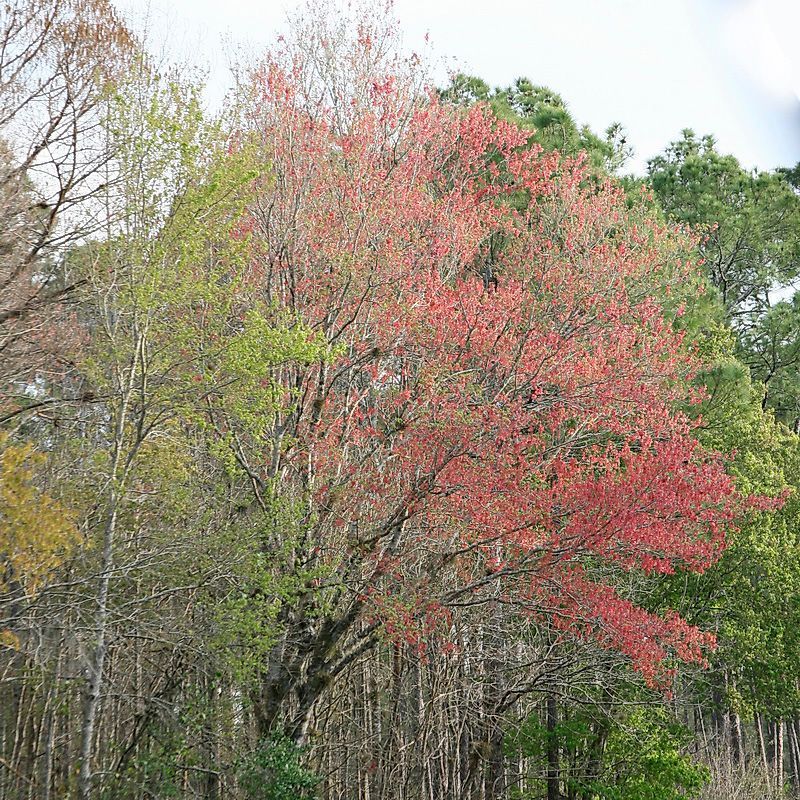
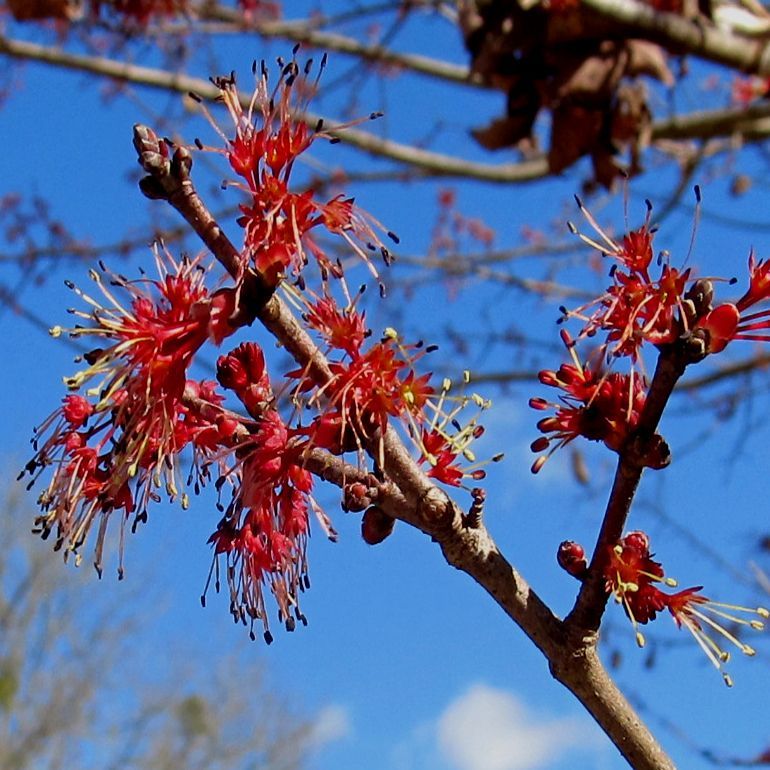
In January the tree bears tiny red flowers followed by conspicuous, bright-red, winged samaras,or keys, which remain on trees for several weeks, serving as indicators of spring.
Florida-grown stock does not need cold temperatures to stimulate flowering, but out-of-state stock does, and should be avoided.
Red maple has the greatest south-north range of tree species in eastern North America.

