Nomenclature
Common Name:
Synonym(s):
Genus species:
Family:
Papaveraceae
Plant Specifics
Form:
Size:
Life Span:
Long-lived perennial
Flower Color:
Fruit Color:
Phenology:
Noted For:
Landscaping
Recommended Uses:
Considerations:
Availability:
Propagation:
Light:
Moisture Tolerance:
Always Flooded------------------------------------------------Extremely Dry
-|----|---|----|---|---|---- <------------------------->
Somewhat moist, no flooding ---to--- Very long very dry periods
Salt Water Flooding Tolerance:
Unknown
Salt Spray/Salty Soil Tolerance:
Low/no tolerance of salty wind or direct salt spray
Soil or Other Substrate:
Sand
Soil pH:
Suitable to Grow In:
8A,8B,9A,9B,10A,10B
Ecology
Wildlife:
Attracts pollinators including bees, flies, and beetles. Documented bee species include Apis mellifera (honeybee), Dialictus tegularis , and Halictus ligatus ( Deyrup et al. 2002) .
Native Habitats:
Natural Range in Florida:
Visit the USF Libraries Atlas of Florida Plants
Comments:
Ethnobotany:
General Comments:
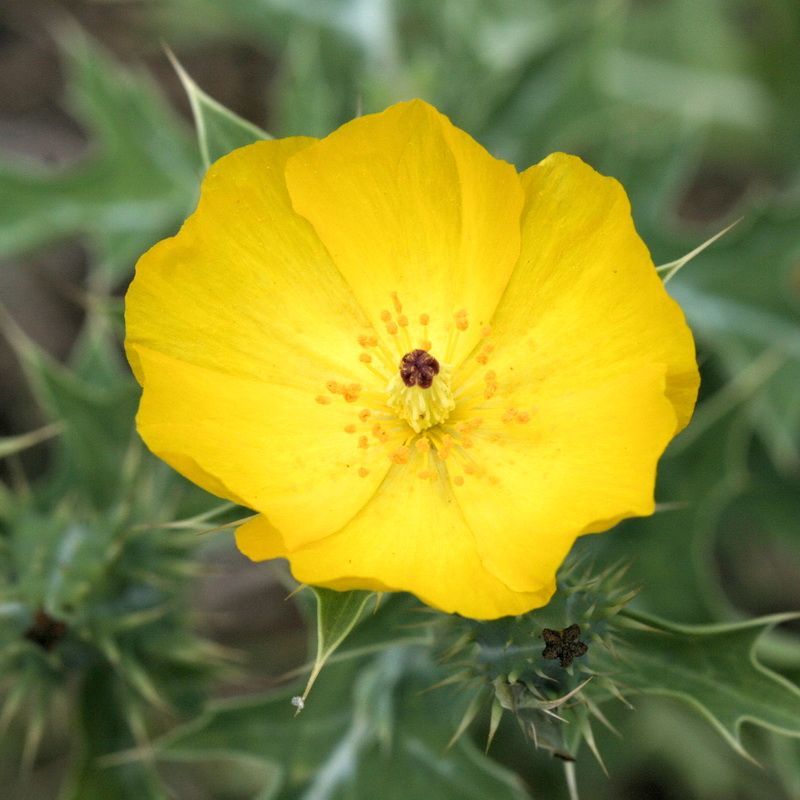
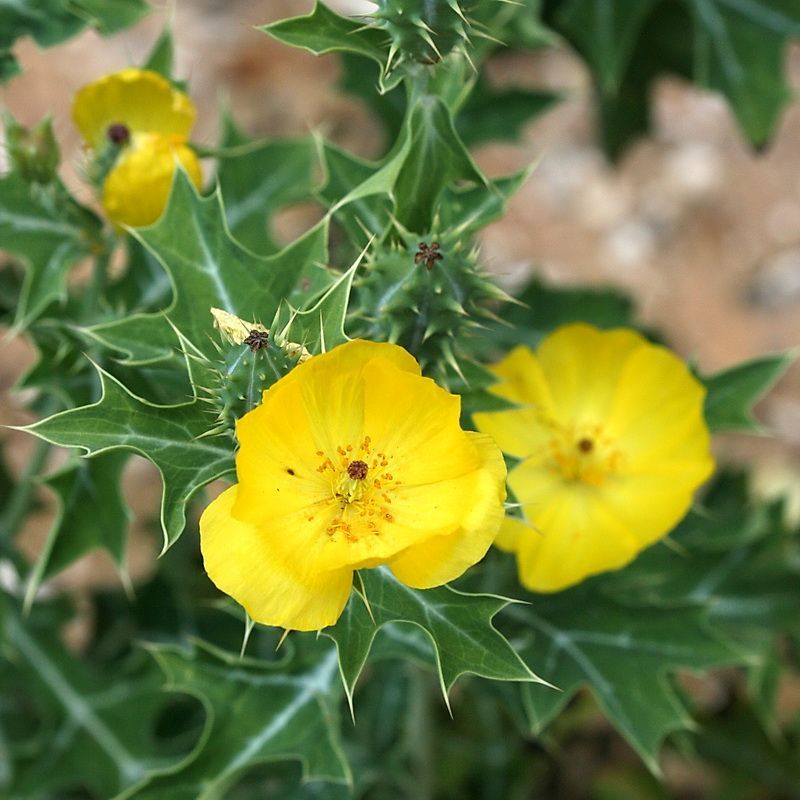
This is one of Florida's most showy and most under-appreciated wildflowers. Look for it along disturbed roadsides in mid-late winter and early spring.
This is a personal favorite of one of the authors -- it grows and bloom early and attracts lots of insects. The only issue is the prickles, so I wear gloves when weeding around it. It reseeds readily so long as there is good sun and bare ground where the seeds land.
Don't let the name fool you, this is a Florida native.

