Nomenclature
Common Name:
Synonym(s):
Genus species:
Family:
Apocynaceae
Plant Specifics
Form:
Size:
Life Span:
Long-lived perennial
Flower Color:
Fruit Color:
Phenology:
Noted For:
Landscaping
Recommended Uses:
Considerations:
Availability:
Propagation:
Light:
Moisture Tolerance:
Always Flooded------------------------------------------------Extremely Dry
-|----|----|----|----|----|----|---- <-----------------> ----|-
Not wet but not extremely dry ---to--- Somewhat long very dry periods
Salt Water Flooding Tolerance:
Unknown
Salt Spray/Salty Soil Tolerance:
Unknown
Soil or Other Substrate:
Soil pH:
Suitable to Grow In:
Ecology
Wildlife:
- Larval host for monach ( Danaus plexippus ) , queen ( Danaus gilippus ) and soldier ( Danaus eresimus ) butterflies.
- Nectar plant for many butterfly species.
Native Habitats:
Natural Range in Florida:
Visit the USF Libraries Atlas of Florida Plants
Comments:
Ethnobotany:
General Comments:
Predominantly a Florida plant, but it has also been recorded in Georgia, South Carolina, North Carolina, and Texas.
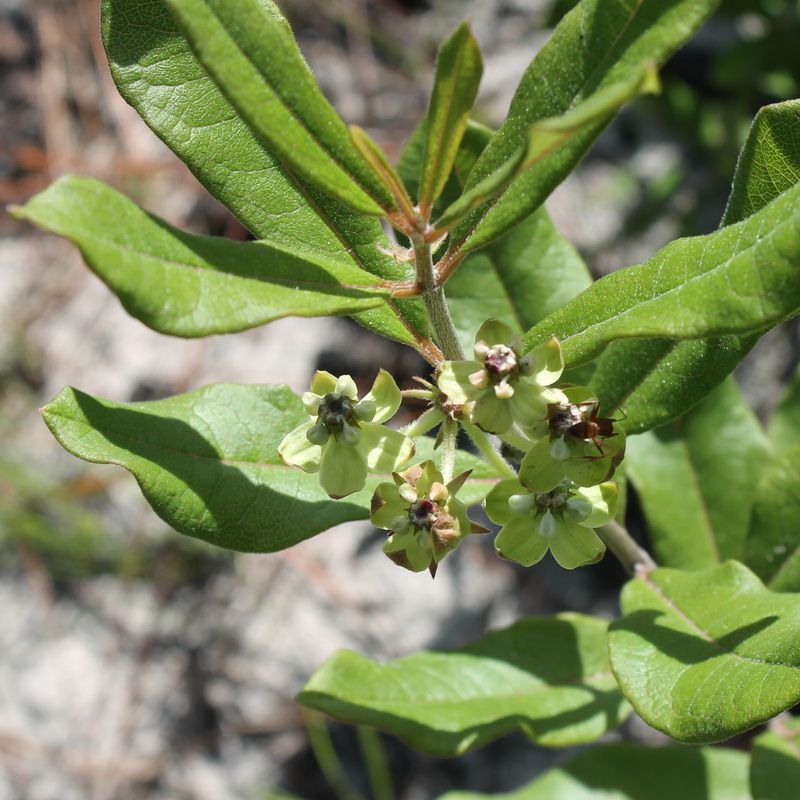
The species name "tomentosa" refers to the dense, matted (tomentose) hairs on the leaves.
Aphids are often a "problem" with milkweed plants -- they are a natural preditor on Asclepias, but we don't like them.

