
Nomenclature
Common Name:
Synonym(s):
Genus species:
Family:
Lamiaceae (Labiatae)
Plant Specifics
Form:
Size:
Life Span:
Long-lived perennial
Flower Color:
Fruit Color:
Phenology:
Noted For:
Landscaping
Recommended Uses:
Specimen plant, mass planting, casual shrub screen
Considerations:
Availability:
Propagation:
Seed.
Light:
Moisture Tolerance:
Always Flooded------------------------------------------------Extremely Dry
Coming Soon!
Usually moist, occasional inundation ---to--- Somewhat long very dry periods
Salt Water Flooding Tolerance:
Unknown
Salt Spray/Salty Soil Tolerance:
Some tolerance to salty wind but not direct salt spray
Soil or Other Substrate:
Sand, Loam
Soil pH:
Suitable to Grow In:
8A,8B,9A,9B,10A,10B
Ecology
Wildlife:
Larval host for for spring azure butterflies and snowberry clearwing moths.
Attracts various pollinators, especially bees. Documented bees include Agapostemon splendens, Augochlora pura, Dialictus placidensis, Halictus ligatus, Megachile brevis pseudobrevis and the none-native Apis mellifera (honeybee) (Deyrup et al. 2002).
Many bird species consume the fruit. including catbirds, mockinbirds, and robins.
Native Habitats:
Dry mesic hardwoods, xeric hammock, scrubby flatwoods, flatwoods, disturbed dry-moist woods.
Natural Range in Florida:
Visit the USF Libraries Atlas of Florida Plants
Comments:
Ethnobotany:
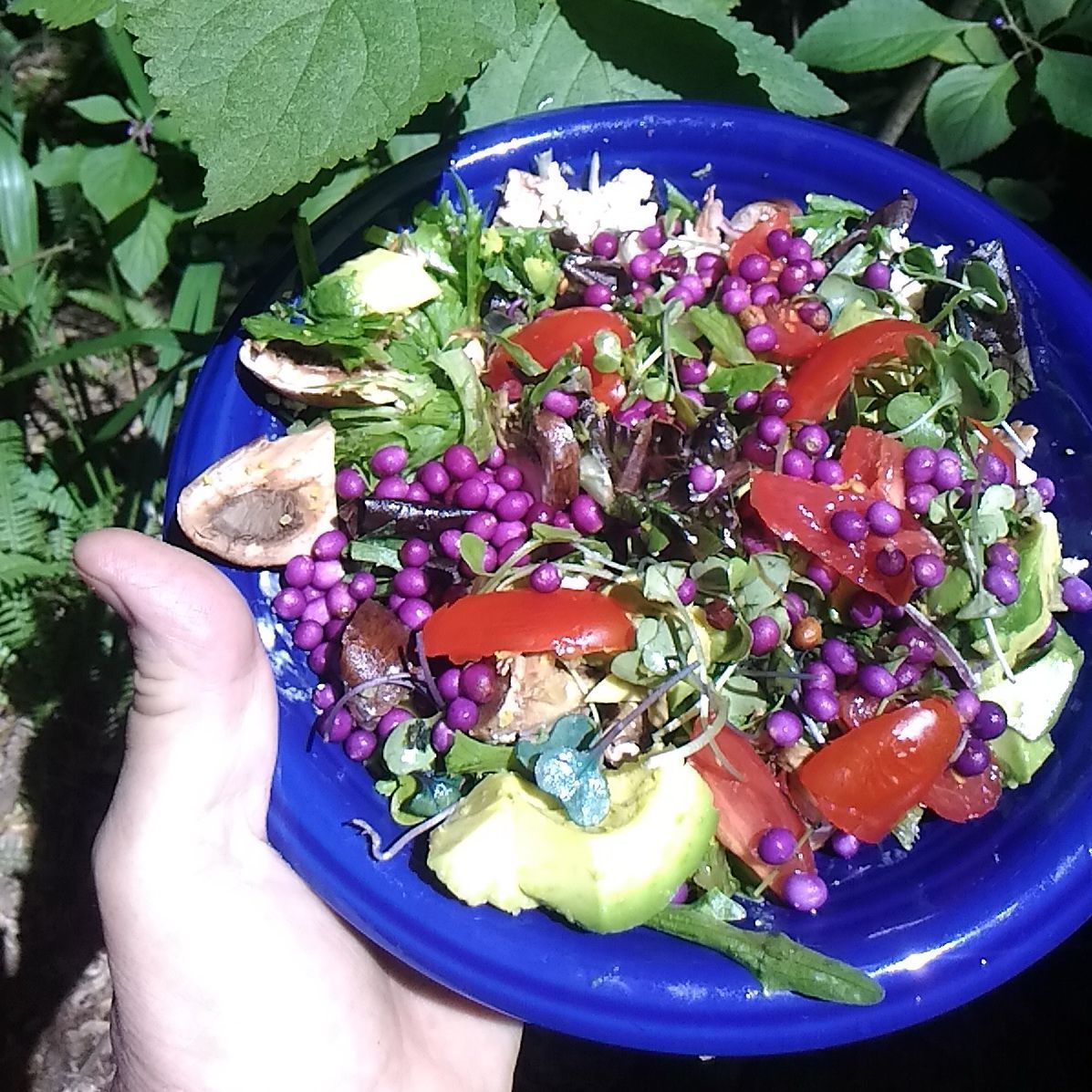
Sometimes used to make jelly which is noted for its color.
There are three chemicals in the leaves that may be as effective as DEET as an insect repellant (Cantrell et al. 2005; Cantrell & Klun 2011). One, callicarpenal, apparently deters biting by the yellow-fever mosquito and the mosquito that spreads malaria. Callicarpenal and other compounds isolated from the plant also repell fire ants and ticks.
General Comments:
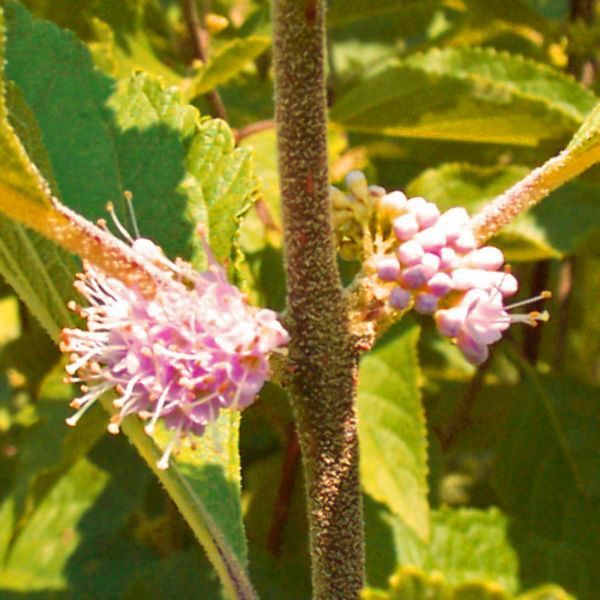
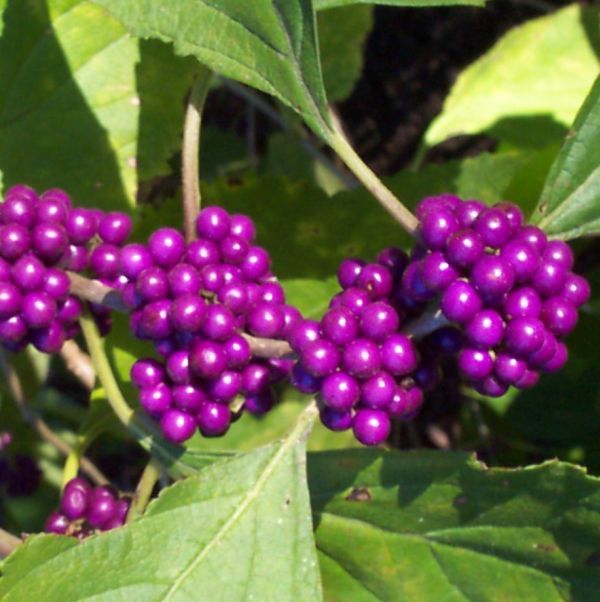
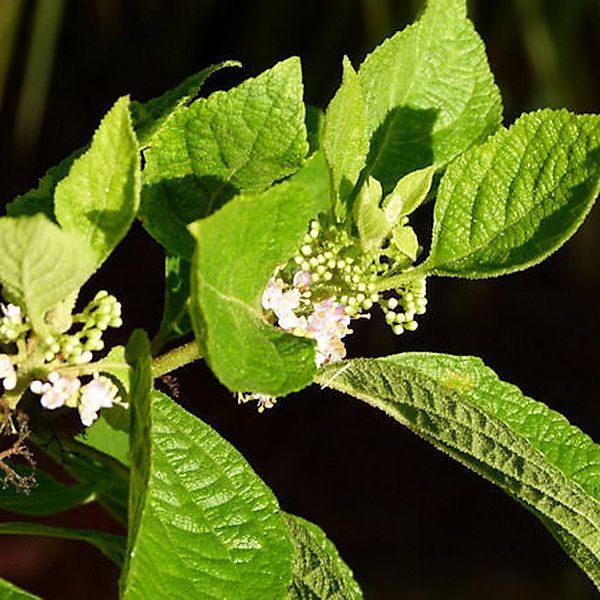
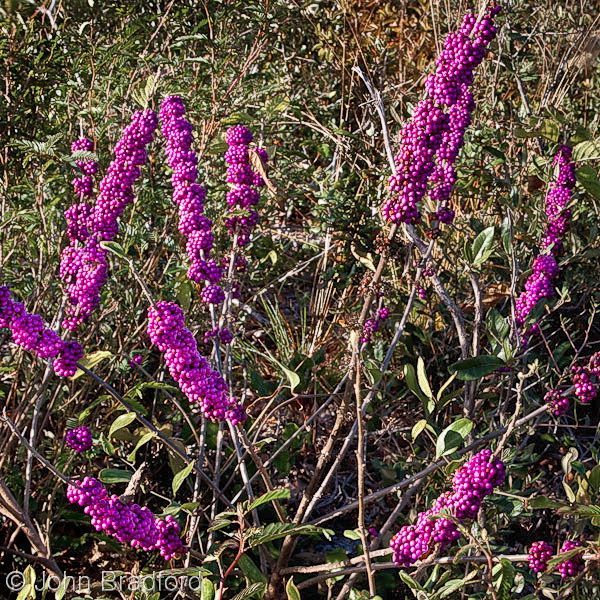
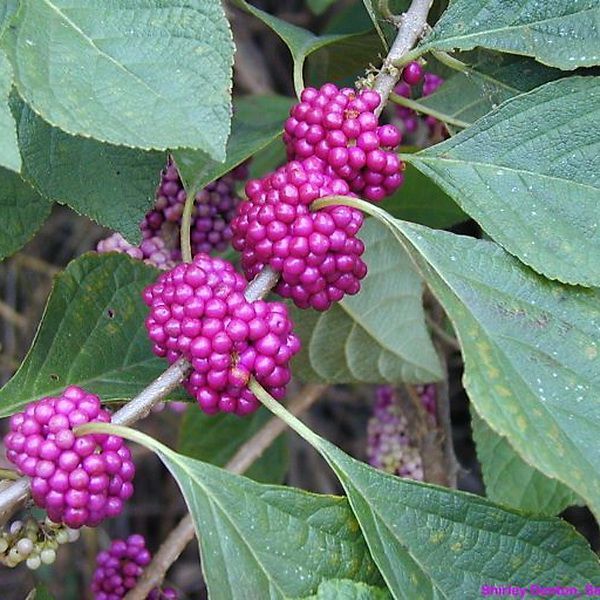
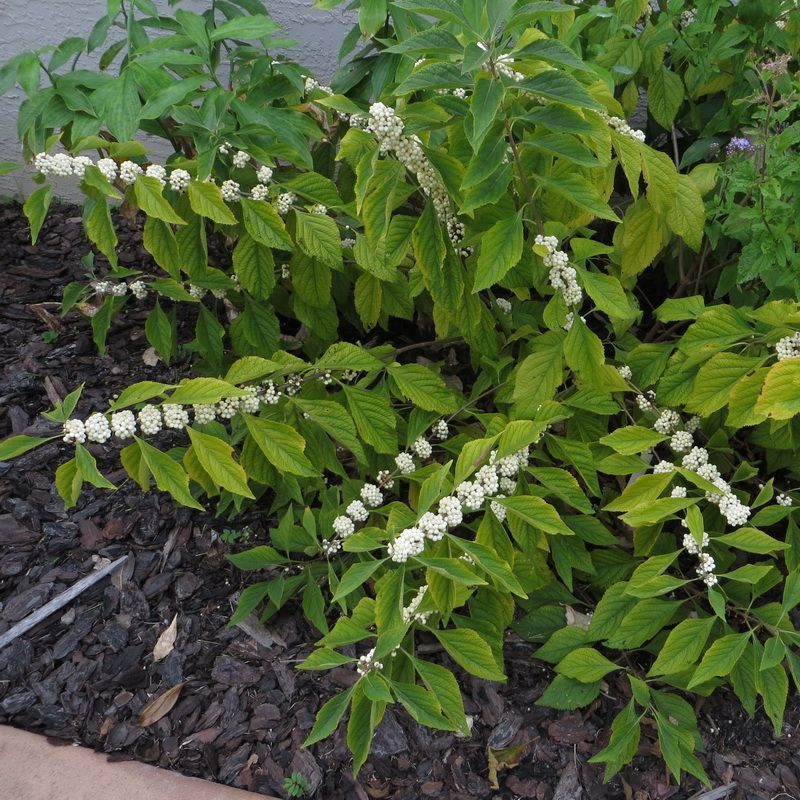
Fruits are magenta. There is a white-fruited/white-flowered variety, uncommonly found naturally in Florida, that is sold occasionally.

