
Photo by: Shirley Denton, Suncoast Chapter FNPS
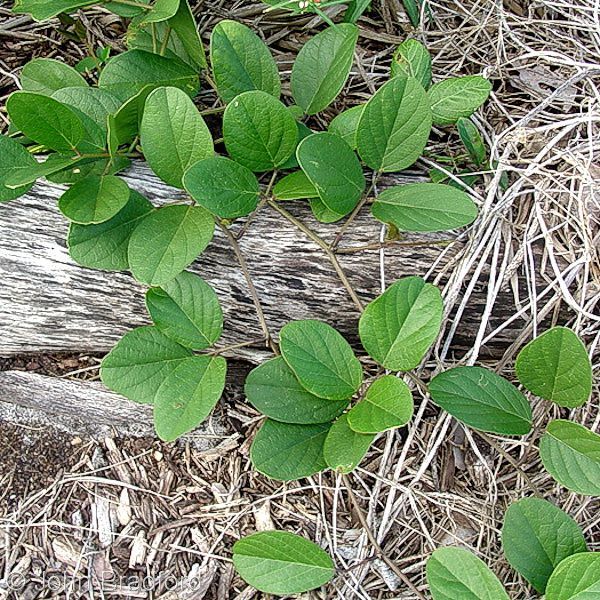
Photo by: John Bradford, Martin County Chapter FNPS
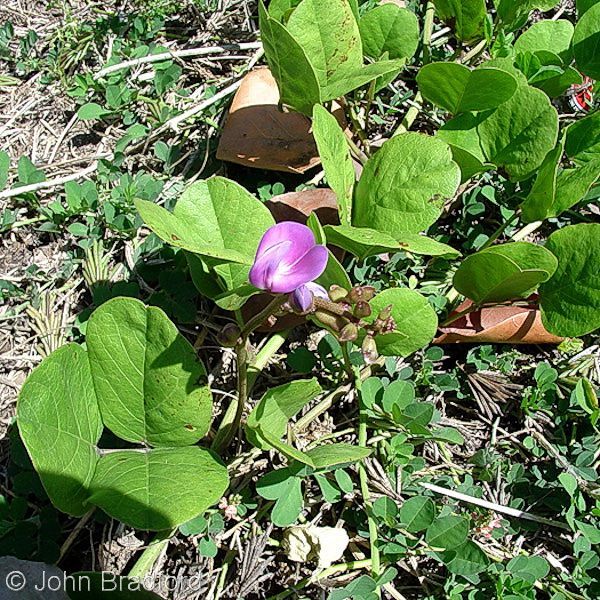
Photo by: John Bradford, Martin County Chapter FNPS
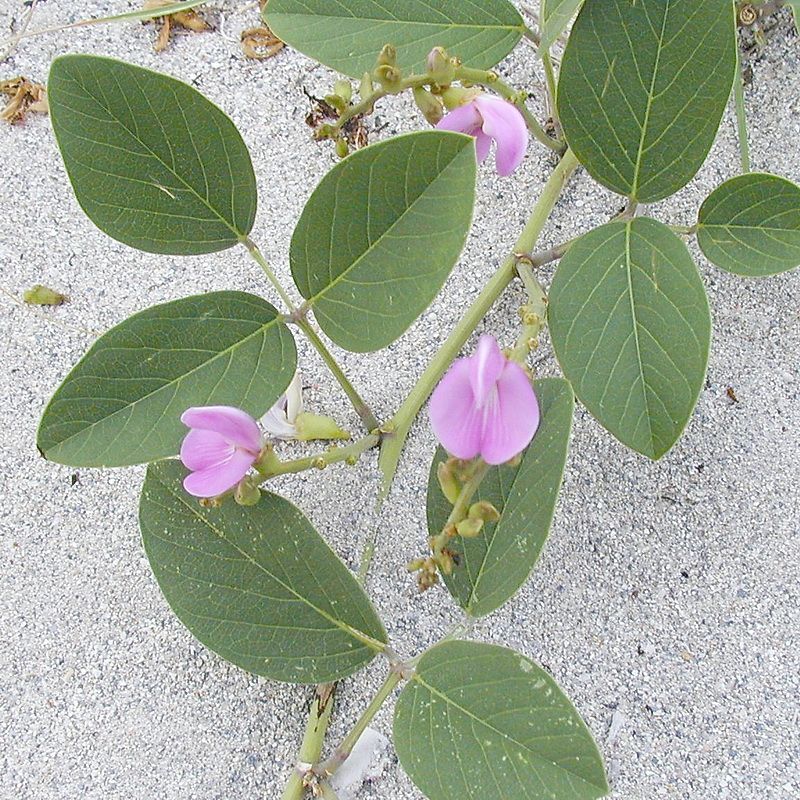
Photo by: Shirley Denton, Suncoast Chapter FNPS
Nomenclature
Common Name:
seaside jackbean, baybean, beach-bean
Synonym(s):
Canavalia maritima
Genus species:
Canavalia rosea
Family:
Fabaceae (Leguminosae)
Plant Specifics
Form:
flower
Size:
.5-1 ft tall by to 40 ft wide
Life Span:
Long-lived perennial
Flower Color:
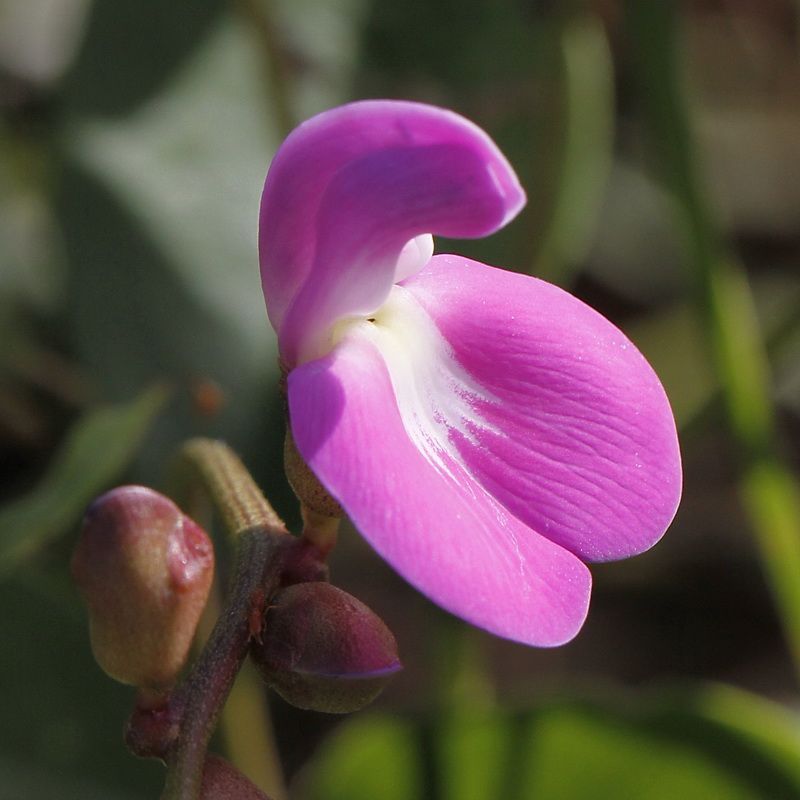
pink,lavender
Fruit Color:
green,brown
Phenology:
Evergreen. Long prostrate stems. Blooms and fruits all year.
Noted For:
Showy Flowers
Landscaping
Recommended Uses:
Groundcover in sandy areas. Used for dune stabilization. Fast growing.
Considerations:
It can be aggressive in the landscape. The seeds and seed pods are poisonous.
Availability:
Native Nurseries, Seed
Propagation:
Seed.
Light:
Full Sun
Moisture Tolerance:
Always Flooded------------------------------------------------Extremely Dry
Coming Soon!
Somewhat moist, no flooding ---to--- Very long very dry periods
Salt Water Flooding Tolerance:
Unknown
Salt Spray/Salty Soil Tolerance:
High. Can tolerate significant and ongoing amounts of salt.
Soil or Other Substrate:
Sand
Soil pH:
Circum-neutral to calcareous
Suitable to Grow In:
9A,9B,10A,10B,11
Ecology
Wildlife:
Pollinators, Caterpillars
Attracts bees.
Native Habitats:
Coastal dunes.
Natural Range in Florida:
Visit the USF Libraries Atlas of Florida Plants
Comments:
Ethnobotany:
Has a history of human use including use as a psychoactive substance and as food (experimentation not recommended). Said to have been an important food for the British explorer, Captain James Cook and his crew during their voyage around the world from 1768 to 1771.
General Comments:
An important sand dune stabilizer.

