

Nomenclature
Common Name:
Synonym(s):
Genus species:
Family:
Clusiaceae
Plant Specifics
Form:
Size:
Life Span:
Long-lived perennial
Flower Color:
Fruit Color:
Phenology:
Noted For:
Landscaping
Recommended Uses:
Considerations:
Availability:
Propagation:
Light:
Moisture Tolerance:
Always Flooded------------------------------------------------Extremely Dry
Coming Soon!
Usually moist, occasional inundation ---to--- Very long very dry periods
Salt Water Flooding Tolerance:
Unknown
Salt Spray/Salty Soil Tolerance:
High. Can tolerate significant and ongoing amounts of salt.
Soil or Other Substrate:
Sand, Lime Rock
Soil pH:
Suitable to Grow In:
10A,10B,11
Ecology
Wildlife:
Can produce seed without pollination.
Dense foliage creates cover for birds and other wildlife ( https://www.plantcreations.com/ ).
Native Habitats:
Natural Range in Florida:
Visit the USF Libraries Atlas of Florida Plants
Comments:
Ethnobotany:
The black material surrounding the seeds was once used to caulk the seams of boats leading to the name pitch apple.
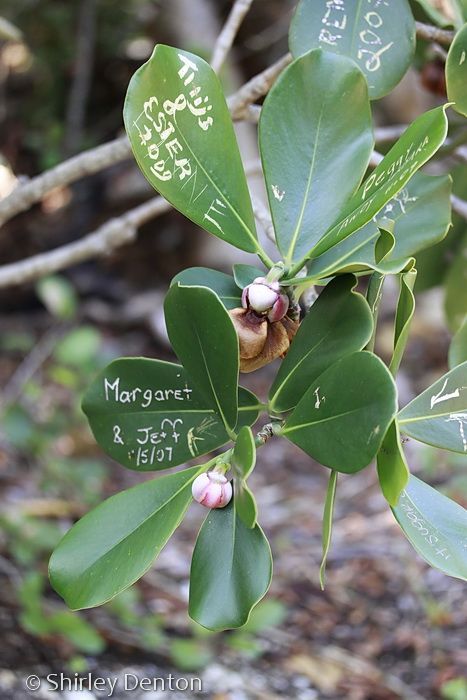
The leathery leaves can be scratched with the scratches remaining on the leaves until they fall -- thus autograph tree.
General Comments:
This Florida native has been introduced into Hawaii where it is extremely invasive. In fact, it has earned the distinction of being listed in the Global Compendium of Weeds.
In Florida, it is known to naturalize into areas near where it has been planted. Avoiding the use of this in landscape settings where it could escape is recommended.

