Nomenclature
Common Name:
Synonym(s):
Genus species:
Family:
Styracaceae
Plant Specifics
Form:
Size:
Life Span:
Long-lived perennial
Flower Color:
Fruit Color:
Phenology:
Noted For:
Landscaping
Recommended Uses:
Considerations:
Availability:
Propagation:
Light:
Moisture Tolerance:
Always Flooded------------------------------------------------Extremely Dry
Coming Soon!
Usually moist, occasional inundation ---to--- Short very dry periods
Salt Water Flooding Tolerance:
Unknown
Salt Spray/Salty Soil Tolerance:
Low/no tolerance of salty wind or direct salt spray
Soil or Other Substrate:
Sand, Loam, Organic
Soil pH:
Suitable to Grow In:
8A,8B,9A,9B
Ecology
Wildlife:
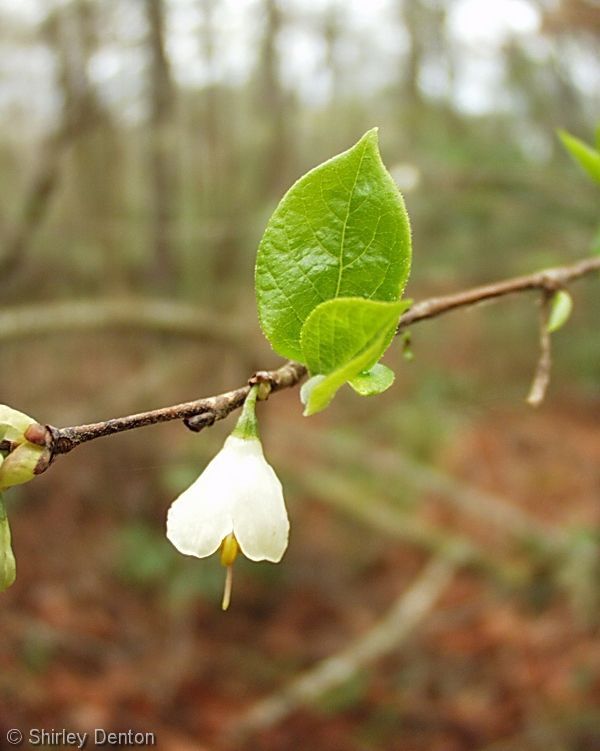
Larval host for various moths including the Promethea Moth ( Callosamia promethea ), Canadian Melanolophia ( Melanolophia canadaria ), and Stinging Rose Caterpillar ( Parasa indetermina ).
Attracts primarily honeybees, bumblebees, and probably other long-tongued bees.
Larval host for various moths including the Promethea Moth (Callosamia promethea), Canadian Melanolophia (Melanolophia canadaria), and Stinging Rose Caterpillar (Parasa indetermina). Among vertebrate animals, tree squirrels occasionally eat the immature fruits and possibly seeds.
Native Habitats:
Natural Range in Florida:
Visit the USF Libraries Atlas of Florida Plants
Comments:
Ethnobotany:
General Comments:

