

Nomenclature
Common Name:
Synonym(s):
Genus species:
Family:
Rubiaceae
Plant Specifics
Form:
Size:
Life Span:
Long-lived perennial
Flower Color:
Fruit Color:
Phenology:
Noted For:
Landscaping
Recommended Uses:
Considerations:
This species is cold sensitive and will die back if it freezes. Usually resprouts from the base.
There are recent observations of the plant in north Florida where it appears to be naturalizing. This is "assissted migration" and could be an the that it may become invasive outside of its range
Availability:
Propagation:
Readily available from native nurseries. Easily transplanted.
May sucker and suckers can be moved. Readily grows from seed.
Light:
Moisture Tolerance:
Always Flooded------------------------------------------------Extremely Dry
Coming Soon!
Somewhat moist, no flooding ---to--- Not wet but not extremely dry
Salt Water Flooding Tolerance:
Unknown
Salt Spray/Salty Soil Tolerance:
Low/no tolerance of salty wind or direct salt spray
Soil or Other Substrate:
Sand, Loam
Soil pH:
Suitable to Grow In:
9A,9B,10A,10B,11
Ecology
Wildlife:
Larval host for the pluto sphinx moth
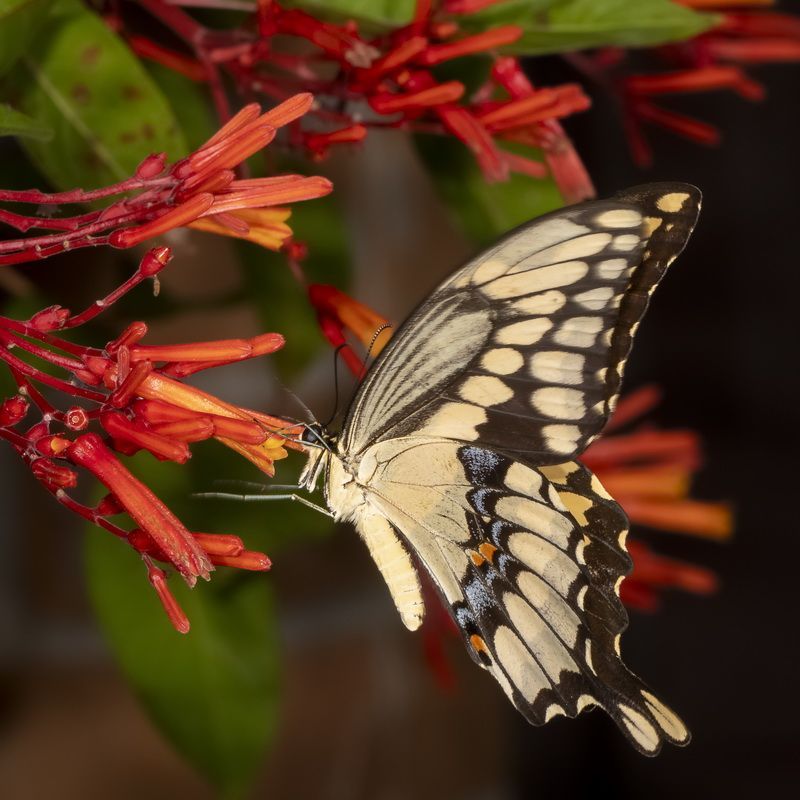
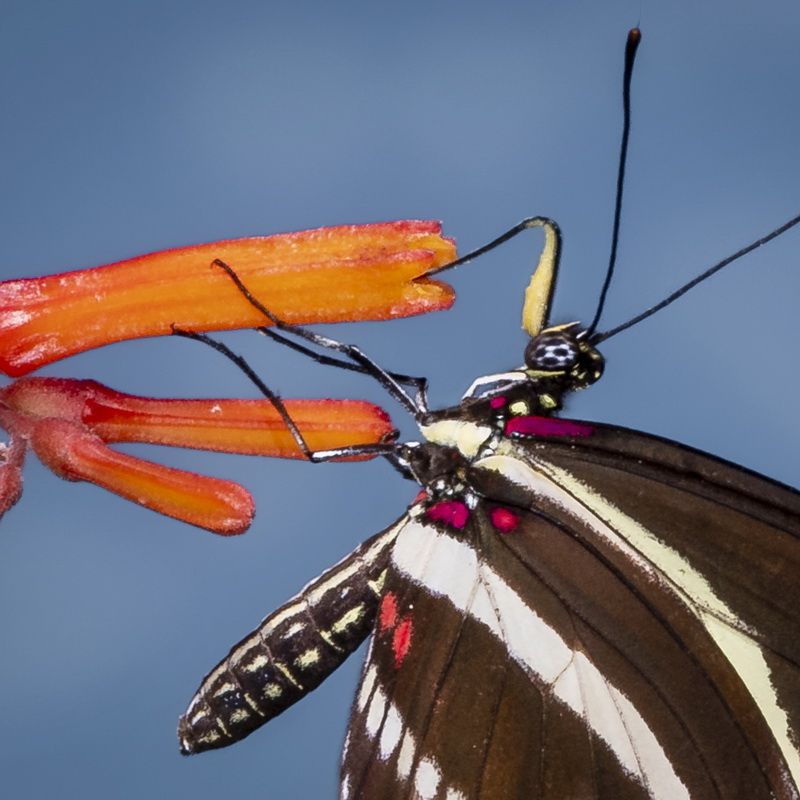
Butterflies, noted for attracting zebrawing
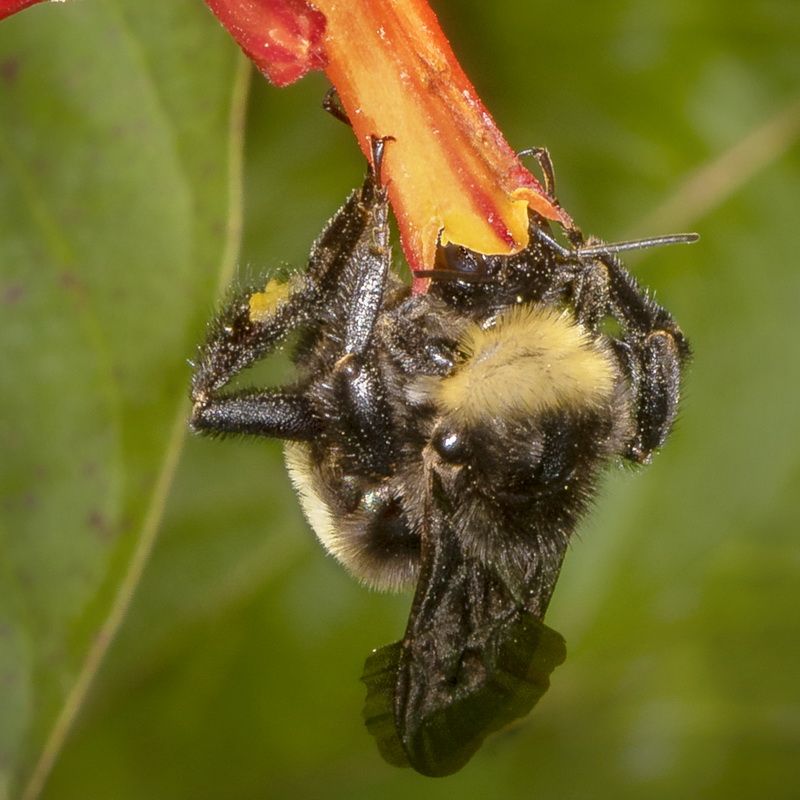
Attracts long-tongued bees including bumblebees.
Birds and small mammals eat the fruits and disperse seeds.
Hummingbirds come for nectar
Native Habitats:
Natural Range in Florida:
Visit the USF Libraries Atlas of Florida Plants
Comments:
Ethnobotany:
General Comments:
Closely related plants occur in the Caribbean and Central America. Yellow or orange flowering plants are not the Florida native.
In recent years plants have been found growing wild near homesites in north Florida -- what you plant can escape into the wild if planted beyond the natural range. Please plant responsibly - this plant has the potential to be invasive when used outside of its natural range. Please act responsibly.

