

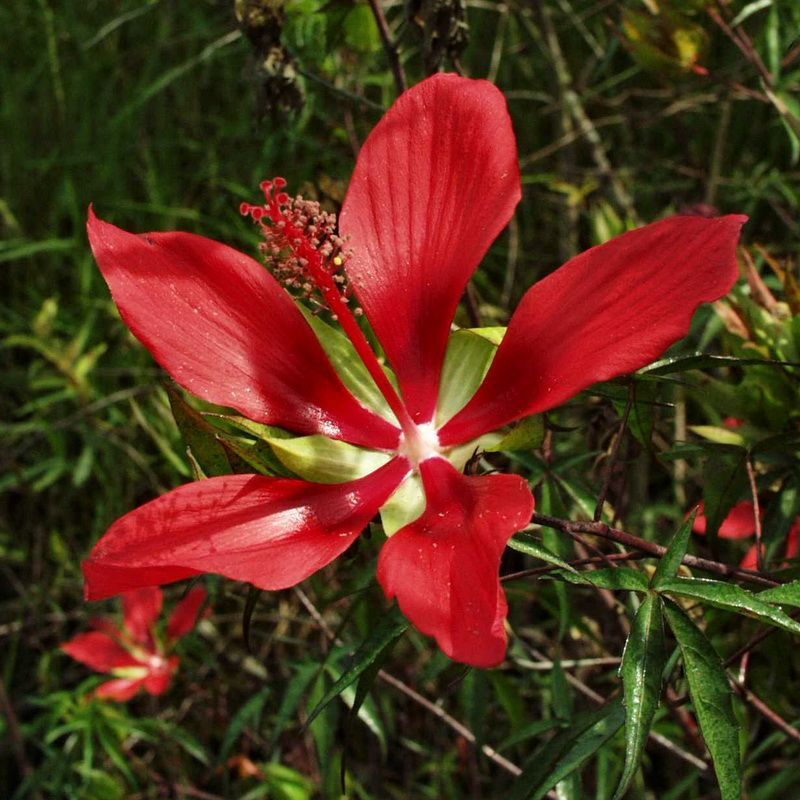
Photo by: Shirley Denton, Suncoast Chapter FNPS

Photo by: Shirley Denton, Suncoast Chapter FNPS
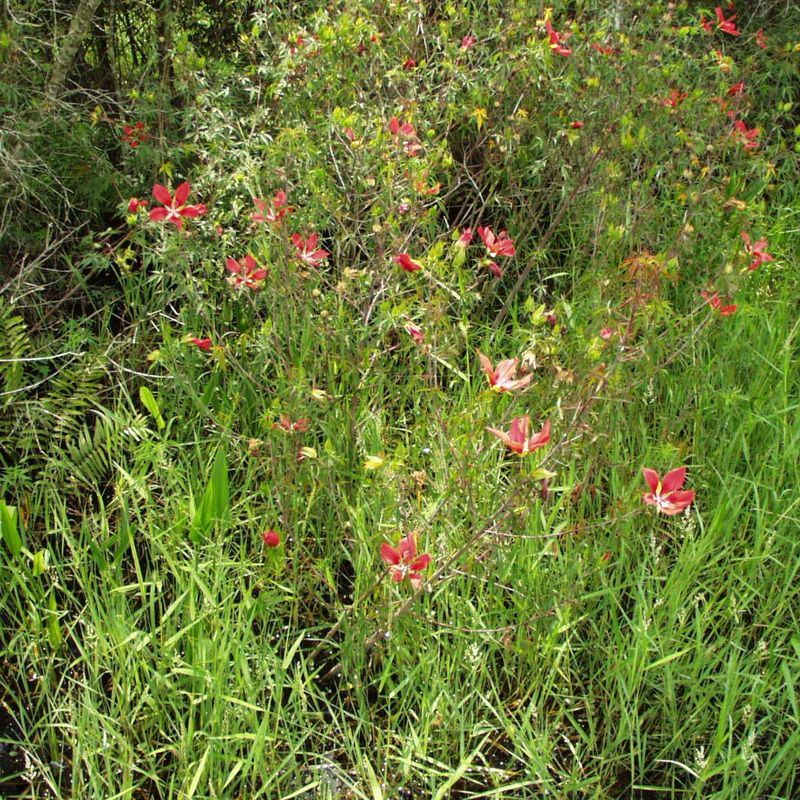
Photo by: Shirley Denton, Suncoast Chapter FNPS
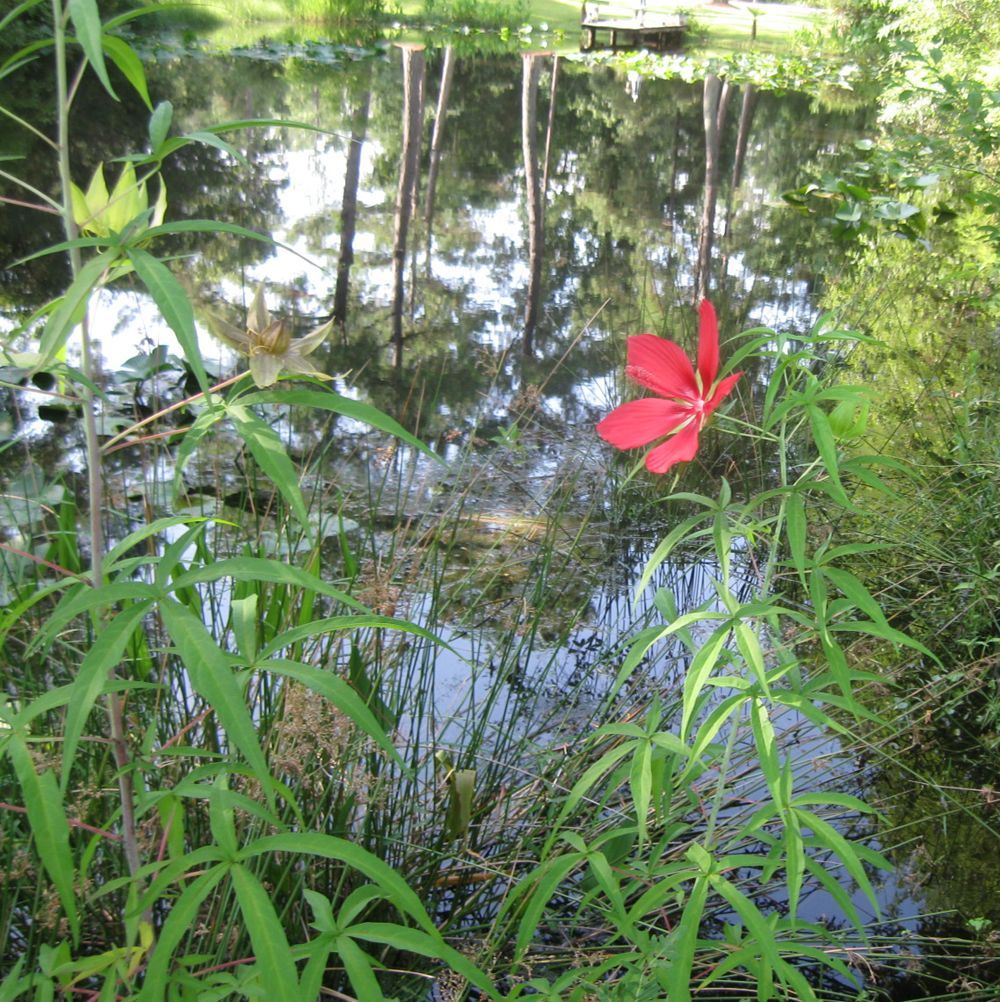
Photo by: Ginny Stibolt, Ixia Chapter FNPS
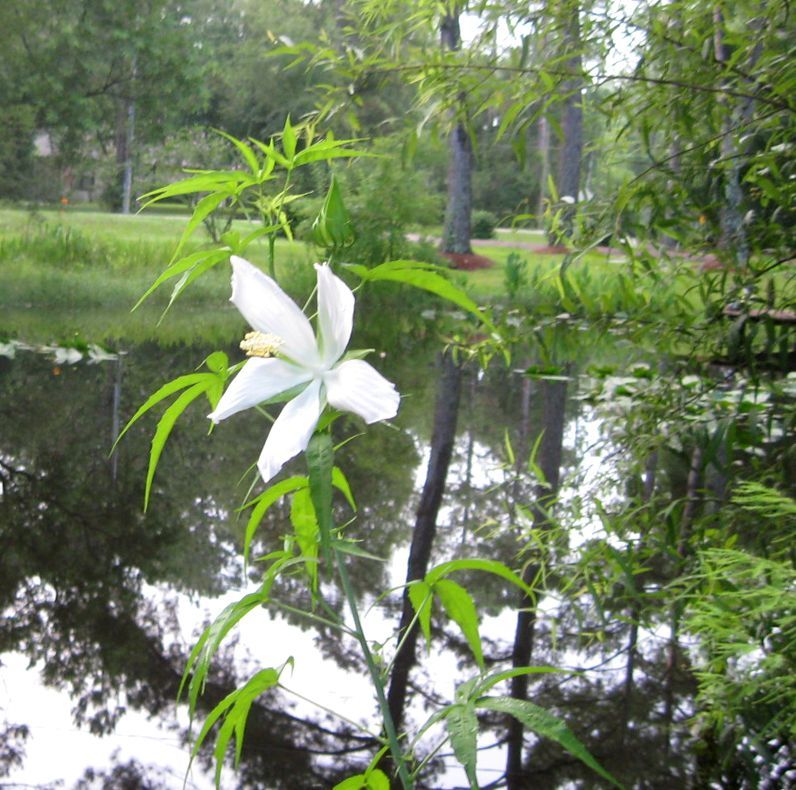
Photo by: Ginny Stibolt, Ixia Chapter FNPS
Nomenclature
Common Name:
scarlet hibiscus
Synonym(s):
Genus species:
Hibiscus coccineus
Family:
Malvaceae
Plant Specifics
Form:
flower
Size:
5-8 ft tall by 2-4 ft wide
Life Span:
Long-lived perennial
Flower Color:
white,red
Fruit Color:
brown
Phenology:
Winter dormant. Blooms spring-summer.
Noted For:
Showy Flowers, Interesting Foliage
Landscaping
Recommended Uses:
Specimen plant in moist areas. There is also a white-flowered variant.
Considerations:
Availability:
Native Nurseries, FNPS Plant Sales
Propagation:
Seeds or division of roots. Seeds need some form of scarification (such as scraping with a file)
Light:
Full Sun, Part Sun
Moisture Tolerance:
Always Flooded------------------------------------------------Extremely Dry
Coming Soon!
Aquatic ---to--- Somewhat moist, no flooding
Salt Water Flooding Tolerance:
Unknown
Salt Spray/Salty Soil Tolerance:
Low/no tolerance of salty wind or direct salt spray
Soil or Other Substrate:
Loam, Organic
Soil pH:
Suitable to Grow In:
8A,8B,9A,9B,10A,10B,11
Ecology
Wildlife:
Pollinators, Caterpillars, Hummingbirds
- Larval host of Gray Hairstreak, Painted Lady Butterfly, Common Checkered Skipper and Tropical Checkered Skipper butterflies and four moths : Pearly Wood Nymph, Yellow Scallop Moth, Io Moth, and Delightful Bird-Dropping Moths.
- Attracts butterflies and native bees (including the Rose-mallow Bee which is a Hibiscus specialist), beetles, etc.
Attracts hummingbirds.
Native Habitats:
Wet sites. Strands, sloughs, swamps, brackish and freshwater marshes; commonly in water.
Natural Range in Florida:
Visit the USF Libraries Atlas of Florida Plants
Comments:
Ethnobotany:
General Comments:
Its deeply divided leaves look somewhat like marijuana leaves(Cannabis
spp.).

