

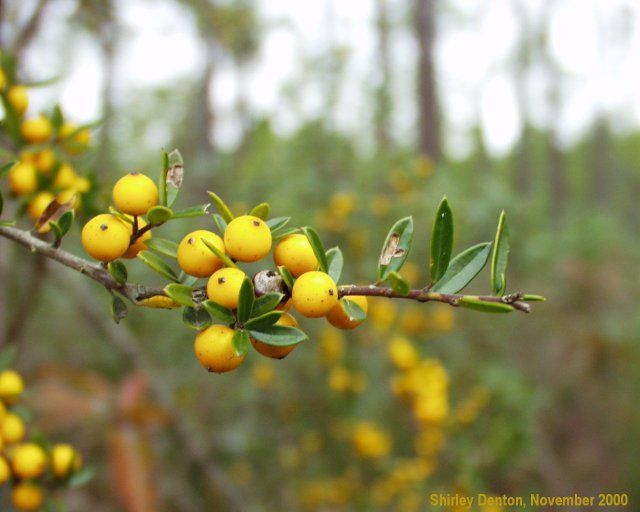
Photo by: Shirley Denton, Suncoast Chapter FNPS
Nomenclature
Common Name:
myrtle-leaf holly
Synonym(s):
Ilex myrtifolia
Genus species:
Ilex cassine var. myrtifolia
Family:
Aquifoliaceae
Plant Specifics
Form:
shrub
Size:
6-25 ft.
Life Span:
Long-lived perennial
Flower Color:
white
Fruit Color:
yellow,red
Phenology:
Evergreen shrub to small tree. Blooms in springs. Red to yellow fruits ripen in fall and persist into winter.
Noted For:
Showy Fruits
Landscaping
Recommended Uses:
Good winter interest in a wetland setting. Would make a good wet-site hedge
Considerations:
It's dioecious; so make sure you have at least one male plant in the vicinity to produce berries on the females.
Availability:
Native Nurseries, Seed, Friends
Propagation:
Softwood cuttings started in spring. Seeds of most holly species require 2-3 years of dormancy before they will germinate.
Light:
Part Sun, Shade
Moisture Tolerance:
Always Flooded------------------------------------------------Extremely Dry
Coming Soon!
Stays wet ---to--- Usually moist, occasional inundation
Salt Water Flooding Tolerance:
Unknown
Salt Spray/Salty Soil Tolerance:
Low/no tolerance of salty wind or direct salt spray
Soil or Other Substrate:
Sand, Loam
Soil pH:
acidic
Suitable to Grow In:
8A,8B
Ecology
Wildlife:
Pollinators, Birds
Bees pollinate flowers.
Fruits are eaten by birds.
Native Habitats:
Wet-moist sites. Typically found in shallow wetland areas.
Natural Range in Florida:
Visit the USF Libraries Atlas of Florida Plants
Comments:
Ethnobotany:
General Comments:
Not frequently cultivated, but worthy of consideration in appropriate sites for its long-lasting colorful fruits. Fruits can be red or yellow.

