Nomenclature
Common Name:
Synonym(s):
Genus species:
Family:
Aquifoliaceae
Plant Specifics
Form:
Size:
Life Span:
Long-lived perennial
Flower Color:
Fruit Color:
Phenology:
Noted For:
Landscaping
Recommended Uses:
Considerations:
Availability:
Propagation:
Light:
Moisture Tolerance:
Always Flooded------------------------------------------------Extremely Dry
Coming Soon!
Somewhat moist, no flooding ---to--- Short very dry periods
Salt Water Flooding Tolerance:
Unknown
Salt Spray/Salty Soil Tolerance:
Low/no tolerance of salty wind or direct salt spray
Soil or Other Substrate:
Sand, Loam
Soil pH:
Suitable to Grow In:
8A,8B,9A,9B
Ecology
Wildlife:
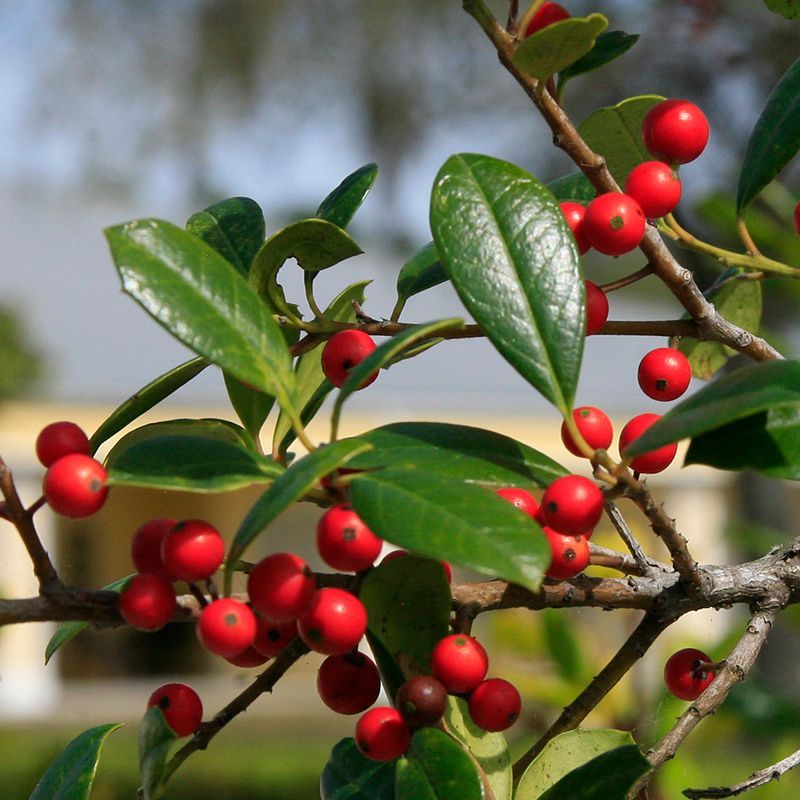
Bees visit the flowers, but all plants are female. This is apparently one of the few hollies where females will produce fruits without the presence of a male holly.
Fruits are eaten by birds.
Native Habitats:
Natural Range in Florida:
Visit the USF Libraries Atlas of Florida Plants
Comments:
Ethnobotany:
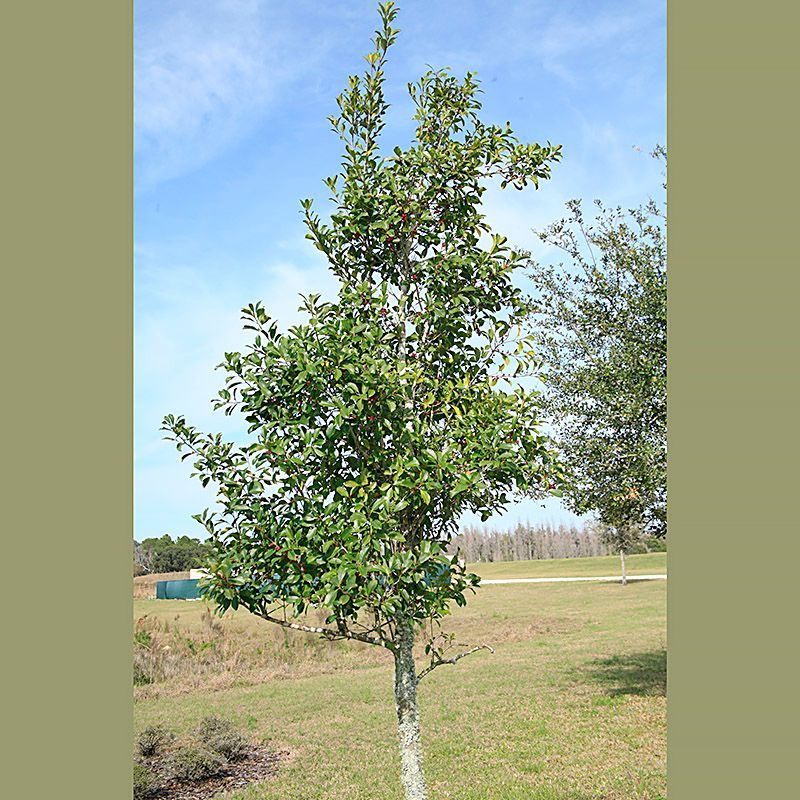
General Comments:
This naturally occurring hybrid has become a landscaping favorite. Ilex x attenuata is a natural hybrid originally found growing in the wild in Florida. It is a cross between I. cassine (dahoon) and I. opaca (American holly). To the best of our knowledge, this holly was documented once in 1924, in Walton County. It may no longer occur in nature.

