

Nomenclature
Common Name:
Synonym(s):
Genus species:
Family:
Haemodoraceae
Plant Specifics
Form:
Size:
Life Span:
Long-lived perennial
Flower Color:
Fruit Color:
Phenology:
Noted For:
Landscaping
Recommended Uses:
Considerations:
Availability:
Propagation:
Light:
Moisture Tolerance:
Always Flooded------------------------------------------------Extremely Dry
Coming Soon!
Stays wet ---to--- Somewhat moist, no flooding
Salt Water Flooding Tolerance:
Unknown
Salt Spray/Salty Soil Tolerance:
Low/no tolerance of salty wind or direct salt spray
Soil or Other Substrate:
Sand, Lime Rock, Organic
Soil pH:
Suitable to Grow In:
Ecology
Wildlife:
Attracts bees, wasps, and butterflies. Documented bee species include Agapostemon splendens, Augochloropsis metallica, A. sumptuosa, Dialictus coreopsis, D. tamiamensis, Anthidiellum perplexum, Anthidium maculifroizs, Coelioxys dolichos, C. mexicana, C. octodentata, C. sayi, Megachile albitarsis, M. brevis pseudobreuis, M. georgica, M. inendica, M. petulans, M. texana, M. xylocopoides, Melissodes coinmunis, Apis mellifera, Bombus impatiens, B. pennsylvanicus, Xylocopa micans and X. virginica krom beini (Deyrup et al. 2002).
This is a favorite food plant of feral hogs which will dig up large patches overnight.
Native Habitats:
Natural Range in Florida:
Visit the USF Libraries Atlas of Florida Plants
Comments:
Ethnobotany:
General Comments:
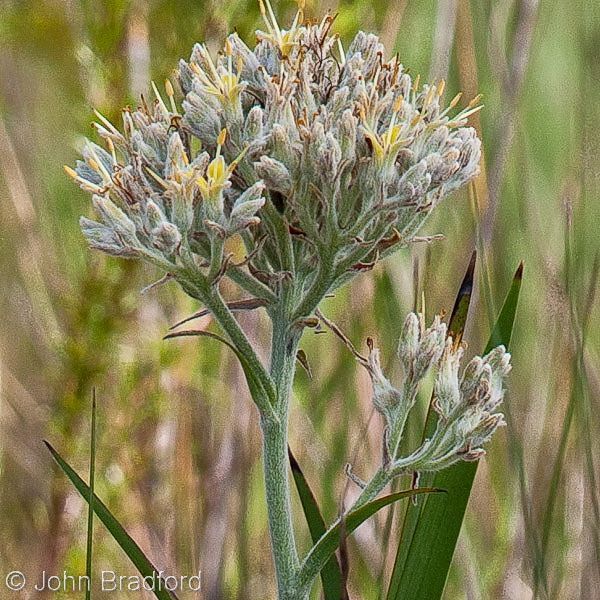
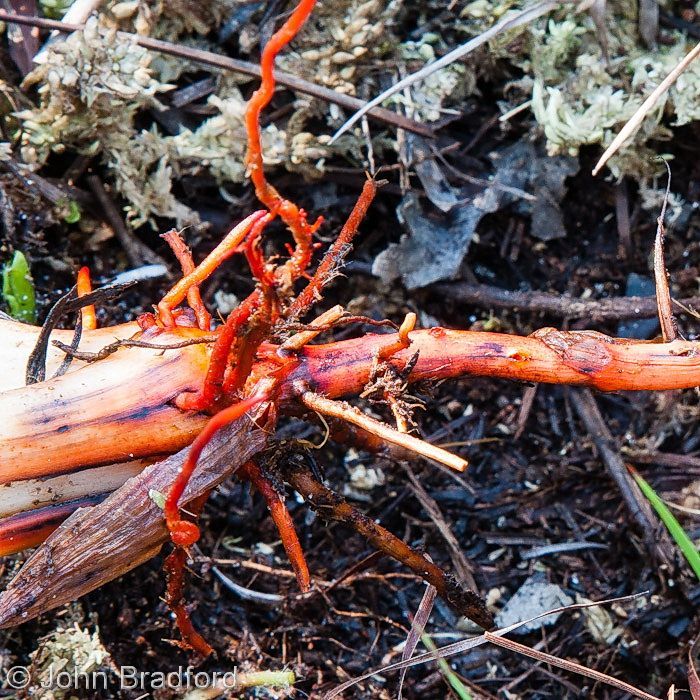
Flowers have yellow tepals but the inflorescence has abundant white hairs which provide an overall white aspect in the landscape. The species is named for its red roots and rhizomes.
Feral hogs love this plant and will dig up extensive areas to get the roots. The plant in turn recovers quickly and new plants come up from the fragmented rhisomes.

