
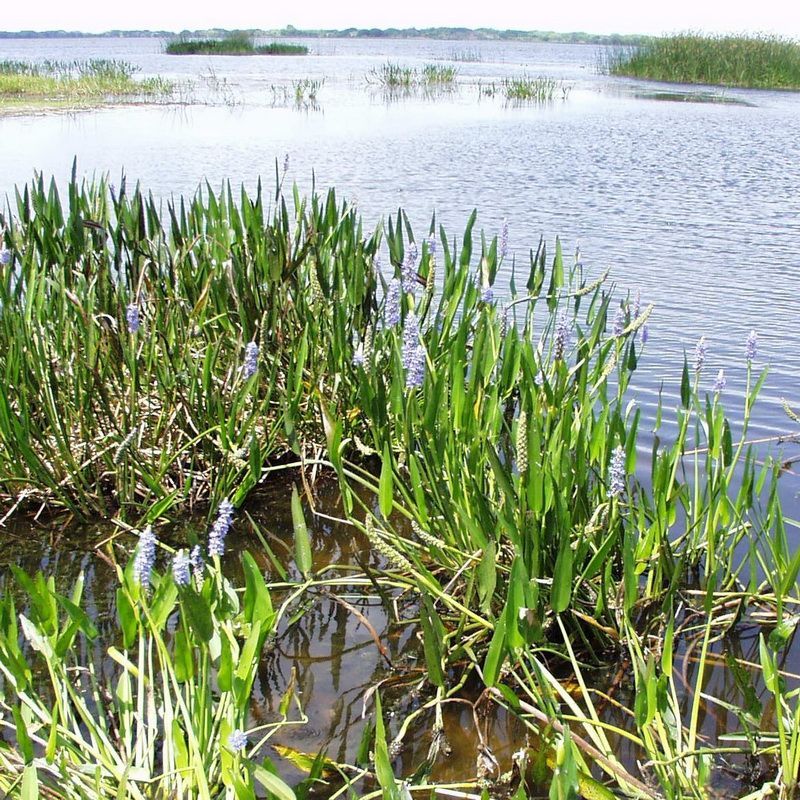
Nomenclature
Common Name:
Synonym(s):
Genus species:
Family:
Pontederiaceae
Plant Specifics
Form:
Size:
Life Span:
Long-lived perennial
Flower Color:
Fruit Color:
Phenology:
Noted For:
Landscaping
Recommended Uses:
Considerations:
Availability:
Propagation:
Light:
Moisture Tolerance:
Always Flooded------------------------------------------------Extremely Dry
Coming Soon!
1 ---to--- Stays wet
Salt Water Flooding Tolerance:
Unknown
Salt Spray/Salty Soil Tolerance:
Low/no tolerance of salty wind or direct salt spray
Soil or Other Substrate:
Sand, Loam, Organic
Soil pH:
Suitable to Grow In:
8A,8B,9A,9B,10A,10B
Ecology
Wildlife:
Attracts butterflies and bees. Documented bee visitors include Hylaeus schwarzi, Dianthidiuin floridiense, Ceratina dupla floridaiza, Apis inellifera , and Xylocopa inicaizs (Deyrup et al. 2002).
Ducks love the plants and a risk is that they might devour an entire planting.
Native Habitats:
Natural Range in Florida:
Visit the USF Libraries Atlas of Florida Plants
Comments:
Ethnobotany:
General Comments:
The natural range in Florida appears to include the entire mainland and exclude the Florida keys. Herbarium specimen in the Florida Keys was in a man-made pond leading to the suspicion that the plant was brought in by man and that the keys are not within the natural range of the species. The counties where the plant has not been documented are well within the range of the species and have ample habitats to support this common species (this author has seen it in most of those counties).

