

-1920w.jpg)
Nomenclature
Common Name:
Synonym(s):
Genus species:
Family:
Fagaceae
Plant Specifics
Form:
Size:
Life Span:
Long-lived perennial
Flower Color:
Fruit Color:
Phenology:
Noted For:
Landscaping
Recommended Uses:
Considerations:
Availability:
Propagation:
Light:
Moisture Tolerance:
Always Flooded------------------------------------------------Extremely Dry
Coming Soon!
Short very dry periods ---to--- Very long very dry periods
Salt Water Flooding Tolerance:
Unknown
Salt Spray/Salty Soil Tolerance:
Some tolerance to salty wind but not direct salt spray
Soil or Other Substrate:
Sand
Soil pH:
Suitable to Grow In:
8A,8B,9A,9B,10A,10B
Ecology
Wildlife:
Larval host plant for oak hairstreak ( Fixsenia favonius ), Horace's duskywing ( Erynnis horatius ), red-banded hairstreak ( Calycopis cecrops ) and white-M hairstreak ( Parrhasius m-album ) butterflies.
possible larval host for Juvenal's duskywing ( Erynnis juvenalis ).
Valued by the Florida scrub-jay for its acorns which are relatively low in tanins and often used as a nesting tree.
Acorns used by woodpeckers and wild turkey
Valued by squirrels and other mammals including white tailed deer
Acorns are low in tannins making them a preferred nut by birds and other wildlife.
Native Habitats:
Natural Range in Florida:
Visit the USF Libraries Atlas of Florida Plants
Comments:
Ethnobotany:
General Comments:
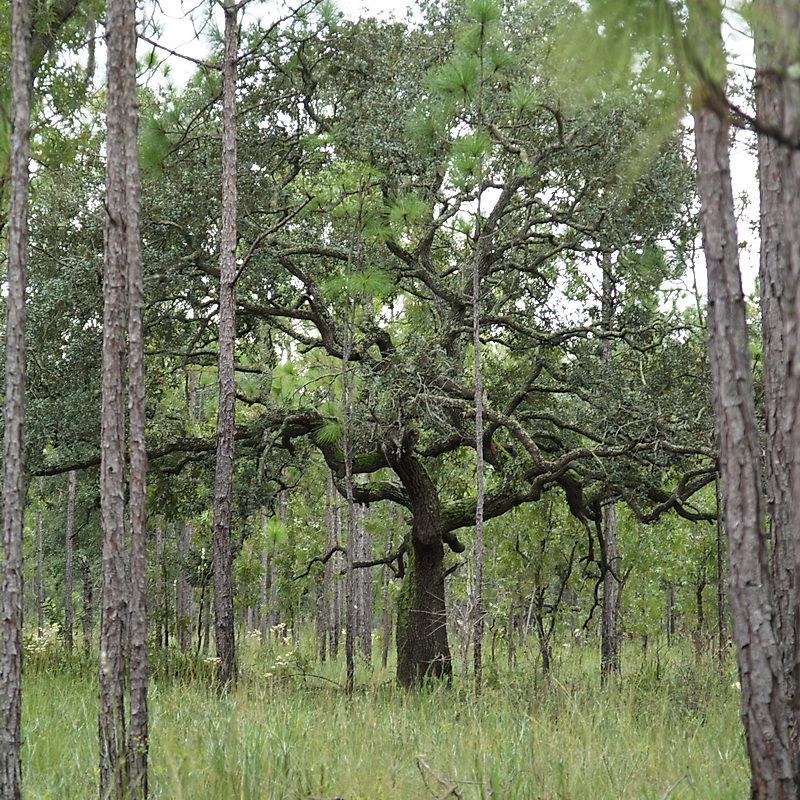
Slower growing and generally smaller than live oak. Extremely drought tolerant.
In environments where there is fire, this is often a small clonal shrub or cluster of small trees.

