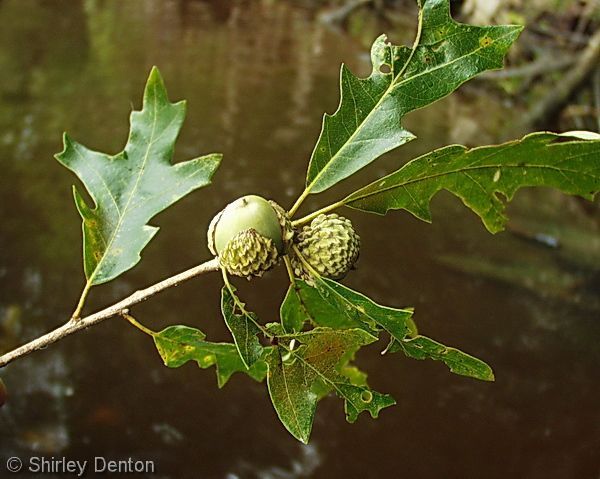
Photo by: Shirley Denton, Suncoast Chapter FNPS
Nomenclature
Common Name:
overcup oak
Synonym(s):
Genus species:
Quercus lyrata
Family:
Fagaceae
Plant Specifics
Form:
tree
Size:
40-60 ft
Life Span:
Long-lived perennial
Flower Color:
NA
Fruit Color:
brown
Phenology:
deciduous
Noted For:
Landscaping
Recommended Uses:
Shade tree.
Considerations:
Falling/fallen acorns can be an issue.
Availability:
Native Nurseries
Propagation:
Seed.
Light:
Full Sun, Part Sun
Moisture Tolerance:
Always Flooded------------------------------------------------Extremely Dry
Coming Soon!
Stays wet ---to--- Not wet but not extremely dry
Salt Water Flooding Tolerance:
Unknown
Salt Spray/Salty Soil Tolerance:
Low/no tolerance of salty wind or direct salt spray
Soil or Other Substrate:
Clay, Loam
Soil pH:
Acidic
Suitable to Grow In:
8A,8B,9A
Ecology
Wildlife:
Caterpillars, Birds, Mammals
Host plant for the White-M Hairstreak and Horace's Duskywing butterflies.
- Acorns appreciated by squirrels, deer, turkey, and other wildlife
- Used by birds for resting and nesting
- Said (by the Lady Bird Johnson Wildlflower Center) to attract water fowl
Native Habitats:
Bottomland floodplains and inundated river levees, lake swamps, rarely on non-wetland portions of floodplains.
Natural Range in Florida:
Visit the USF Libraries Atlas of Florida Plants
Comments:
Ethnobotany:
General Comments:
Its acorn is large (about an inch long) and is nearly enclosed by its cup or receptacle--hence the name "overcup."

