



Nomenclature
Common Name:
Synonym(s):
Genus species:
Family:
Fagaceae
Plant Specifics
Form:
Size:
Life Span:
Long-lived perennial
Flower Color:
Fruit Color:
Phenology:
Noted For:
Landscaping
Recommended Uses:
Considerations:
Availability:
Propagation:
Light:
Moisture Tolerance:
Always Flooded------------------------------------------------Extremely Dry
Coming Soon!
Usually moist, occasional inundation ---to--- Very long very dry periods
Salt Water Flooding Tolerance:
Unknown
Salt Spray/Salty Soil Tolerance:
Moderate. Tolerant of salty wind and may get some salt spray.
Soil or Other Substrate:
Sand, Loam
Soil pH:
Suitable to Grow In:
8A,8B,9A,9B,10A,10B,11
Ecology
Wildlife:
Larval host plant for Horace's duskywing ( Erynnis horatius ), red-banded hairstreak ( Calycopis cecrops ) and white-M hairstreak ( Parrhasius m-album ) butterflies;.
Possible larval host for Juvenal's duskywing ( Erynnis juvenalis ) and oak hairstreak ( Fixsenia favonius ) butterflies.
Acorns provide a good food source for many types of birds and mammals.
Good nesting habitat for birds and squirrels. The acorns are low in tannins.
Hummingbirds are attracted to and eat live oak pollen
Native Habitats:
Natural Range in Florida:
Visit the USF Libraries Atlas of Florida Plants
Comments:
Ethnobotany:
General Comments:
This species is broadly planted. It is one of the few native trees that is widely available. Noted for its twisty form, tolerance of root damage, and longevity.
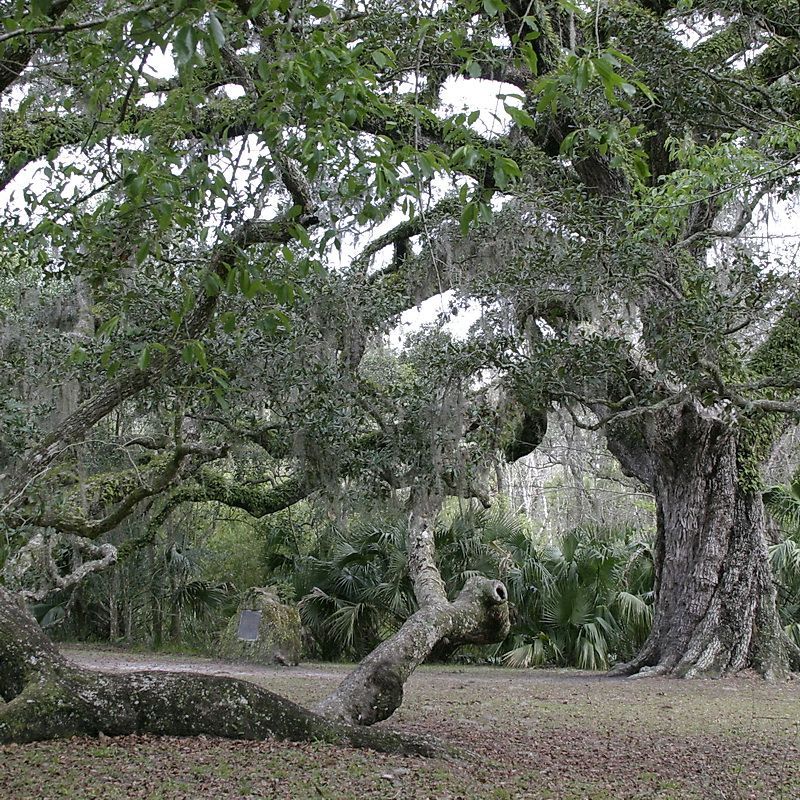
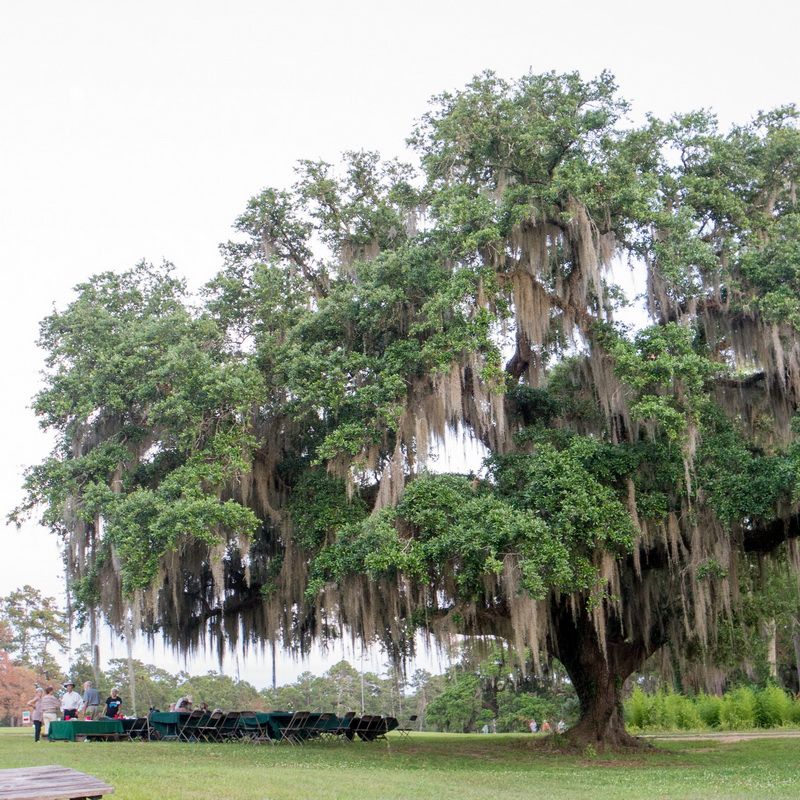
The form of this tree varies enormously with light conditions. Open grown trees are sometimes shaped like inverted bowls and there is much horizontal growth. Shade grown trees tend to grow straight toward the best light source and can either be tall and straight, or if the light is nor directly above, be very twisty.
Noted for being a good epiphyte host. Throughout much of its range its branches are hosts to many epiphytic plants, especially bromeliads (such as ball moss, Tillandsia recurvata and Spanish moss, T. usneoides), ferns (such as resurrection fern, Pleopeltis polypodioides and orchids including butterfly orchid (Encyclia tampensis).

