



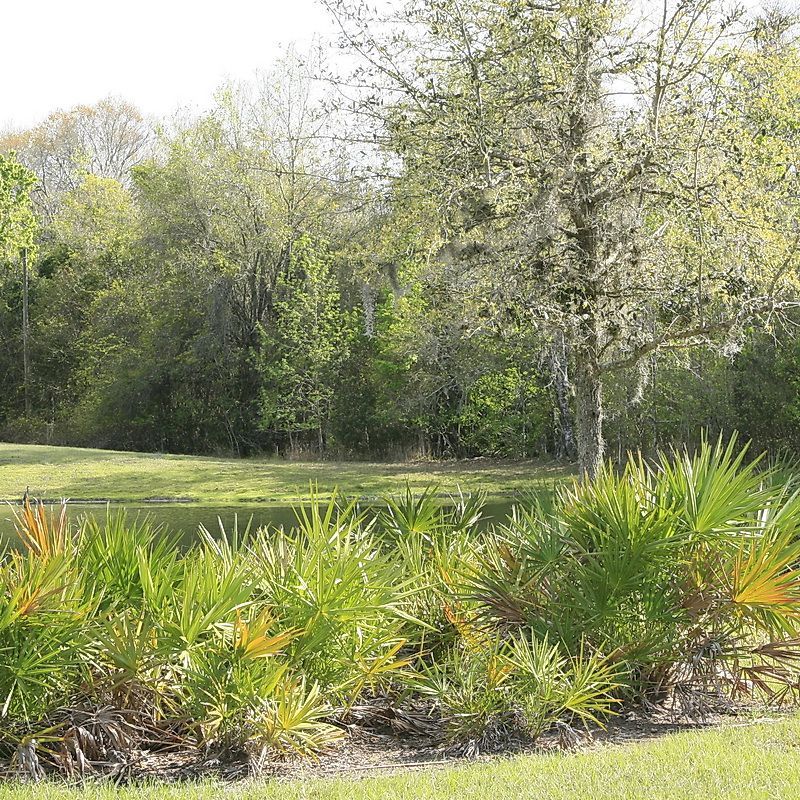
Nomenclature
Common Name:
Synonym(s):
Genus species:
Family:
Arecaceae (Palmae)
Plant Specifics
Form:
Size:
Life Span:
Long-lived perennial
Flower Color:
Fruit Color:
Phenology:
Noted For:
Landscaping
Recommended Uses:
Considerations:
Availability:
Propagation:
Light:
Moisture Tolerance:
Always Flooded------------------------------------------------Extremely Dry
Coming Soon!
Usually moist, occasional inundation ---to--- Very long very dry periods
Salt Water Flooding Tolerance:
Unknown
Salt Spray/Salty Soil Tolerance:
Moderate. Tolerant of salty wind and may get some salt spray.
Soil or Other Substrate:
Sand, Loam
Soil pH:
Suitable to Grow In:
8A,8B,9A,9B,10A,10B,11
Ecology
Wildlife:
Larval host plant for monk skipper ( Asbolis capucinus ) and palmetto skipper ( Euphyes arpa ) butterflies.
Nectar plant for Bartram's scrub-hairstreak (S trymon acis ), atala ( Eumaes atala) and other butterflies.
Documented bees visiting the plant include Colletes banksi, C. brimleyi, C. mandibularis, C. rzudus, Colletes sp. A, Hylaeus graenicheri, Agaposternon splendens, Augochlora pura, Augochlorella aurata, Augochloropsis metallica, A. sumptuosa, Dialictus miniatulus, D. nymphalis, D. placidensis, D. tegularis, Evylaeus pectoralis, Halictus ligatus, Sphecodes heraclei, Coelioxys sayi, Dianthidium. floridiense, Megachile policaris, M. xylocopoides, Epeolus erigeronis, E. glabratus, E. zonatus, Apis mellifera, Bombus impatiens, B. pennsylvanicus , and Xylocopa virginica krombeini (Deyrup et al. 2002). Another study documented 311 species of flower visitors including 121 species of bees, 117 species of flies, and 52 species of beetles (Deyrup and Deyrup 2012).
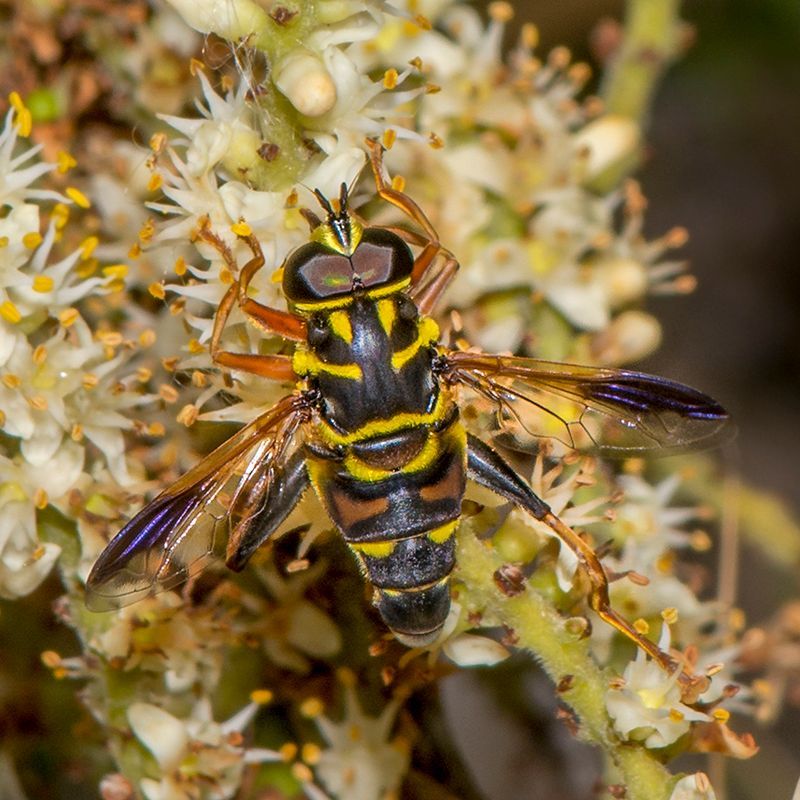
Saw palmetto also attracts Syrphid flies including the flower fly, Meromacrus acutus , which apparently is a saw palmetto specialist (John Lampkin, 2019)
Palmetto berries are important bear food.
More than 100 bird species, 27 mammals, 25 amphibians, 61 reptiles, and countless insects use it as food and/or cover (Maehr and Layne 1996).
As Maehr and Layne summarize, “ If saw palmetto is not the plant species most highly used by Florida wildlife, it certainly is in close contention for that honor.”
Native Habitats:
Natural Range in Florida:
Visit the USF Libraries Atlas of Florida Plants
Comments:
Ethnobotany:
General Comments:
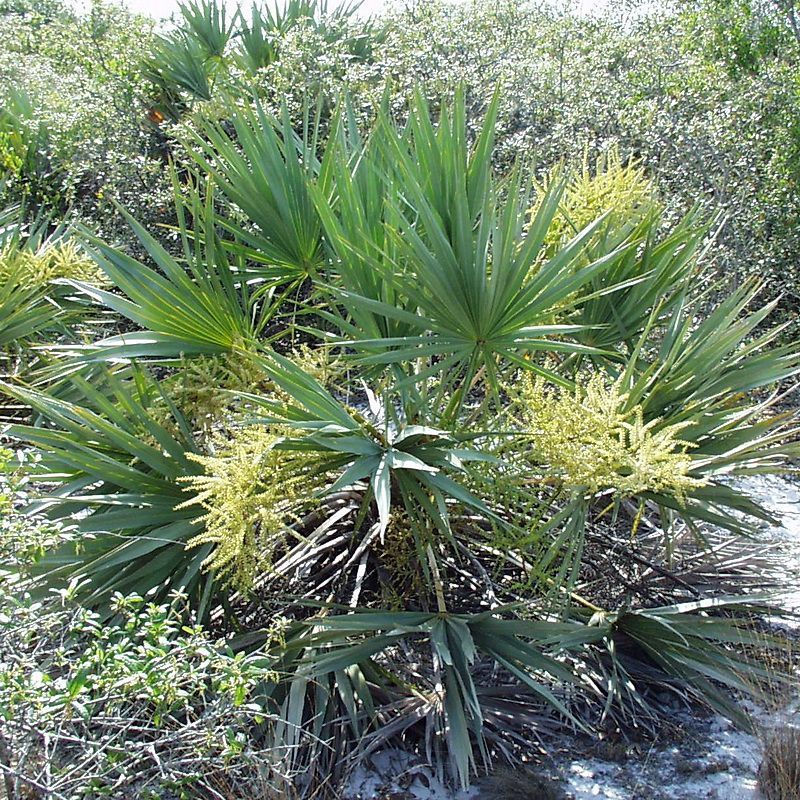
There are two color morphs: green and silver. Silver is associated with the east coast, but may occur anywhere within the range. It is typically larger and faster growing than the green morph.
Saw palmetto is exceedingly important to the fire ecology of Florida. Keeping saw palmetto dominated woodlands burned is essential both for ecology and safety. Overgrown saw palmetto thickets are severe fire hazards associated with catastrophic firestorms during dry windy weather. Tall palmetto understories can carry fires into the overstory and kill mature trees (Sackett 1975; Hough and Albini 1978. exerpted from Duever, 2011).
Saw palmetto is frequently clonal. A clone is a group of plants that are genetically identical as it is formed by the spreading of underground stems which produce new visible genetic "twins" called ramets. For saw palmetto, the group of individuals that make of the clone may continue to spread for thousands of years, though the underground connections break with time. Clones can become quite large, and it takes genetic studies to definitively map an idividual clone. One such study found that in a 20x20m (approximately 66x66ft) study plot, based on modeled rates of spread, the oldest of their clones was likely over 5,500 years old. The researchers concluded that other clones (not studied) might exceed 10,000 years in age. Individual plants do not live to such ripe old ages, and individual plants can grow fairly quickly (Takahashi, et al. 2011).

