
Nomenclature

Common Name:

American elm

Synonym(s):

Ulmus floridana

Genus species:

Ulmus americana

Family:

Ulmaceae

Plant Specifics

Form:

tree

Size:

60-70 ft tall in Florida by 20-40 ft wide

Life Span:

Long-lived perennial

Flower Color:

green,NA

Fruit Color:

brown,NA

Phenology:

Deciduous. Inconspicuous blooms in early spring. Life span around 150 yrs (Nelson 2003).

Noted For:

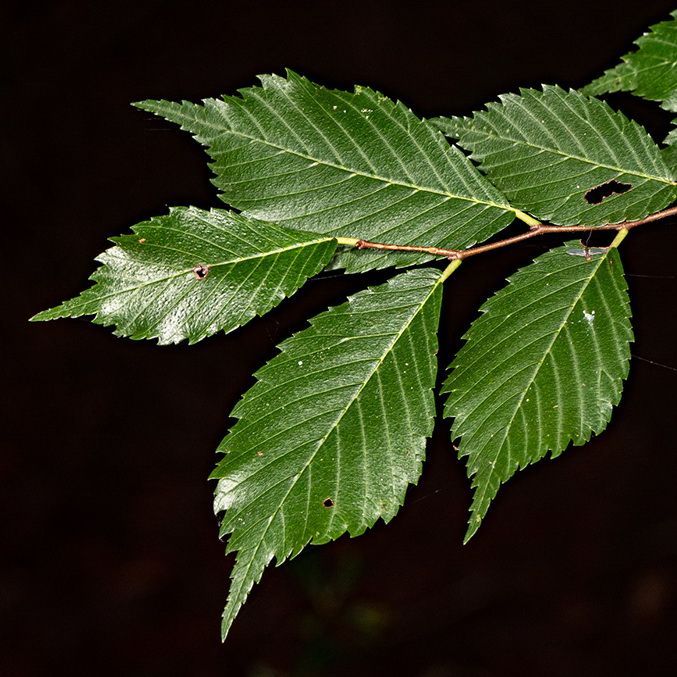
Fall Color, Interesting Foliage

Landscaping

Recommended Uses:

Shade tree, used as a street tree noted for its spreading urn-shaped crown. Tolerant of root disturbance.

Considerations:

While Dutch elm disease has not been detected in Florida (IFAS, 2018), the planting practices that result in massive losses of street trees north of Florida (planting in rows along strees esp. where root graphs could occur) would be good to avoid.

Availability:

Quality Nurseries, Native Nurseries

Propagation:

Seed or cuttings.

Light:

Full Sun, Part Sun

Moisture Tolerance:

Always Flooded------------------------------------------------Extremely Dry

Coming Soon!

Usually moist, occasional inundation ---to--- Not wet but not extremely dry

Salt Water Flooding Tolerance:

Unknown

Salt Spray/Salty Soil Tolerance:

Low/no tolerance of salty wind or direct salt spray

Soil or Other Substrate:

Sand, Clay, Loam

Soil pH:

acidic to circum-neutral

Suitable to Grow In:

8A,8B,9A,9B

Ecology

Wildlife:

Caterpillars, Birds, Mammals

Larval host for: Eastern Comma ( Polygonia comma ), Question Mark ( Polygonia interrogationis ), Painted Lady ( Vanessa cardui )

Seeds used by birds in spring when little else is available.


Used for nesting. 

Native Habitats:

Floodplain forest, wet mesic forests, hardwood swamps.

Natural Range in Florida:

Comments:

Ethnobotany:

General Comments:

This tree is subject to Dutch elm disease. Dutch elm disease has not been detected in Florida (IFAS 2008). In most of eastern North America, this tree has largely disappeared from landscape use due to mass mortality from Dutch elm disease.