
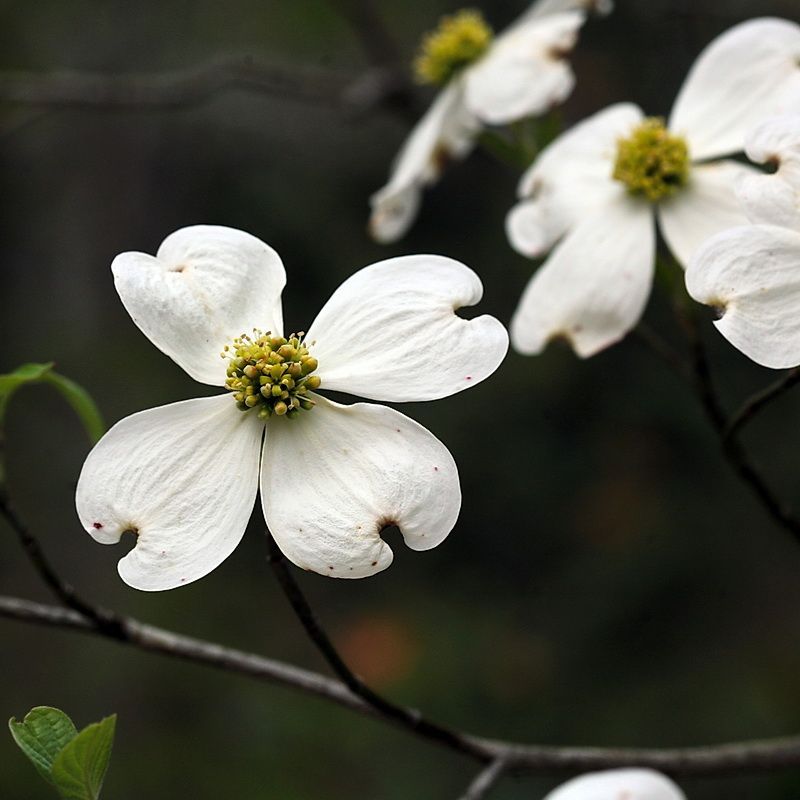
Cornus florida
flowering dogwood
Cornaceae
Plant Specifics
Form:
Size:
Life Span:
long-lived perennial
Flower Color:
Fruit Color:
Phenology:
Noted For:
Landscaping
Recommended Uses:
Considerations:
Very sensitive to appropriate soils. Does poorly in neutral or alkaline soils. Dogwoods do not tolerate heavy foot traffic or extra soil piled around their root areas.
Light:
Moisture Tolerance:
Somewhat moist, no flooding ---- to ---- Short very dry periods
Salt Water Flooding Tolerance:
Unknown
Salt Spray/Salty Soil Tolerance:
Low/no tolerance of salty wind or direct salt spray
Soil or Other Substrate:
Sand, Loam
Suitable to Grow In:
8A,8B,9A,9B
Ecology
Wildlife:
Attracts long-tongued bees, short-tongued bees, wasps, flies, and butterflies.
Larval host for cecropia silkmoth ( Hyalophora cecropia ) and spring azure butterfly ( Celastrina ladon ).
Birds and small mammals consume the fruit
Native Habitats:

