
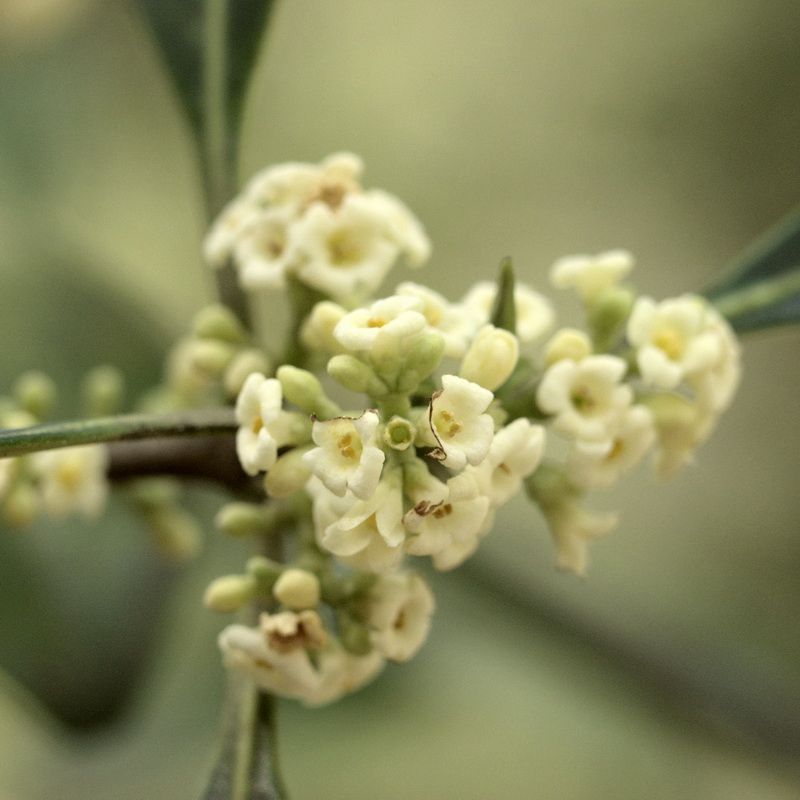
Cartrema americanum
wild olive, American devilwood
Oleaceae
Plant Specifics
Form:
shrub
Size:
8-15 (50) ft tall by 5-10 ft wide
Life Span:
long-lived perennial
Flower Color:
white
Fruit Color:
black
Phenology:
evergreen
Noted For:
Showy Flowers, Aroma/Showy Fruitsagrance, Interesting Foliage
Landscaping
Recommended Uses:
Evergreen screen, evergreen shrub to small tree.
Considerations:
Light:
Part Sun, Shade
Moisture Tolerance:
Usually moist, occasional inundation ---- to ---- Somewhat long very dry periods
Salt Water Flooding Tolerance:
Unknown
Salt Spray/Salty Soil Tolerance:
Moderate. Tolerant of salty wind and may get some salt spray.
Soil or Other Substrate:
Sand, Loam
Suitable to Grow In:
8A,8B,9A,9B
Ecology
Wildlife:
Pollinators, Birds, Mammals
Attracts bees.
Larger birds and small mammals eat the fruit.
Native Habitats:
Moist sites. Coastal hammocks, floodplains, bulffs, flatwoods, bay swamps.

