
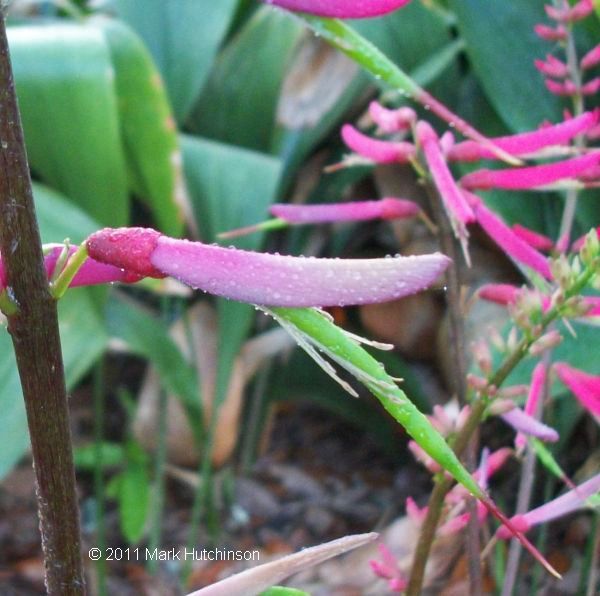
Erythrina herbacea
coralbean, Cherokee bean
Fabaceae (Leguminosae)
Plant Specifics
Form:
Size:
Life Span:
long-lived perennial
Flower Color:
Fruit Color:
Phenology:
Noted For:
Landscaping
Recommended Uses:
Considerations:
It has thorns, but they are rather small.
The seeds of Cherokee bean are poisonous and purportedly used for rat poison in Mexico.
Light:
Moisture Tolerance:
Usually moist, occasional inundation ---- to ---- Very long very dry periods
Salt Water Flooding Tolerance:
Unknown
Salt Spray/Salty Soil Tolerance:
High. Can tolerate significant and ongoing amounts of salt.
Soil or Other Substrate:
Sand, Loam
Suitable to Grow In:
8A,8B,9A,9B,10A,10B,11
Ecology
Wildlife:
Attracts long-tongued pollinators.
Attracts hummingbirds.
Due to its dense foliage and thorny stems, coral bean serves as a refuge for small birds and animals.
Native Habitats:

