
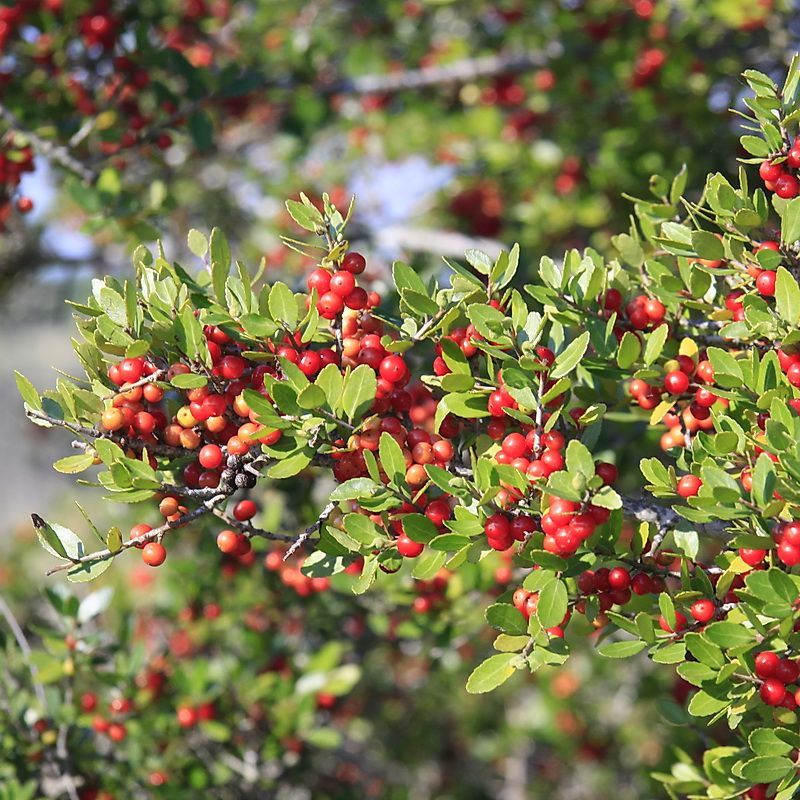
Ilex vomitoria
yaupon holly
Nomenclature
Common Name:
Synonym(s):
Genus species:
Family:
Aquifoliaceae
Plant Specifics
Form:
Size:
Life Span:
Long-lived perennial
Flower Color:
Fruit Color:
Phenology:
Noted For:
Landscaping
Recommended Uses:
Considerations:
Text
Availability:
Text
Propagation:
Text
Light:
Text
Moisture Tolerance:
Always Flooded---------------------------------Extremely Dry
□□□□□□□□□□□□□□□□□□□□□■■■■■■■■■■■■■■■■■■■■■
Somewhat moist, no flooding -to- 1Stays wet
Salt Water Flooding Tolerance:
Unknown
Salt Spray/Salty Soil Tolerance:
Moderate. Tolerant of salty wind and may get some salt spray.
Soil or Other Substrate:
Soil pH:
Suitable to Grow In:
8A,8B,9A,9B,10A
Ecology
Wildlife:
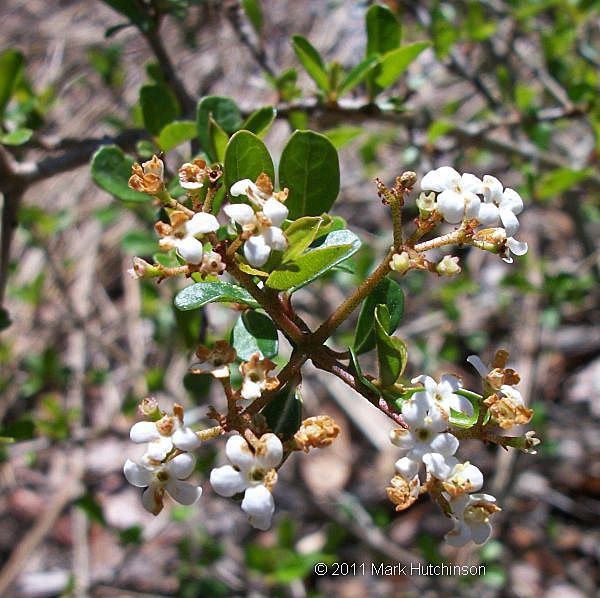
Bees pollinate flowers.
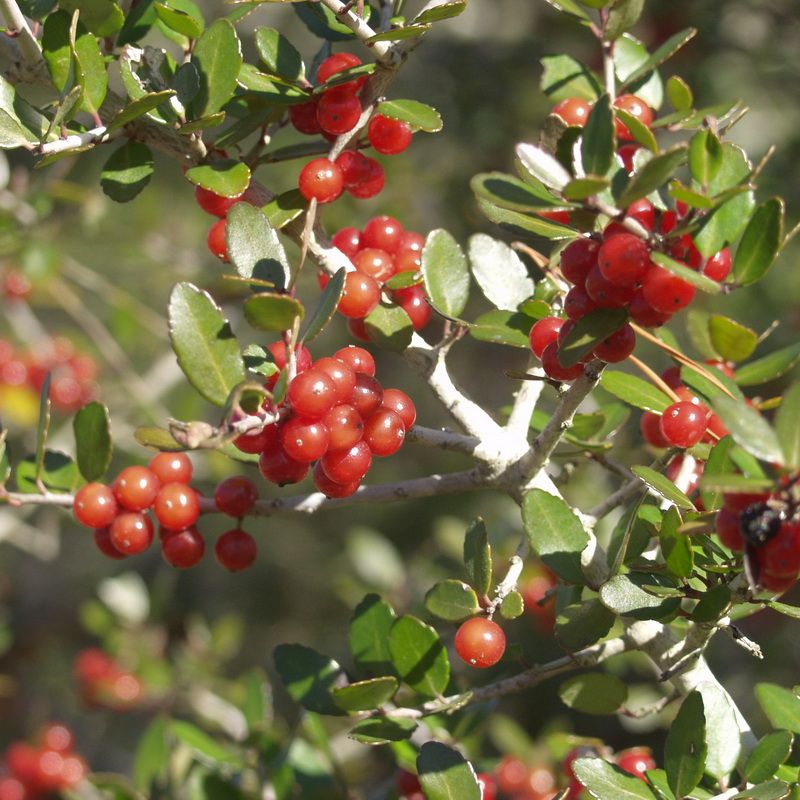
Fruits are eaten by birds.
Native Habitats:
Comments:
Ethnobotany:
General Comments:
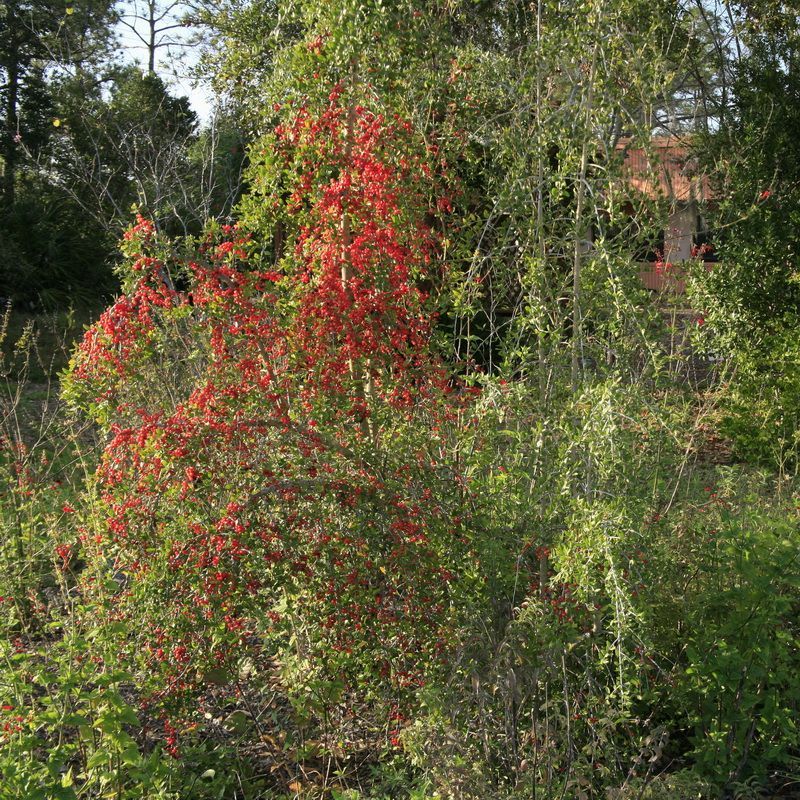
To get fruits, both a male and a female are required. Although there are issues with provenance, 'Shillings' is a male and can provide an inconspicuous source of pollen for larger females. The issue (with no scientifically vetted answer) is whether pollen from a natural dwarf could have any affect on wild populations of yaupon holly (the author suspects 'no' as being dwarf is unlikely to provide any selective advantage in the wild.

