

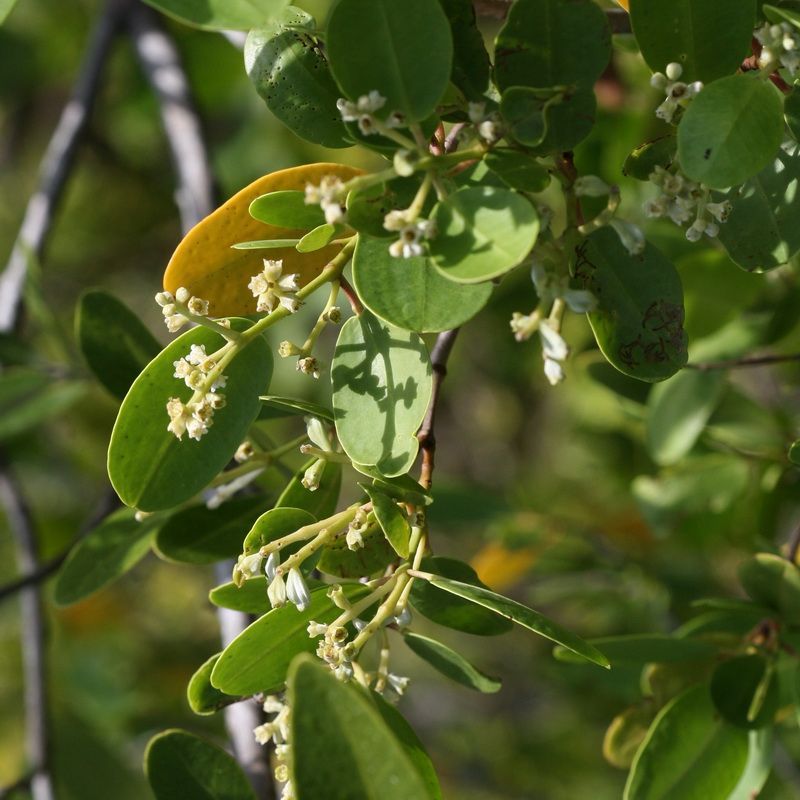
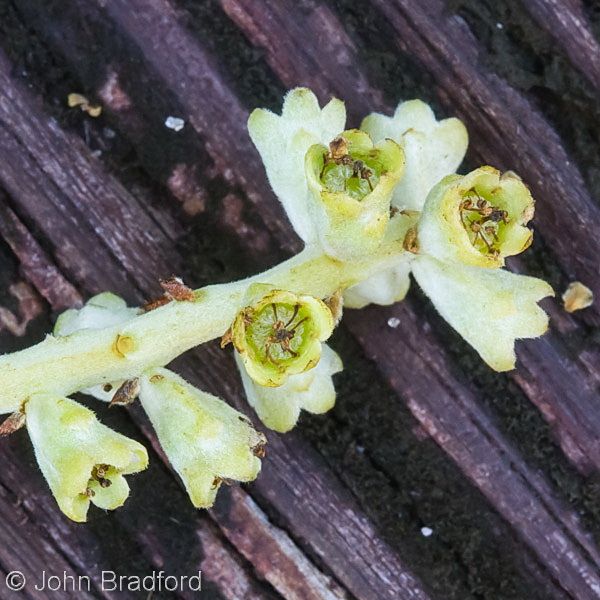
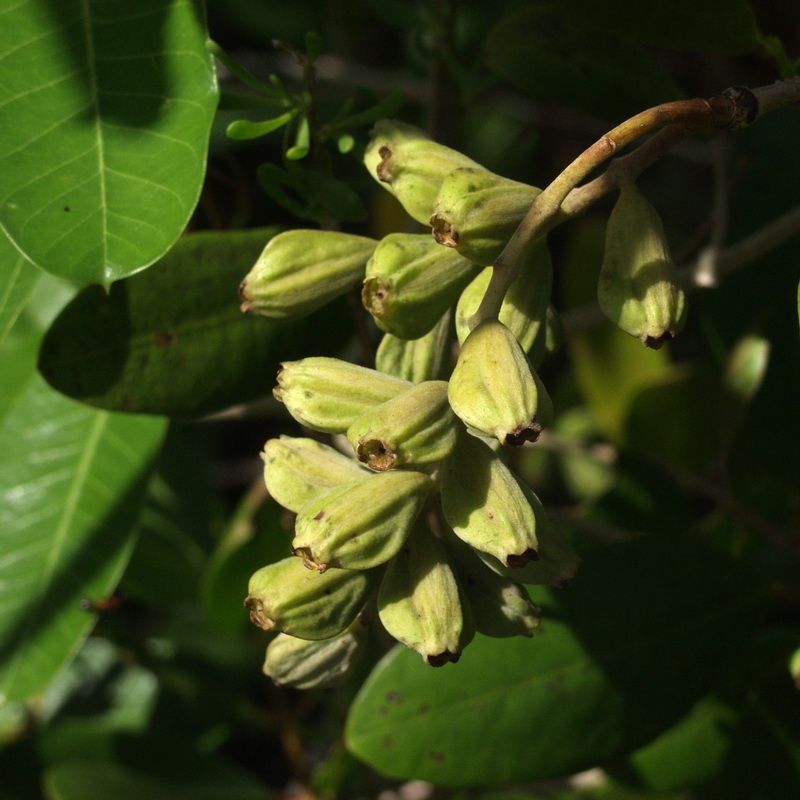
Laguncularia racemosa
white mangrove
Nomenclature
Common Name:
Synonym(s):
Genus species:
Family:
Combretaceae
Plant Specifics
Form:
Size:
Life Span:
Long-lived perennial
Flower Color:
Fruit Color:
Phenology:
Noted For:
Landscaping
Recommended Uses:
Considerations:
Text
Availability:
Text
Propagation:
Text
Light:
Text
Moisture Tolerance:
Always Flooded---------------------------------Extremely Dry
□□□■■■■■■■■■□□□□□□□□□□□□□□□□□□□□□□□□□□□□□□
Aquatic -to- Stays wet
Salt Water Flooding Tolerance:
Unknown
Salt Spray/Salty Soil Tolerance:
High. Can tolerate significant and ongoing amounts of salt.
Soil or Other Substrate:
Soil pH:
Suitable to Grow In:
9A,9B,10A,10B,11
Ecology
Wildlife:
Attracts bees, wasps, flies and butterflies (Landry 2013).
Native Habitats:
Comments:
Ethnobotany:
General Comments:
It's called "white mangrove" because it exudes extra salt through special glands which makes the leaves appear white.
The word "mangrove" refers to all types of trees that have adapted to living in the sea. Worldwide, there are 23 genera from eight different families that have species that are described as mangroves.

