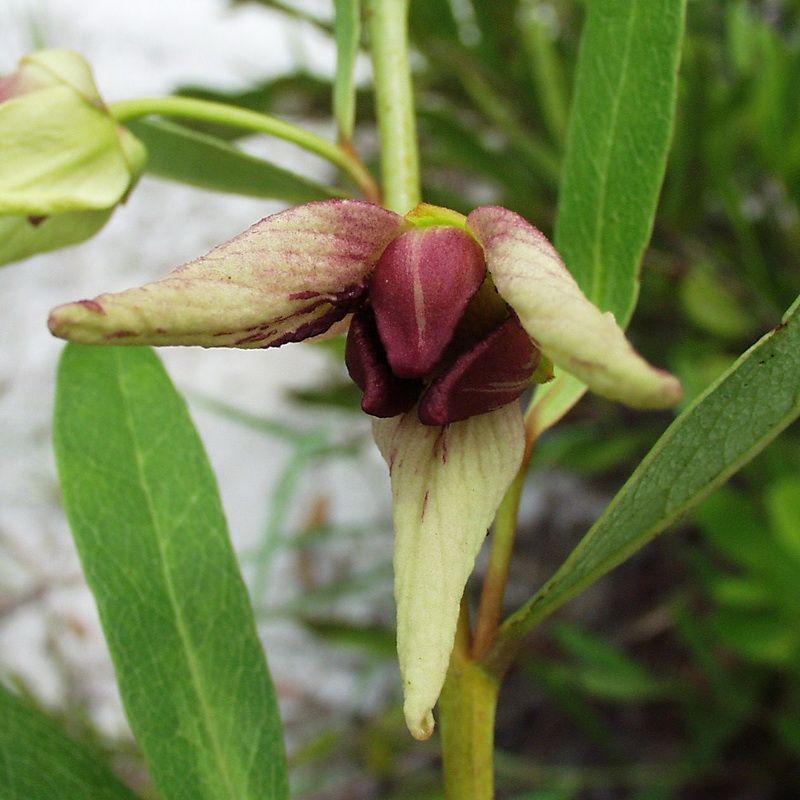
• Photo by: Shirley Denton, Suncoast Chapter FNPS
  • Photo by: Shirley Denton, Suncoast Chapter FNPS
  • Photo by: Mark Hutchinson, Hernando Chapter, FNPS
  • Photo by: Mark Hutchinson, Hernando Chapter, FNPS
  • Photo by: Mark Hutchinson, Hernando Chapter, FNPS

Asimina pygmea

dwarf pawpaw, gopherberry

Nomenclature

Common Name:

dwarf pawpaw, gopherberry

Synonym(s):

Genus species:

Asimina pygmea

Family:

Annonaceae

Plant Specifics

Form:

shrub

Size:

1.5 - 2.0 ft tall by 1 - 1.5 ft wide

Life Span:

Long-lived perennial

Flower Color:

white,red,green

Fruit Color:

green

Phenology:

Blooms in late spring

Noted For:

Showy Flowers, Showy Fruits

Landscaping

Recommended Uses:

Specimen plant.

Considerations:

Text

Availability:

Text

Propagation:

Text

Light:

Text

Moisture Tolerance:

Always Flooded---------------------------------Extremely Dry

â–¡â–¡â–¡â–¡â–¡â–¡â–¡â–¡â–¡â–¡â–¡â–¡â–¡â–¡â–¡â–¡â–¡â–¡â– â– â– â– â– â– â– â– â– â– â– â– â– â– â– â– â– â– â–¡â–¡â–¡â–¡â–¡â–¡

Somewhat moist, no flooding -to- Somewhat long very dry periods

Salt Water Flooding Tolerance:

Unknown

Salt Spray/Salty Soil Tolerance:

Low/no tolerance of salty wind or direct salt spray

Soil or Other Substrate:

Sand

Soil pH:

5.0 - 7.0

Suitable to Grow In:

8B,9A,9B

Ecology

Wildlife:

Caterpillars, Birds, Mammals

Larval host to the Zebra Swallowtail butterfly ( Eurytides marcellus )and pawpaw sphinx ( Dolba hyloeus ). Pollinated by flies and beetles.

Birds and small wildlife consume the fruit.


The fruit of dwarf pawpaw is sometimes called gopherberry because the fruit is eaten by gopher tortoises.

Native Habitats:

flatwoods, scrub, sandhill

Comments:

Ethnobotany:

Edible fruit.

General Comments:

Flowers range from maroon to maroon and white, to maroon and green mixed. One common name is gopherberry - because golpher tortoise eat the fruit.