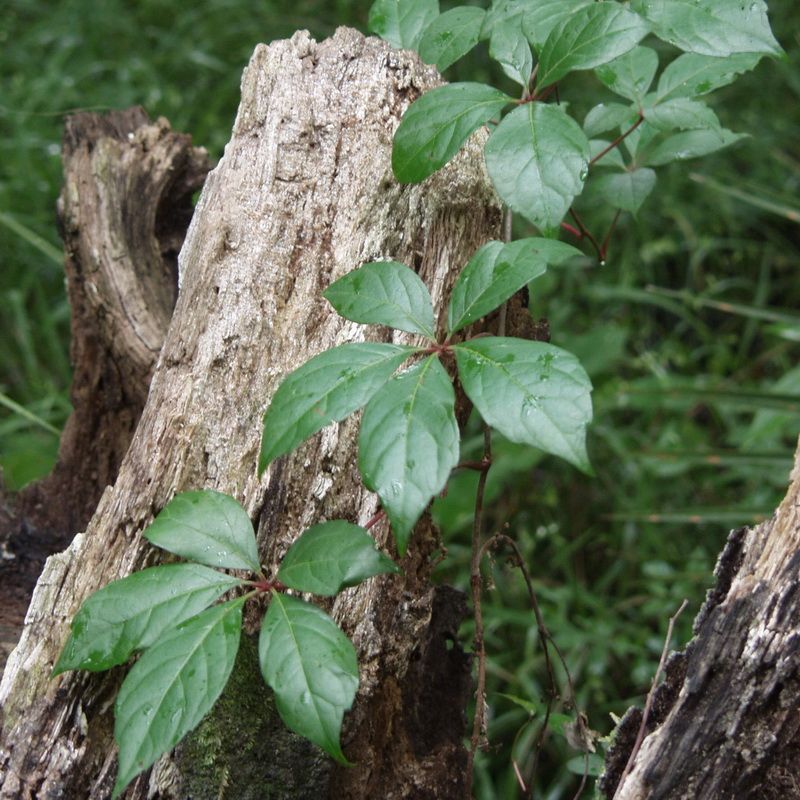
Parthenocissus quinquefolia
woodbine, Virginia creeper
Vitaceae
Plant Specifics
Form:
Size:
Life Span:
annual
Flower Color:
Fruit Color:
Phenology:
Noted For:
Landscaping
Recommended Uses:
Considerations:
It should not be allowed to climb painted surfaces because this same adhesive-like material will bond to the surface and likely damage the paint . This plant can be overly aggressive and readily reseeds.
Light:
Moisture Tolerance:
Usually moist, occasional inundation ---- to ---- Somewhat long very dry periods
Salt Water Flooding Tolerance:
Unknown
Salt Spray/Salty Soil Tolerance:
Moderate. Tolerant of salty wind and may get some salt spray.
Soil or Other Substrate:
Sand, Clay, Loam
Suitable to Grow In:
8A,8B,9A,9B,10A,10B,11
Ecology
Wildlife:
Pollinated by bees and other pollinators. Bees documented visiting this species include Colletes nudus, Augochloropsis metallica, Megachile mendica , and Apis mellifera (honeybee) (Deyrup et al. 2002).
Larval host for some sphynx moths.
Fruits eaten by a variety of birds and small mammals. Also used for shelter.
Native Habitats:

