
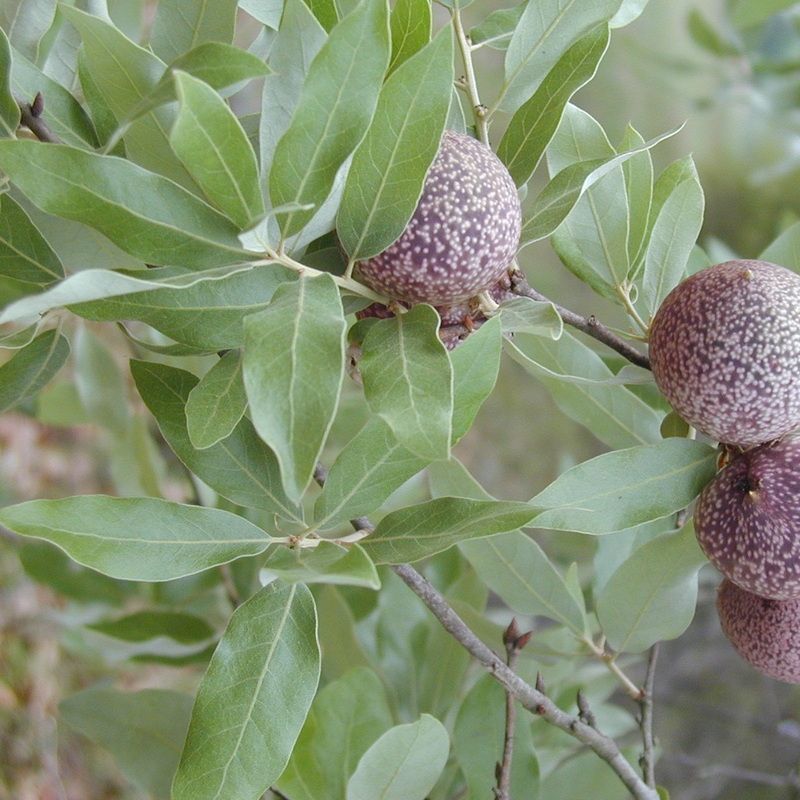
Quercus incana
bluejack oak
Fagaceae
Plant Specifics
Form:
tree
Size:
Small tree. Can be a shade tree for small yards.
Life Span:
long-lived perennial
Flower Color:
inconspicuous
Fruit Color:
brown
Phenology:
Deciduous
Noted For:
Landscaping
Recommended Uses:
Small tree in sandhill and other sandy-loam settings.
Considerations:
Does not handle root disturbance well (is noted for disappearing if land is managed by rollerchopping)
Light:
Moisture Tolerance:
Short very dry periods ---- to ---- Very long very dry periods
Salt Water Flooding Tolerance:
Unknown
Salt Spray/Salty Soil Tolerance:
Low/no tolerance of salty wind or direct salt spray
Soil or Other Substrate:
Suitable to Grow In:
Ecology
Wildlife:
Caterpillars, Birds, Mammals
Importnt food source for some species of moths and butterflies.
Acorns provide food for selected birds, squirrels, raccoons, and deer.
Native Habitats:
Sandhill

