

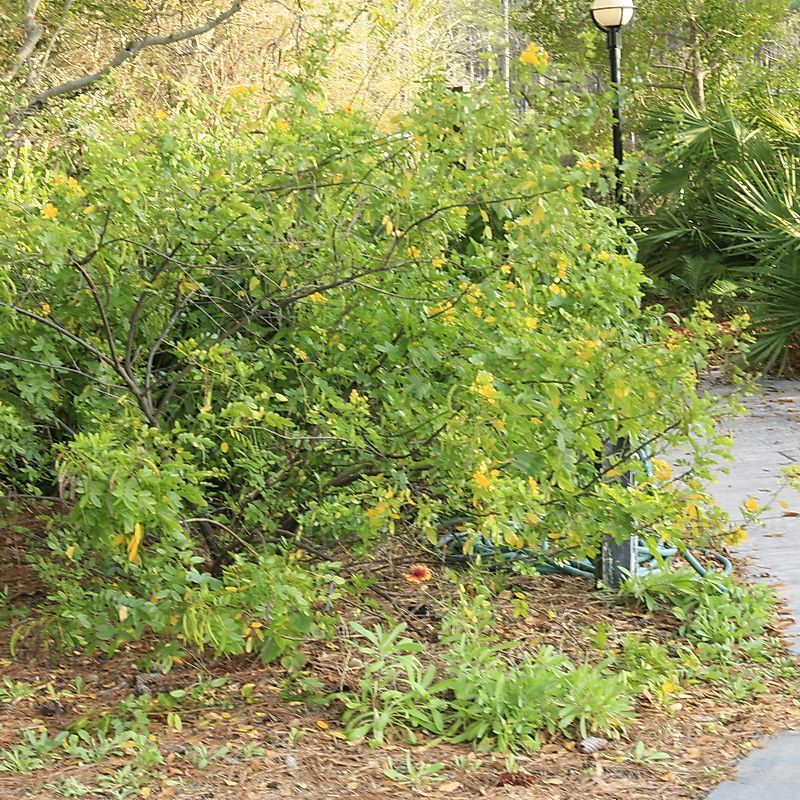
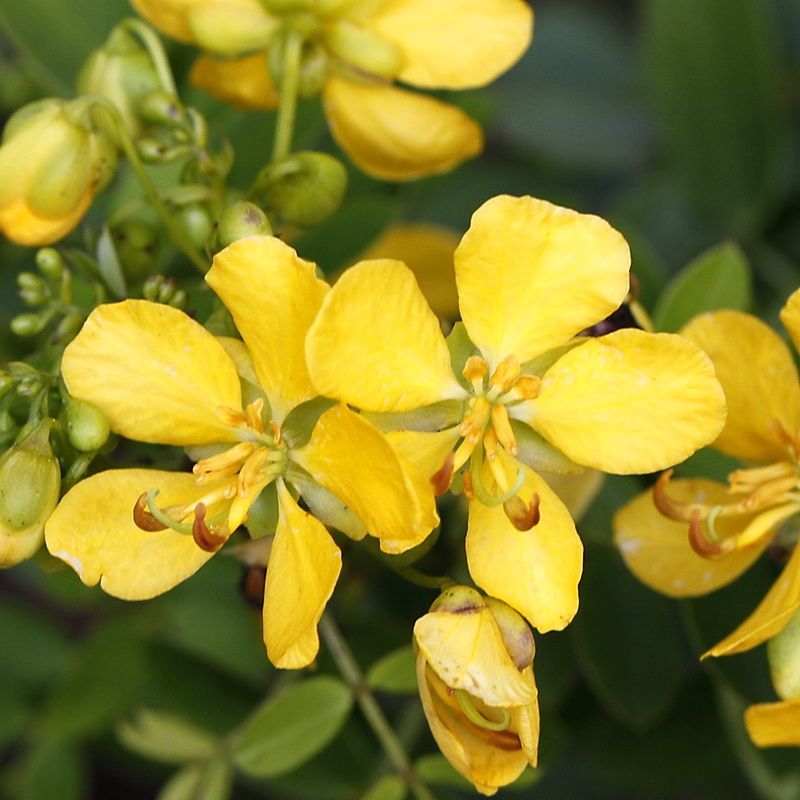
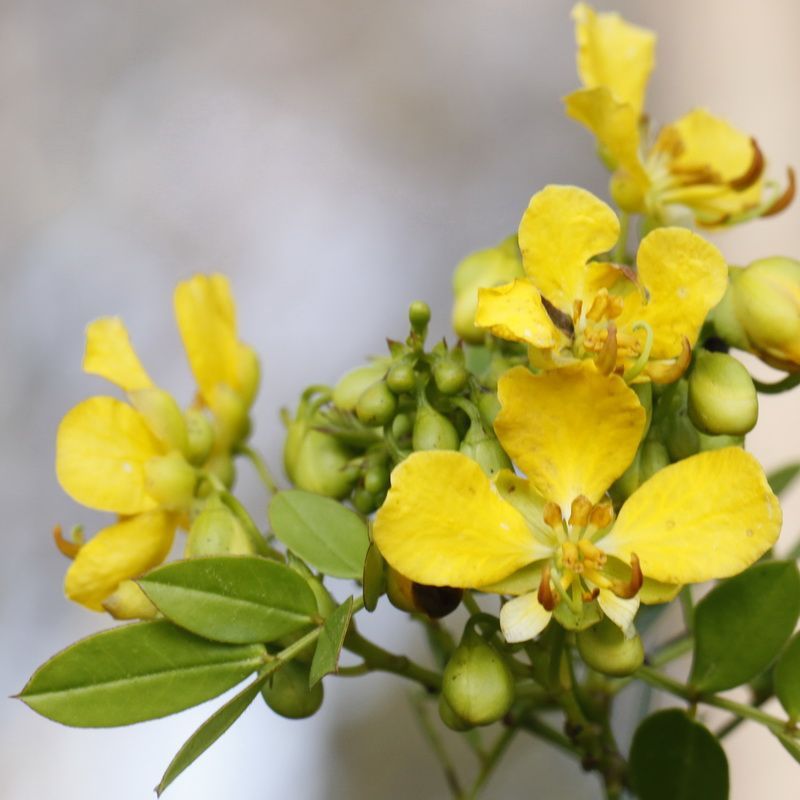
Senna ligustrina
privet senna, privet wild sensitive plant
Nomenclature
Common Name:
Synonym(s):
Genus species:
Family:
Fabaceae (Leguminosae)
Plant Specifics
Form:
Size:
Life Span:
Long-lived perennial
Flower Color:
Fruit Color:
Phenology:
Noted For:
Landscaping
Recommended Uses:
Considerations:
Text
Availability:
Text
Propagation:
Text
Light:
Text
Moisture Tolerance:
Always Flooded---------------------------------Extremely Dry
□□□□□□□□□□□□□□□□□□□□□■■■■■■■■■■■■■■■■■■□□□
Somewhat moist, no flooding -to- Very long very dry periods
Salt Water Flooding Tolerance:
Unknown
Salt Spray/Salty Soil Tolerance:
Moderate. Tolerant of salty wind and may get some salt spray.
Soil or Other Substrate:
Sand
Soil pH:
Suitable to Grow In:
9A,9B,10A,10B,11
Ecology
Wildlife:
Larval host plant for cloudless sulphur ( Phoebis sennae ), sleepy orange ( Eurema nicippi ) and the introduced orange-barred sulphur ( Phoebis philea ) butterflies.
A gland at the base of the leaves attracts ants that attack the butterfly caterpillars (IRC, 2021)
Sennas attract butterflies, solitary bees including sweat bees and bumble bees, as pollinators.
Native Habitats:
Comments:
Ethnobotany:
General Comments:

