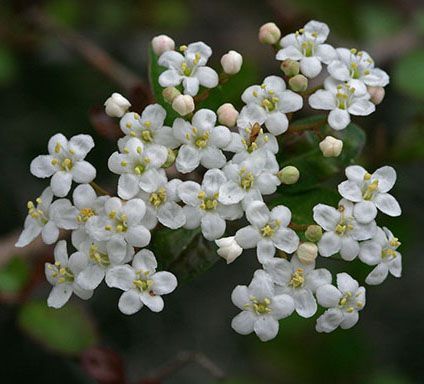

• Photo by: Paul Rebman
  • Photo by: Mark Hutchinson, Hernando Chapter, FNPS
  • Photo by: Mark Hutchinson, Hernando Chapter, FNPS
  • Photo by: Mark Hutchinson, Hernando Chapter, FNPS
  • Photo by: Rick Cantrell, Magnolia Chapter FNPS
  • Photo by: Shirley Denton, Suncoast Chapter FNPS
  • Photo by: Shirley Denton, Suncoast Chapter FNPS
  • Photo by: Shirley Denton, Suncoast Chapter FNPS
  • Photo by: Shirley Denton, Suncoast Chapter FNPS

Viburnum obovatum

Walter's viburnum

Nomenclature

Common Name:

Walter's viburnum

Synonym(s):

Genus species:

Viburnum obovatum

Family:

Adoxaceae

Plant Specifics

Form:

shrub

Size:

10-15 (30) ft by tall  by 10-15 ft wide with new plants growing from rhyzomes (underground stems) to form clones of substantial width unless removed.

Life Span:

Long-lived perennial

Flower Color:

white

Fruit Color:

red,black

Phenology:

Tardily deciduous leafing out shortly after the old leaves fall. Blooms late winter-early spring. Fruits ripen late summer-early fall. Life span likely >50 yrs (Nelson 2003).

Noted For:

Showy Flowers, Showy Fruits, Hurricane Wind Resistance

Landscaping

Recommended Uses:

Specimen plant, hedge or screen plant. Can be allowed to form a thicket, sheared, or kept pruned into a tree.  Fast growing.

Considerations:

Text

Availability:

Text

Propagation:

Text

Light:

Text

Moisture Tolerance:

Always Flooded---------------------------------Extremely Dry

â–¡â–¡â–¡â–¡â–¡â–¡â–¡â–¡â–¡â–¡â–¡â–¡â– â– â– â– â– â– â– â– â– â– â– â– â– â– â– â– â– â– â– â– â– â– â– â– â–¡â–¡â–¡â–¡â–¡â–¡

Usually moist, occasional inundation -to- Somewhat long very dry periods

Salt Water Flooding Tolerance:

Unknown

Salt Spray/Salty Soil Tolerance:

Low/no tolerance of salty wind or direct salt spray

Soil or Other Substrate:

Sand

Soil pH:

Acidic

Suitable to Grow In:

8A,8B,9A,9B,10A

Ecology

Wildlife:

Pollinators, Butterflies, Caterpillars, Birds, Mammals

Larval host for the spring azure butterfly ( Celastrina ladon ).


Both native and non-native viburnums ( Viburnum spp.) attract a wide range of pollinators with strong scents that promise either a nectar or pollen reward. Scarab beetles of the genus Cetonia are particularly interesting viburnum pollinators, possessing branched hairs on their bodies that are similar to pollen-collecting hairs found on bees. These hairs ensure a better chance of cross-pollination for self-sterile viburnum species. Viburnums with long corolla tubes and sweet scents are most often pollinated by species belonging to the order Lepidoptera, while viburnums with shorter corolla tubes and muskier odors receive frequent visits from flies and small bees. This relationship corresponds to the size of the insect mouthparts. Most viburnums produce very little nectar despite the wide range of pollinators..  The primary reward, at least for bees, is not nectar but pollen ( Arnold Arboretum ).

Birds and other wildlife consume the fruit.

Native Habitats:

Riverine forests, swamp borders, hydric hammocks. Also cultivated as an ornamental.

Comments:

Ethnobotany:

General Comments:

The name Walter's viburnum honors Thomas Walter (1740-89), English-born planter of South Carolina, who described this species in his Flora Caroliniana.